





Gastrointestinal Cancer
Latest News

Advertisement
Latest Videos







CME Content































Advertisement
More News
Stephen L. Chan, MD, comments on the use of AFP as a predictive biomarker in HCC (hepatocellular carcinoma) and the current use of ramucirumab.
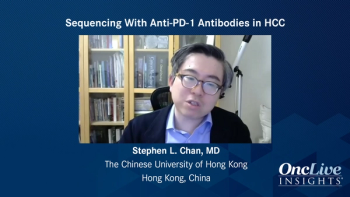
Amit Singal, MD; Masatoshi Kudo, MD, PhD; and Stephen L. Chan, MD, share their personal approaches to sequencing with an anti-PD-1 antibody after first-line atezolizumab-bevacizumab in HCC (hepatocellular carcinoma).

Significant tumor necrosis was observed in 20% of patients with resectable hepatocellular carcinoma who received neoadjuvant treatment with cemiplimab-rwlc.

The majority of independently adjudicated interstitial lung disease cases associated with fam-trastuzumab deruxtecan-nxki were low grade and occurred within the first 12 months of treatment, with lower risk of developing the effect observed in patients who were on the drug for longer than 1 year.

Atezolizumab elicited durable clinical activity irrespective of microsatellite instability status in patients with advanced solid tumors with a tumor mutational burden of more than 16 mutations per megabase.
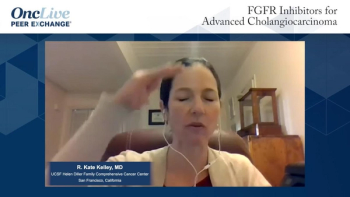
R. Kate Kelley, MD, of the UCSF Helen Diller Family Comprehensive Cancer Center, comments on the rationale for treating patients with advanced cholangiocarcinoma with an FGFR inhibitor.
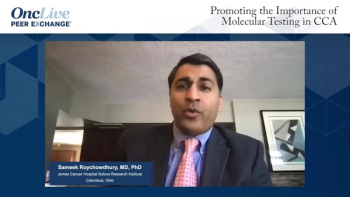
The value of early molecular testing in cholangiocarcinoma and importance of promoting its role to both patients and GI oncologists.

The FDA has authorized the marketing of the first device that utilizes artificial intelligence based on machine learning to help clinicians detect lesions like polyps or suspected tumors in the colon in real time during a colonoscopy.

Seribantumab demonstrated efficacy in reducing tumor growth in preclinical models of NRG1 fusion–positive gastrointestinal cancers, suggesting that the use of seribantumab as monotherapy could have clinical utility in treating patients with GI and other NRG1 fusion–driven cancers.

Nivolumab in combination with paclitaxel showed clinical activity and a manageable safety profile when used as second-line therapy for patients with Epstein-Barr virus–related, microsatellite instability–high/mismatch repair deficient or PD-L1–positive advanced gastric cancer.

Zenocutuzumab has been shown to block the growth and cause the death of NRG1 fusion–positive cell lines, and to induce tumor shrinkage and durable tumor regression in multiple cancers when used in NRG1 fusion–positive patient-derived xenografts.
Trastuzumab deruxtecan has not only demonstrated efficacy as a potential anti-HER2 therapeutic option for patients with HER2-amplified gastric cancers, but has also shown promise in those with HER2 moderate-, low-, and non-expressing disease.

Wasif Saif, MD, discusses factors to consider when choosing a frontline treatment strategy in pancreatic cancer, highlights the hunt for helpful biomarkers of response to available options, and offers sequencing suggestions.

Anna T. Levy, DO, discuses the safety profile and appropriate dosing of cabozantinib in patients with hepatocellular carcinoma.
A panel of experts lead by Richard S. Finn, MD, provide their final thoughts on the future of advanced unresectable liver cancer.

Encouraging efficacy data for ripretinib as a later-line therapy for patients with advanced gastrointestinal stromal tumor have investigators hypothesizing new approaches to derive even greater benefit with the agent.
The combination of nivolumab and ipilimumab and nivolumab plus chemotherapy resulted in a statistically significant overall survival benefit compared with chemotherapy alone in patients with unresectable advanced or metastatic esophageal squamous cell carcinoma.
Amit Singal, MD, comments on the use of cabozantinib in patients with Child-Pugh A and Child-Pugh B disease as well as regorafenib in advanced stage HCC (hepatocellular carcinoma).
Considerations for selecting a VEGF TKI (tyrosine kinase inhibitor) in the second-line setting for the management of HCC (hepatocellular carcinoma).
Michele Ghidini, MD, PhD, discusses the effects of body weight loss in gastric/gastroesophageal junction cancer.
Daniel Lin, MD, MS, highlights pivotal trials evaluating immunotherapy regimens in patients with hepatocellular carcinoma, remaining sequencing questions, and emerging regimens that are showing promise.
Axel Grothey, MD, discusses the potential applications for ctDNA in CRC and shed light on the updated analysis from the pivotal IMbrave150 trial in advanced hepatocellular carcinoma.

Lakshmi Rajdev, MD, discusses some of the key developments made with immunotherapy in GI cancers and the groundbreaking data that have recently read out to support their use.
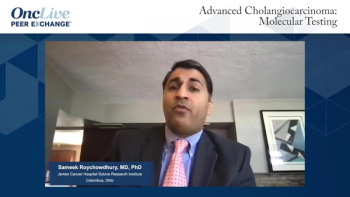
Experts who treat patients with GI cancers, such as cholangiocarcinoma, emphasize the need for more standardized approaches to molecular testing.
A panel of GI oncologists comment on the transition to targeted therapy and immunotherapy as treatments for advanced cholangiocarcinoma, as well as highlight predictive and prognostic markers that can help guide treatment decisions with novel therapies.
Advertisement
Advertisement
Trending on OncLive
1
Long-Term Cilta-Cel Data Show Low Rates of PFS Events in Standard-Risk R/R Myeloma
2
FDA Updates Axi-Cel Label to Remove Limitation of Use in R/R PCNSL
3
Real-World Data Support Clinical Benefit With Lifileucel in Previously Treated Advanced Melanoma
4
Single-Center, Retrospective Data Show Low Rate of Lifileucel Infusion Following Referral in Advanced Melanoma
5