



Hematologic Oncology
Latest News
Advertisement
Latest Videos

CME Content






























Advertisement
More News
Michael Green, MD, Northern California Oncologist, discusses his preferred treatment regimens for patients with multiple myeloma in early relapse.
Ethnic differences in the prevalence of neurotoxicity from methotrexate therapy may help explain why minority patients, specifically Hispanics, experience disparities in treatment outcomes for pediatric acute lymphoblastic leukemia.
Meagan A. Jacoby, MD, PhD, discusses treatment-free remissions in patients with chronic-phase chronic myeloid leukemia.
Robyn M. Scherber, MD, MPH, physician, The Mays Cancer Center, the newly named center of UT Health San Antonio MD Anderson Cancer Center, discusses ruxolitinib (Jakafi) failure in patients with myelofibrosis (MF).
Ravi Vij, MD, MBA, professor of medicine, Division of Oncology, Section of Bone Marrow Transplant, Washington University School of Medicine, Siteman Cancer Center, discusses the use of maintenance and consolidation in multiple myeloma.
Novel agents and treatment strategies continue to expand the armamentarium in follicular lymphoma, explains John P. Leonard, MD, in a session at the 36th Annual CFS®.
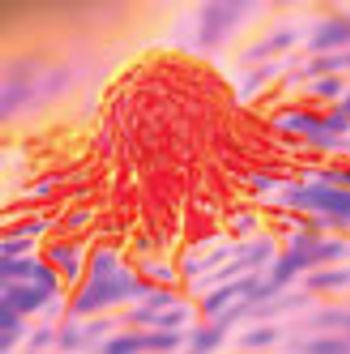
As researchers gain a better understanding of the unique aspects of individual tumor types and their surrounding microenvironment, the design of novel therapies categorized as prodrugs is become increasingly sophisticated, and several novel constructs show particular promise.
Jason Valent, MD, an oncologist at Cleveland Clinic, discusses the recent FDA approval of dose-adjusted carfilzomib in patients with myeloma.
Brad Kahl, MD, professor in the Department of Medicine, Washington University School of Medicine, Siteman Cancer Center, discusses considerations for treatment strategies in patients with chronic lymphocytic leukemia.
Jason Valent, MD, discusses the current and future landscape of relapsed/refractory multiple myeloma.
Adding daratumumab to lenalidomide and dexamethasone reduced the risk of disease progression or death by 45% compared with lenalidomide/dexamethasone alone in newly diagnosed patients with multiple myeloma who are not candidates for high-dose chemotherapy and autologous stem-cell transplant.
Bita Fakhri, MD, MPH, a professor of medicine in the Division of Hematology/Oncology at the University of California, San Francisco Helen Diller Family Comprehensive Cancer Center, discusses the data behind the frontline approval of daratumumab (Darzalex) in combination with bortezomib (Velcade), melphalan, and prednisone (VMP) in multiple myeloma.
Lloyd Damon, MD, director of the Adult Blood and Marrow Transplant and Hematologic Malignancies Program, and chief of the University of California, San Francisco (UCSF) Hematology Clinic, UCSF Helen Diller Family Comprehensive Cancer Center, discusses allogeneic stem cell transplant (ASCT) in the treatment of patients with acute myeloid leukemia (AML).
Thomas G. Martin, MD, clinical professor of medicine, Adult Leukemia and Bone Marrow Transplantation Program, and associate director, Myeloma Program, University of California, San Francisco; co-leader, Hematopoietic Malignancies Program, Helen Diller Family Comprehensive Cancer Center, discusses transplant and maintenance for the treatment of patients with high-risk multiple myeloma.
Neil P. Shah, MD, PhD, discusses emerging agents and the tyrosine kinase inhibitor discontinuation approach in the landscape of chronic myeloid leukemia.
The FDA has granted a priority review designation to a supplemental new drug application for ruxolitinib (Jakafi) for the treatment of patients with acute graft-versus-host disease who have had an inadequate response to corticosteroids.
Nancy L. Bartlett, MD, discusses factors in treatment decisions for patients with advanced-stage Hodgkin lymphoma.
Nancy Bartlett, MD, Koman Chair in Medical Oncology, Washington University School of Medicine, Siteman Cancer Center, discusses treatment regimens for patients with Hodgkin lymphoma.
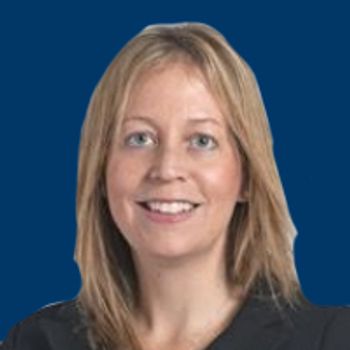
Hetty Carraway, MD, highlights ongoing genomic research in acute myeloid leukemia, as well as recent therapeutic advances in the field.
Geoffrey Uy, MD, assistant professor of medicine, Division of Oncology, Section of Bone Marrow Transplantation, Washington University School of Medicine, Siteman Cancer Center, discusses therapy selection in acute myeloid leukemia (AML).
Ravi Vij, MD, MBA, professor of medicine, Division of Oncology, Section of Bone Marrow Transplant, Washington University School of Medicine, Siteman Cancer Center, discusses the optimal induction therapy in the treatment of patients with multiple myeloma.
Stephen Oh, MD, PhD, assistant professor of medicine, Division of Hematology, Washington University School of Medicine, Siteman Cancer Center, discusses the development of JAK inhibitors in myelofibrosis.
Vivian G. Oehler, MD, discusses the diagnosis, risk prognostication and therapeutic strategies for polycythemia vera, essential thrombocytopenia, and myelofibrosis.
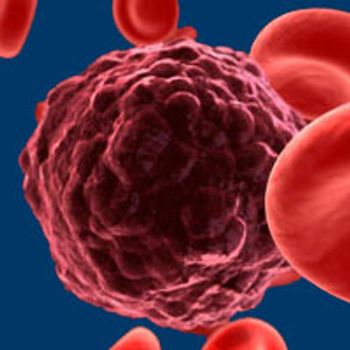
A new drug application has been submitted to Japan's Ministry of Health, Labor and Welfare for quizartinib for the treatment of adult patients with FLT3-ITD–positive acute myeloid leukemia.
Lloyd Damon, MD, director of the Adult Blood and Marrow Transplant and Hematologic Malignancies Program, and chief of the University of California, San Francisco (UCSF) Hematology Clinic, UCSF Helen Diller Family Comprehensive Cancer Center, discusses drug development in acute myeloid leukemia (AML).
Advertisement
Advertisement
Trending on OncLive
1
Single-Center, Retrospective Data Show Low Rate of Lifileucel Infusion Following Referral in Advanced Melanoma
2
Real-World Data Support Clinical Benefit With Lifileucel in Previously Treated Advanced Melanoma
3
Outcomes With Bridging Therapy Correlate With Cilta-Cel Efficacy, Safety in Multiple Myeloma
4
Long-Term Cilta-Cel Data Show Low Rates of PFS Events in Standard-Risk R/R Myeloma
5