

Hematologic Oncology
Latest News
Advertisement
Latest Videos
CME Content































Advertisement
More News
Dr. Park and co-panelists review the patient and disease characteristics, including patient age, high pre-apheresis disease burden, and bridging response to inotuzumab or blinatumomab among other variables that might best support consideration of post-CART19 maintenance therapy.
Dr. Roloff and faculty assess outcomes from the retrospective, multicenter ROCCA analysis (Real-world Outcomes Collaborative of CAR-T in Adult ALL) and propose some social determinants of health SDoH variables that bear further investigation.

Soquelitinib has been granted an orphan drug designation by the FDA for potential use in T-cell lymphoma.
This session will focus on considerations and outcomes of allo-HSCT specifically among patients over 55 years of age. The panel will discuss how transplant protocols and supportive care measures can be optimized for this population who are at higher risk of comorbidities, toxicity and poor functional status.
An overview of promising novel cellular therapies showing efficacy against hematologic cancers in early-phase clinical trials.
Panel experts comment on the role of combination therapies in MF and debate if these therapies will be the new standard of care.
Faculty offer insights into the future of PV management as well as unmet needs.
NXC-201 has received orphan drug designation from the European Commission for use in patients with amyloid light-chain amyloidosis.
The phase 3 ENHANCE-3 study of magrolimab plus venetoclax/azacitidine vs venetoclax/azacitidine in select patients with AML has been terminated.
The expert panel explores belumosudil's role in treating chronic GVHD after multiple systemic therapy lines. They discuss the ROCKstar trial, highlighting its overall response rates and real-world experiences.
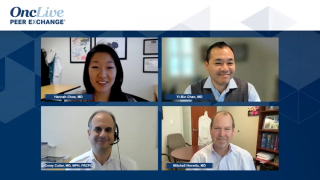
Drs Yi-Bin Chen, Corey Cutler, Hannah Choe, and Mitchell Horwitz discuss the approval and real-world experiences of ibrutinib and ruxolitinib for chronic GVHD. The panel discusses the challenges and varying effectiveness observed in real-world usage, contrasting the experiences of the two drugs.
Focusing their discussion on therapeutic options for patients with R/R DLBCL, in the third line and beyond setting.
Clinical Oncologists focus their discussion on navigating toxicities specific to CAR T, highlighting cytokine release syndrome (CRS) and neurotoxicities.
Andrew Brunner, MD, presents the profile of a 72-year-old man with MDS and the panel offers their initial impressions on the case, focusing on the treatment decisions.
Experts on mantle cell lymphoma discuss second-line treatment options available for patients.
A panel of experts review latest data from ASH 2023 on approved and emerging therapies in frontline MCL.
Amy DeZern, MD, MHS, provides clinical insights on the first-line treatment of patients with lower-risk MDS and symptomatic anemia.
The combination of the first-in-class inhibitor enasidenib plus venetoclax has generated excitement targeting IDH2 mutations in relapsed/refractory AML.
Miguel-Angel Perales, MD, shares background on the unique design of a real-world analysis of liso-cel in LBCL in which he and his co-investigators prospectively collected retrospective data.
Miguel-Angel Perales, MD, shares insight into the factors he considers when deciding if a patient should receive CAR T-cell therapy in the second line.
Jorge J. Castillo, MD, discusses preliminary data from a phase 2 study of acalabrutinib plus rituximab in patients with IgM symptomatic anti-MAG peripheral neuropathy.
Dr. Roloff and colleagues offer expert opinion on optimizing treatment sequences for patients with relapsed or refractory ALL who have received two or more prior lines of therapy and the disease and patient factors that inform their treatment plans.
Panelists evaluate PFS, OS, and the prognostic significance of negative MRD.
Provide detailed case studies highlighting the development, clinical presentation, multidisciplinary management, and outcomes of patients with acute and chronic GvHD following allo-HSCT.
Faculty discuss the best strategies to monitor patients who are receiving treatment of MF as well as commenting on when it might be appropriate to switch therapies.
Advertisement
Advertisement
Trending on OncLive
1
Single-Center, Retrospective Data Show Low Rate of Lifileucel Infusion Following Referral in Advanced Melanoma
2
Long-Term Cilta-Cel Data Show Low Rates of PFS Events in Standard-Risk R/R Myeloma
3
Real-World Data Support Clinical Benefit With Lifileucel in Previously Treated Advanced Melanoma
4
Dr Riedell on the Long-Term Efficacy of Tisa-Cel in R/R Follicular Lymphoma
5