




Hematologic Oncology
Latest News

Development of Zandelisib for B-cell Malignancies Discontinued Outside of Japan
By Chris Ryan
Advertisement
Latest Videos



CME Content































Advertisement
More News
Insight to the factors that help select optimal third-line treatment for patients with follicular lymphoma in the context of available novel therapies.

A girl who grew up in a small South Dakota town, Julie M. Vose, MD, MBA, grew into a dynamo who revolutionized lymphoma treatment and led the most prominent oncology organization in the world.

The PI3K cell-signaling network has been an important therapeutic target in oncology research for nearly 40 years ago, but the use of PI3K inhibitors in hematologic malignancies has come under scrutiny amid concerns about efficacy and safety.

The FDA has approved olutasidenib (Rezlidhia) capsules for adult patients with relapsed or refractory acute myeloid leukemia with a susceptible IDH1 mutation as detected by an FDA-approved test.

The FDA has accepted a biologics license application seeking the approval of a reformulation of denileukin diftitox for use as a potential therapeutic option in patients with persistent or recurrent cutaneous T-cell lymphoma.
A comprehensive overview of the third-line treatment armamentarium for patients with relapsed/refractory follicular lymphoma.
Key opinion leader Lori Leslie, MD, sheds light on the optimal sequencing of therapy throughout multiple lines of follicular lymphoma.
Joshua Brody, MD, discusses key follow-up data from the phase 3 ECHELON-1 trial in classical Hodgkin lymphoma.
The FDA has granted CB-010 a regenerative medicine advanced therapy designation for relapsed/refractory large B-cell lymphoma and a fast track designation for relapsed/refractory B-cell non-Hodgkin lymphoma.
The FDA has extended the Prescription Drug User Fee Act goal date to May 1, 2023, for the biologics license application seeking the approval of omidubicel for patients with blood cancers in need of allogenic hematopoietic stem cell transplant.
An expert’s perspective on assessing response to therapy in follicular lymphoma and the parameters used to identify high-risk disease.
Expert hematologist-oncologist Lori Leslie, MD, provides insight to the incidence and prognosis of follicular lymphoma, highlighting a patient case of refractory disease.

The oral PI3Kδ inhibitor zandelisib produced an overall response rate in Japanese patients with relapsed/refractory indolent B-cell non-Hodgkin lymphoma without small lymphocytic lymphoma, lymphoplasmacytic lymphoma, and Waldenström macroglobulinemia.

The FDA has approved a supplemental biologics license application to add a Monday/Wednesday/Friday intramuscular dosing schedule for asparaginase erwinia chrysanthemi (recombinant)-rywn (Rylaze).

Ponatinib plus reduced-intensity chemotherapy produced a higher rate of minimal residual disease–negative complete remission compared with imatinib in patients with newly diagnosed Philadelphia chromosome–positive acute lymphoblastic leukemia.

Novel agents such as momelotinib and pacritinib are expanding the myelofibrosis treatment landscape, and additional research will further define the options available for patients with this disease, as well as those with other leukemias and lymphomas.
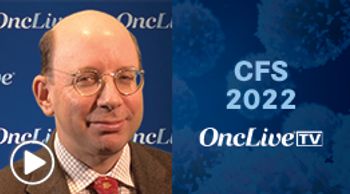
Alexander E. Perl, MD, MS, associate professor, medicine, the Hospital of the University of Pennsylvania, discusses why genetic testing is important for determining targeted therapies for patients with acute myeloid leukemia.
In this inaugural episode, Dr Lunning details important findings to come out of the Pan Pacific Lymphoma Conference, including results evaluating prophylactic medications in the management of patients with hematologic malignancies receiving cellular therapy or autologous stem cell transplant.
The FDA has approved brentuximab vedotin (Adcetris) in combination with doxorubicin, vincristine, etoposide, prednisone, and cyclophosphamide in pediatric patients aged 2 years and older with previously untreated, high-risk classical Hodgkin lymphoma.

New treatments are emerging for patients with relapsed/refractory diffuse large B-cell lymphoma in addition to chimeric antigen receptor T-cell therapy, which has moved up into the second line.

Clinicians treating patients with newly diagnosed acute lymphocytic leukemia now have multiple options at their disposal, including tyrosine kinase inhibitors, blinatumomab, and multiagent chemotherapy-based regimens, with more options aiming to enter the treatment paradigm.
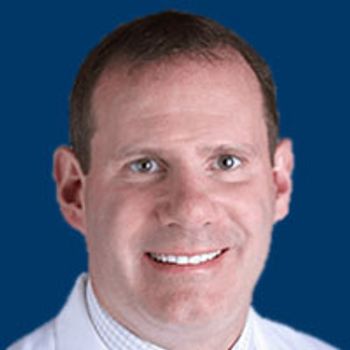
The increasing integration of CAR T-cell therapies into the treatment paradigm for adult patients with relapsed or refractory multiple myeloma addresses several unmet needs and improves outcomes for this historically limited patient population.
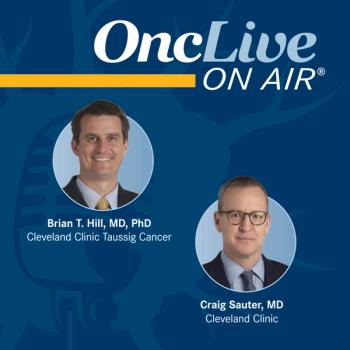
Drs Sauter and Hill discuss the use of CAR T-cell therapy in patients with lymphomas, the potential for allogeneic CAR T cells, and ways to expand access and address financial toxicity.
Mikkael A. Sekeres, MD, MS, discussed the changes to the classifications of MDS, the evolution of targeted therapies for patients with acute myeloid leukemia, and approaches for patients with bone marrow failure syndromes.

The first patient in the chronic lymphocytic leukemia cohort has been dosed in the phase 1 COVALENT-101 trial, which is evaluating the first-in-class covalent menin inhibitor BMF-219.
Advertisement
Advertisement
Trending on OncLive
1
Single-Center, Retrospective Data Show Low Rate of Lifileucel Infusion Following Referral in Advanced Melanoma
2
Long-Term Cilta-Cel Data Show Low Rates of PFS Events in Standard-Risk R/R Myeloma
3
Real-World Data Support Clinical Benefit With Lifileucel in Previously Treated Advanced Melanoma
4
Dr Riedell on the Long-Term Efficacy of Tisa-Cel in R/R Follicular Lymphoma
5