


Hematologic Oncology
Latest News

Advertisement
Latest Videos






CME Content































Advertisement
More News
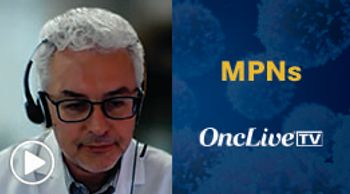
Srdan Verstovsek, MD, PhD, discusses the FDA approval of pemigatinib, an FGFR1 inhibitor, in patients with myeloid neoplasms with an FGFR1 rearrangement.
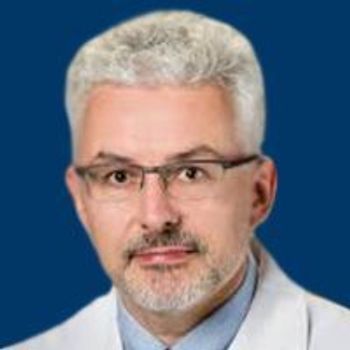
Srdan Verstovsek, MD, PhD, discusses the clinical implications of the FDA approval of pemigatinib, the results of the FIGHT-203 trial, and the need to conduct chromosomal analysis for patients with myeloid/lymphoid neoplasms.

Results from a retrospective analysis presented during the 2022 ESMO Congress indicated that circulating tumor DNA could potentially be leveraged as a prognostic factor and a tumor-specific biomarker for diffuse large B-cell lymphoma in China.
The combination of orelabrutinib and R-CHOP elicited a favorable overall response rate and progression-free response rate in patients with previously untreated non–germinal center B-cell–like diffuse large B-cell lymphoma (DLBCL) with extranodal disease.

Saul A. Rosenberg, MD, FASCO, the Maureen Lyles D’Ambrogio Professor Emeritus at Stanford School of Medicine and the 2019 Giants of Cancer Care® award winner for Lymphoma, died at the age of 95.
Azacitidine plus venetoclax showed encouraging activity in patients with high-risk myelodysplastic syndromes or chronic myelomonocytic leukemia.
Dr Chen details the findings from a study of patients with transformed cutaneous T-cell lymphoma, gives her perspective on findings from the FLASH trial, and discusses the need for more research funding in this disease.

The European Commission has granted an orphan drug designation to nanatinostat and valganciclovir for use as a potential therapeutic option in patients with peripheral T-cell lymphoma.
Emavusertib elicited antitumor activity when given as a monotherapy in patients with relapsed/refractory acute myeloid leukemia or high-risk myelodysplastic syndrome that harbored a spliceosome or FLT3 mutation.
A single-center study at the Dana-Farber Cancer Institute/Brigham and Women’s Hospital assessed the real-world experience of 20 patients treated with idecabtagene vicleucel with relapsed and refractory multiple myeloma who had exhausted at least 4 lines of prior therapy.

Five years since the first FDA approval of CAR T-cell therapy in relapsed/refractory lymphoma, there is still much to learn about how to optimize its use, according to Sattva S. Neelapu, MD.
Findings of a retrospective study demonstrated a high dosing compliance with daratumumab compared with approved indications for patients with multiple myeloma in the real-world setting.
Fixed-duration bendamustine plus rituximab was effective in patients with previously untreated Waldenström macroglobulinemia, regardless of MYD88L265P mutation status, but the presence of the CXCR4WHIM mutation may be associated with resistance to the combination.
Michael Dickinson, MBBS, expands on data from a phase 2 dose-expansion study of glofitamab in heavily pretreated, highly refractory large B-cell lymphoma, explains the effect bispecific antibodies could have on treatment, and highlights other research efforts surrounding glofitamab-based therapies.

The first-in-class dual PIM/FLT3 kinase inhibitor, SEL24/MEN1703, showcased encouraging efficacy and a tolerable safety profile in patients with acute myeloid leukemia whose tumors harbor a IDH1/2 mutation.
Belantamab mafodotin monotherapy demonstrated anticancer activity with a tolerable safety profile in heavily pretreated patients with relapsed or refractory multiple myeloma.

Daratumumab combinations elicited significant progression-free survival, overall survival, overall response rate, and minimal residual disease–negativity benefits vs control in pretreated patients with relapsed or refractory multiple myeloma across clinically relevant subgroups.
Expert panelists reflect on the advent of newer therapies in immune thrombocytopenia and look toward future evolutions in care.

Although cutaneous T-cell lymphoma, a group of non-Hodgkin T-cell lymphomas, remains a rare disease, incidence has increased steadily since the 1970s.

The Hong Kong Special Administrative Region’s Department of Health has accepted for review a biologics license application seeking the approval of tafasitamab plus lenalidomide in patients with relapsed or refractory diffuse large B-cell lymphoma.
First-line treatment with pivekimab sunirine generated responses with favorable tolerability in patients with blastic plasmacytoid dendritic cell neoplasm, according to data from the phase 2 CADENZA trial.

Selina M. Luger, MD, FRCPC, Gail J. Roboz, MD, and Wendy Stock, MD, discuss how being female affected their careers and share the scientific achievements they most want to be remembered for in the leukemia field.

The FDA has granted permission for enrollment to resume in the monotherapy phase 1a portion of the phase 1/2 TakeAim Leukemia trial evaluating emavusertib in relapsed/refractory acute myeloid leukemia or high-risk myelodysplastic syndromes.
Rami Komrokji, MD, expands on the disease factors and treatment options for lower-risk and higher-risk myelodysplastic syndromes, and highlights other key updates in chronic lymphocytic leukemia, mantle cell lymphoma, diffuse large B-cell lymphoma, and myelofibrosis.
Daiichi Sankyo submitted a supplemental new drug application to Japan’s Ministry of Health, Labor, and Welfare for the use of quizartinib in patients with newly diagnosed, FLT3-ITD–positive acute myeloid leukemia.
Advertisement
Advertisement
Trending on OncLive
1
Long-Term Cilta-Cel Data Show Low Rates of PFS Events in Standard-Risk R/R Myeloma
2
Real-World Data Support Clinical Benefit With Lifileucel in Previously Treated Advanced Melanoma
3
FDA Updates Axi-Cel Label to Remove Limitation of Use in R/R PCNSL
4
Dr Riedell on the Long-Term Efficacy of Tisa-Cel in R/R Follicular Lymphoma
5