





Lung Cancer
Latest News
Advertisement
Video Series


Latest Videos





Podcasts


CME Content































Advertisement
More News

Ivonescimab plus chemotherapy improved PFS and response rates vs tislelizumab in advanced squamous NSCLC, with a manageable safety profile.

Sacituzumab tirumotecan reduced the risk of progression or death by 51% in nonsquamous EGFR-mutated NSCLC resistant to EGFR TKIs.

Zipalertinib demonstrated preliminary efficacy and low rates of treatment-related dose reductions and discontinuations in NSCLC harboring EGFR mutations and CNS metastases and/or leptomeningeal disease.

Durvalumab in combination with chemotherapy produced outcomes consistent with prior studies in patients with advanced pleural mesothelioma.

I-DXd showed intracranial efficacy and manageable safety in ES-SCLC with brain metastases, per data from the IDeate-Lung01 study.

The SKYSCRAPER-03 trial missed the end point of a PFS benefit with tiragolumab plus atezolizumab vs durvalumab consolidation in advanced NSCLC.

Findigs from DeLLphi-304 support the use of tarlatamab as a standard of care for all patients with second-line small cell lung cancer.
First-line treatment with tarlatamab plus chemoimmunotherapy and anti–PD-L1 maintenance therapy generated durable responses in patients with ES-SCLC.
Osimertinib plus chemotherapy improved OS vs osimertinib alone in EGFR-mutated advanced non–small lung cancer, irrespective of poor prognostic factors.

NorthStar findings support osimertinib plus local consolidative therapy in EGFR-mutant non–small cell lung cancer.
Sevabertinib monotherapy led to robust and durable responses in first-line and pretreated patients with HER2-mutant advanced non–small cell lung cancer.
First-line alectinib produced a clinically meaningful overall survival benefit in advanced ALK-positive non–small cell lung cancer.
Zongertinib was effective for the first-line treatment of patients with treatment-naive HER2-mutated NSCLC.
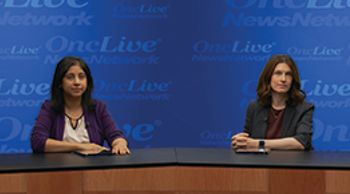
Julia Rotow, MD, and Jyoti Malhotra, MD, MPH, discuss novel biomarkers under investigation in advanced NSCLC.
Maurice Perol, MD, discusses the persistent unmet need for effective treatments following progression on immunotherapy in NSCLC.

Solange Peters, MD, PhD, discusses the necessity of global consensus meetings to navigate clinical "gray zones" in lung cancer management.
Antonio Passaro, MD, PhD, discusses testing methodologies and clinical trials for MET, the most studied resistance biomarker, following progression on EGFR TKIs.

Xiuning Le, MD, PhD, discusses efficacy data with firmonertinib for the treatment of patients with EGFR PACC–mutated NSCLC.
Xiuning Le, MD, PhD, discusses the prevalence of EGFR PACC mutations in NSCLC.

Percy Lee, MD, discusses the importance of considering radiation therapy techniques like IMRT and proton therapy for patients with locally advanced NSCLC.

Researchers developed a way to predict how lung cancer cells will respond to different therapies, allowing for more effective individualized treatment.

Panelists discuss how to pivot treatment plans when patients cannot proceed to surgery after induction therapy, emphasizing the importance of determining resectability up front and having multidisciplinary contingency plans.
Panelists discuss how resectability determination remains surgeon-dependent and institution-specific, requiring careful consideration of both technical feasibility (“can you”) and appropriateness (“should you”) for individual patients.

Leading experts across oncology specialties preview the key studies and data they are most anticipating ahead of the 2025 ESMO Congress.

Preview the top lung, breast, GI, GU, gynecologic, and hematologic oncology abstracts and topics ahead of the 2025 ESMO Congress.
Advertisement
Advertisement
Trending on OncLive
1
Long-Term Cilta-Cel Data Show Low Rates of PFS Events in Standard-Risk R/R Myeloma
2
FDA Updates Axi-Cel Label to Remove Limitation of Use in R/R PCNSL
3
Real-World Data Support Clinical Benefit With Lifileucel in Previously Treated Advanced Melanoma
4
Single-Center, Retrospective Data Show Low Rate of Lifileucel Infusion Following Referral in Advanced Melanoma
5