



Lung Cancer
Latest News
Advertisement
Video Series
Latest Videos


Podcasts
CME Content































Advertisement
More News

VT3989 has received fast track designation from the FDA for unresectable malignant nonpleural or pleural mesothelioma after progression on prior therapy.
Sagus Sampath, MD, discusses the safety profile of consolidative radiotherapy administered in conjunction with osimertinib in advanced EGFR-mutant NSCLC
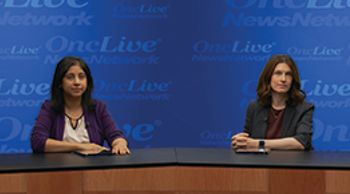
Julia Rotow, MD, and Jyoti Malhotra, MD, MPH, discuss the investigation of sigvotatug vedotin plus pembrolizumab in NSCLC.
Julia Rotow, MD, and Jyoti Malhotra, MD, MPH, discuss the investigation of sigvotatug vedotin in nonsquamous NSCLC.

Eric K. Singhi, MD, and Sandip P. Patel, MD, discuss the management of immune-related adverse effects in advanced NSCLC.
Eric K. Singhi, MD, and Sandip P. Patel, MD, discuss the impact of the FDA approval of cemiplimab plus chemotherapy in advanced NSCLC.

Lorlatinib has received NICE’s recommendation for untreated advanced non–small cell lung cancer.
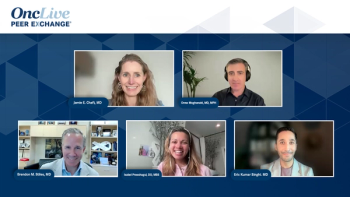
Panelists discuss how multidisciplinary coordination and early communication between surgical, pulmonary, and oncology teams ensures adequate tissue procurement for molecular testing from the initial biopsy.
Panelists discuss how to manage the waiting period for biomarker results while balancing urgency in curable patients, emphasizing the importance of tissue-based testing over liquid biopsies in early-stage disease.
Panelists discuss how surgeon-led ultrasound-guided biopsies can expedite care timelines and overcome barriers to guideline-concordant biomarker testing that still affects one-third of eligible patients.

Check out this September recap of OncLive’s coverage of the top news and expert insights in lung cancer.

The top 5 OncLive TV videos of the week cover insights in lung cancer, and prostate cancer, myelofibrosis.

The FDA clears maintenance lurbinectedin combination in lung cancer, T-DxD sBLA in HER2-positive breast cancer is accepted for review, and more.
Here is your Q4 2025 preview spotlighting 10 FDA decisions to watch, including upcoming PDUFAs for belantamab mafodotin, revumenib, sevabertinib, and more.
Panelists discuss how preliminary neoadjuvant chemoimmunotherapy data showing high response rates and pathologic complete responses in limited-stage SCLC appears promising but requires larger studies and careful patient selection given the complexity of staging and surgical candidacy.
Panelists discuss how while emerging biomarkers like inflamed subtypes and MHC class I expression show promise for predicting immunotherapy benefit, current clinical practice treats all patients with immunotherapy since the potential for exceptional responses cannot be reliably predicted.
The FDA approved lurbinectedin plus atezolizumab as first-line maintenance for ES-SCLC that has not progressed after frontline induction therapy.

Ahead of the 2025 ESMO Congress, OncLive spoke with experts in lung cancer care to preview the most anticipated meeting abstracts.
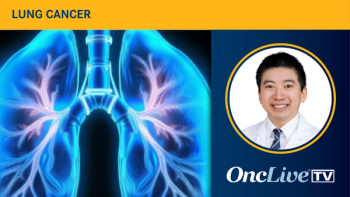
Matthew Lee, MD, details the improved disease-free survival outcomes with adjuvant alectinib in patients with ALK-positive NSCLC.
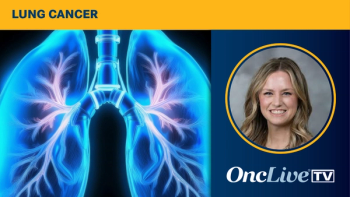
Misty D. Shields, MD, PhD, discusses the modern role for prophylactic cranial irradiation in extensive-stage SCLC management.
Panelists discuss how comprehensive biomarker testing is essential for all patients with early-stage non–small cell lung cancer (NSCLC), with thoracic specialists emphasizing the importance of testing primary tumor samples and lymph nodes to identify actionable mutations that guide treatment decisions and inform patients about their therapeutic journey, particularly as targeted therapies and immunotherapies continue to advance in early-stage and locally advanced disease settings.
Eric K. Singhi, MD, and Sandip P. Patel, MD, discuss treatment and sequencing considerations in advanced non–small cell lung cancer.
OncLive social media polls reveal which lung cancer abstracts are generating excitement ahead of the 2025 ESMO Congress.
Lyudmila A. Bazhenova, MD, discusses the FDA approval of sunvozertinib (Zegfrovy) in patients with EGFR exon 20–mutant non–small cell lung cancer.
Panelists discuss how the concerning underutilization of first-line chemoimmunotherapy in extensive-stage SCLC may stem from clinical nihilism, lack of urgency in treatment initiation, and inadequate education about the substantial benefits these therapies provide to patients.
Advertisement
Advertisement
Trending on OncLive
1
Long-Term Cilta-Cel Data Show Low Rates of PFS Events in Standard-Risk R/R Myeloma
2
Real-World Data Support Clinical Benefit With Lifileucel in Previously Treated Advanced Melanoma
3
FDA Updates Axi-Cel Label to Remove Limitation of Use in R/R PCNSL
4
Dr Riedell on the Long-Term Efficacy of Tisa-Cel in R/R Follicular Lymphoma
5