







Mantle Cell Lymphoma
Latest News
Advertisement
Latest Videos





CME Content

































Advertisement
More News
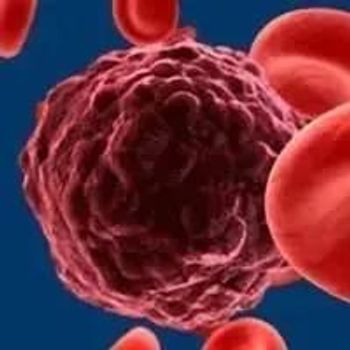
Zanubrutinib demonstrated a significant improvement in progression-free survival compared with orelabrutinib in patients with relapsed/refractory chronic lymphocytic leukemia and small lymphocytic lymphoma or mantle cell lymphoma.

Tycel Jovelle Phillips, MD, outlines the reasons why p53-mutated mantle cell lymphoma is difficult to treat and discusses potential future directions for the treatment of this subgroup of patients.
Tycel Jovelle Phillips, MD, discusses the role of p53 mutations in the outcomes of patients with mantle cell lymphoma.

Brad S. Kahl, MD, discusses current best practices for the treatment of older patients with mantle cell lymphoma, as well as where the treatment paradigm might lead in the future.

Brad S. Kahl, MD, explains the evolution of mantle cell lymphoma treatment over the past decade and lays out the trajectory for future therapies, including the potential benefits of lenalidomide in the maintenance setting.

Michael Wang, MD, discusses the innovative design of the SHINE trial, notes the importance of developing improved treatments for older patient populations, and highlights significant progression-free survival and safety data from the study.

Toby Eyre, MBChB, DipMedEd, MRCP, FRCPath, MD, discusses the design and the rationale of the phase 3 BRUIN-MCL-321 trial in mantle cell lymphoma.
Single-agent pirtobrutinib is being investigated for safety and efficacy in heavily pretreated, BTK inhibitor–naïve patients with mantle cell lymphoma in the ongoing phase 3 BRUIN-MCL-321 trial.
Ibrutinib in combination with bendamustine and rituximab with rituximab maintenance elicited a significant improvement in progression-free survival compared with standard chemoimmunotherapy in older patients with mantle cell lymphoma.

The use of BTK inhibitors as a frontline treatment improved overall survival vs their deployment in subsequent lines of therapy in patients with mantle cell lymphoma, according to a real-world study (IRB-300004501) published in Blood Advances.
The BTK inhibitor zanubrutinib has been approved in Uruguay for the treatment of adult patients with previously treated mantle cell lymphoma, relapsed or refractory marginal zone lymphoma, and Waldenström macroglobulinemia.
Jay Yang, MD, discusses the current treatment landscape of mantle cell lymphoma.

Martin F. Dietrich, MD, PhD, highlights recent updates in mantle cell lymphoma treatment, explains how new developments have raised sequencing questions, and projects where future research efforts will focus.

Maher Albitar, MD, and Andre H. Goy, MD, share insights regarding molecular complexities in mantle cell lymphoma.
Ibrutinib-based combination therapy demonstrated a higher overall response rate and longer progression-free survival compared with ibrutinib alone in patients with relapsed/refractory mantle cell lymphoma.
The overall mortality rate for patients with mantle cell lymphoma who contract COVID-19 is high, and mortality rates rise significantly in patients who are hospitalized or enter intensive care units, according to findings from a retrospective study that were published in Hemasphere.
The combination of bendamustine and rituximab plus autologous stem cell transplantation and maintenance rituximab was shown to be an effective first-line treatment with comparable outcomes to R-CHOP/R-DHAP plus ASCT and observation in young patients with transplant-eligible mantle cell lymphoma.

Martin Dietrich, MD, PhD, discusses optimizing treatment options for patients with mantle cell lymphoma.
Zanubrutinib monotherapy continues to demonstrate durable responses with an acceptable toxicity profile in patients with relapsed or refractory mantle cell lymphoma.

A Type II variation application seeking the approval of a new indication for ibrutinib plus bendamustine and rituximab in adult patients with previously untreated mantle cell lymphoma who are not candidates for autologous stem cell transplant has been submitted to the European Medicines Agency.

Martin Dietrich, MD, PhD, discusses the current treatment landscape of mantle cell lymphoma.

Treatment with the CD19-directed CAR T-cell therapy brexucabtagene autoleucel demonstrated significant activity, marked by high response rates and prolonged survival, in patients with relapsed mantle cell lymphoma in the pivotal ZUMA-2 trial.

Although the addition of copanlisib to ibrutinib resulted in a high overall response rate in patients with relapsed/refractory mantle cell lymphoma, the regimen was found to have additive toxicity, according to findings from a small phase 1 trial.

The combination of ibrutinib given at 420 mg and venetoclax at 200 mg elicited an objective response rate of 93.8% in patients with relapsed/refractory mantle cell lymphoma, according to results of a phase 1 dose-finding study.

Michael Wang, MD, discusses adverse effects associated with BTK inhibitors in patients with mantle cell lymphoma.
Advertisement
Advertisement
Trending on OncLive
1
Single-Center, Retrospective Data Show Low Rate of Lifileucel Infusion Following Referral in Advanced Melanoma
2
Real-World Data Support Clinical Benefit With Lifileucel in Previously Treated Advanced Melanoma
3
Long-Term Cilta-Cel Data Show Low Rates of PFS Events in Standard-Risk R/R Myeloma
4
Dr Riedell on the Long-Term Efficacy of Tisa-Cel in R/R Follicular Lymphoma
5