




Mantle Cell Lymphoma
Latest News
Advertisement
Latest Videos

CME Content






























Advertisement
More News

Mitchell R. Smith, MD, PhD, discusses the results of the ECOG-ACRIN E1411 trial examining BR-based induction treatment in patients with mantle cell lymphoma and next steps for research.
Mitchell R. Smith, MD, PhD, discusses the rationale for the phase 2 ECOG-ACRIN E1411 trial in mantle cell lymphoma.
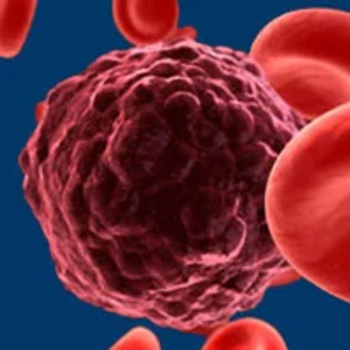
This article discusses the current treatment landscape and therapeutic strategies for mantle cell lymphoma, the role of Bruton tyrosine kinase inhibitor therapies in MCL, and insights on new regimens and ongoing clinical trials from leading experts in hematologic malignancies.
Peter Martin, MD, discusses the role of maintenance therapy with rituximab in mantle cell lymphoma.
Bijal Shah, MD, MS, discusses efforts to combat resistance to BTK inhibitors in patients with mantle cell lymphoma.
Tycel Jovelle Phillips, MD, discusses the next steps in evaluating the combination of venetoclax, lenalidomide, and rituximab in mantle cell lymphoma.

The FDA has granted a breakthrough therapy designation orelabrutinib for the treatment of patients with relapsed/refractory mantle cell lymphoma.

Three first-in-class, SOX11 small molecule inhibitors demonstrated on-target antitumor activity in mantle cell lymphoma cell lines and in patient-derived ibrutinib-resistant models ex vivo.
Peter Martin, MD, discusses the findings of a real-world analysis of clinical outcomes in mantle cell lymphoma.

Peter Martin, MD, discusses discrepancies in real-world patterns of care for patients with MCL and what can be done to overcome them.
Loncastuximab tesirine-lpyl continued to demonstrate promising antitumor activity with an acceptable toxicity profile when used in the treatment of select patients with non-Hodgkin lymphoma, including diffuse large B-cell lymphoma and mantle cell lymphoma.

Peter Riedell, MD, discusses the rationale for a study in mantle cell lymphoma, the clinical implications of the findings, and unanswered questions that future research efforts should aim to answer.
Tycel Jovelle Phillips, MD, discusses the design of a phase 1 trial with venetoclax, lenalidomide, and rituximab in mantle cell lymphoma.

Narendranath Epperla, MD, MS, discusses the efficacy of brexucabtagene autoleucel in patients with mantle cell lymphoma.
Peter Martin, MD, discusses the rationale to evaluate real-world outcomes in mantle cell lymphoma.
A study of treatment patterns in adult patients with mantle cell lymphoma revealed a discrepancy between actual patterns of care and recommendations based on clinical trials.

Narendranath Epperla, MD, MS, discusses future research efforts in mantle cell lymphoma.
Tycel Jovelle Phillips, MD, discusses the toxicity profile of the combination of venetoclax, lenalidomide, and rituximab in mantle cell lymphoma.

Time-to-next treatment and overall survival were improved in a real-world study evaluating patients who received rituximab maintenance after first-line treatment with bendamustine and rituximab or R-CHOP in patients with mantle cell lymphoma.
Mitchell R. Smith, MD, PhD, discusses the results of the phase 2 ECOG-ACRIN E1411 trial in mantle cell lymphoma.

TG-1701 demonstrated encouraging clinical and pharmacodynamic activity at all dose levels in patients with B-cell malignancies.
Cirmtuzumab and ibrutinib led to reported high overall response rates in patients with mantle cell lymphoma or chronic lymphocytic leukemia.
Bijal Shah, MD, MS, discusses shortcomings with BTK inhibitors in high-risk mantle cell lymphoma.
A second treatment with CD19-directed CAR T-cell therapy plus ibrutinib (Imbruvica) following failed prior CD19-directed CAR T-cell therapy and salvage treatment with ibrutinib led to greater efficiency and anti-CD19 CAR T-cell amplification, but also higher grades of cytokine release syndrome and more serious hematologic toxicity in patients with refractory B-cell non-Hodgkin lymphoma.
The ongoing, phase 1/2 PrE0404 trial is evaluating the combination of ixazomib and ibrutinib in patients with relapsed/refractory mantle cell lymphoma with the goal of improving upon single-agent BTK inhibitor therapy in this patient population.
Advertisement
Advertisement
Trending on OncLive
1
Long-Term Cilta-Cel Data Show Low Rates of PFS Events in Standard-Risk R/R Myeloma
2
Single-Center, Retrospective Data Show Low Rate of Lifileucel Infusion Following Referral in Advanced Melanoma
3
Real-World Data Support Clinical Benefit With Lifileucel in Previously Treated Advanced Melanoma
4
Dr Riedell on the Long-Term Efficacy of Tisa-Cel in R/R Follicular Lymphoma
5