




Multiple Myeloma
Latest News
Advertisement
Latest Videos





CME Content































Advertisement
More News
Comprehensive discussion on the MonumenTAL-1 trial of talquetamab, a GPRC5D- and CD3-targeted agent, in the setting of relapsed/refractory multiple myeloma.

Induction therapy with the quadruplet regimen of daratumumab, carfilzomib, lenalidomide, and dexamethasone appears to be feasible in patients with high-risk, newly diagnosed multiple myeloma who are eligible for transplant, displaying safety benefits and responses.
Ixazomib plus daratumumab without dexamethasone showed a positive efficacy profile for elderly frail patients with relapsed/refractory multiple myeloma, according to results of the phase 2 IFM 2018-02 study.

Daratumumab plus induction/consolidation lenalidomide, bortezomib, and dexamethasone elicited higher minimal residual disease-negativity rates vs the RVd combination alone in patients with transplant-eligible newly diagnosed multiple myeloma, including those in high-risk subgroups.

The combination of lenalidomide (Revlimid), bortezomib, and dexamethasone (RVd) plus autologous stem cell transplant as initial therapy followed by lenalidomide maintenance demonstrated a significant improvement in progression-free survival vs RVd alone followed by lenalidomide maintenance in patients with newly diagnosed multiple myeloma.
For the 10th consecutive year, OncLive® is honored to recognize oncology leaders whose innovations have contributed to immeasurable improvements in outcomes for countless patients.
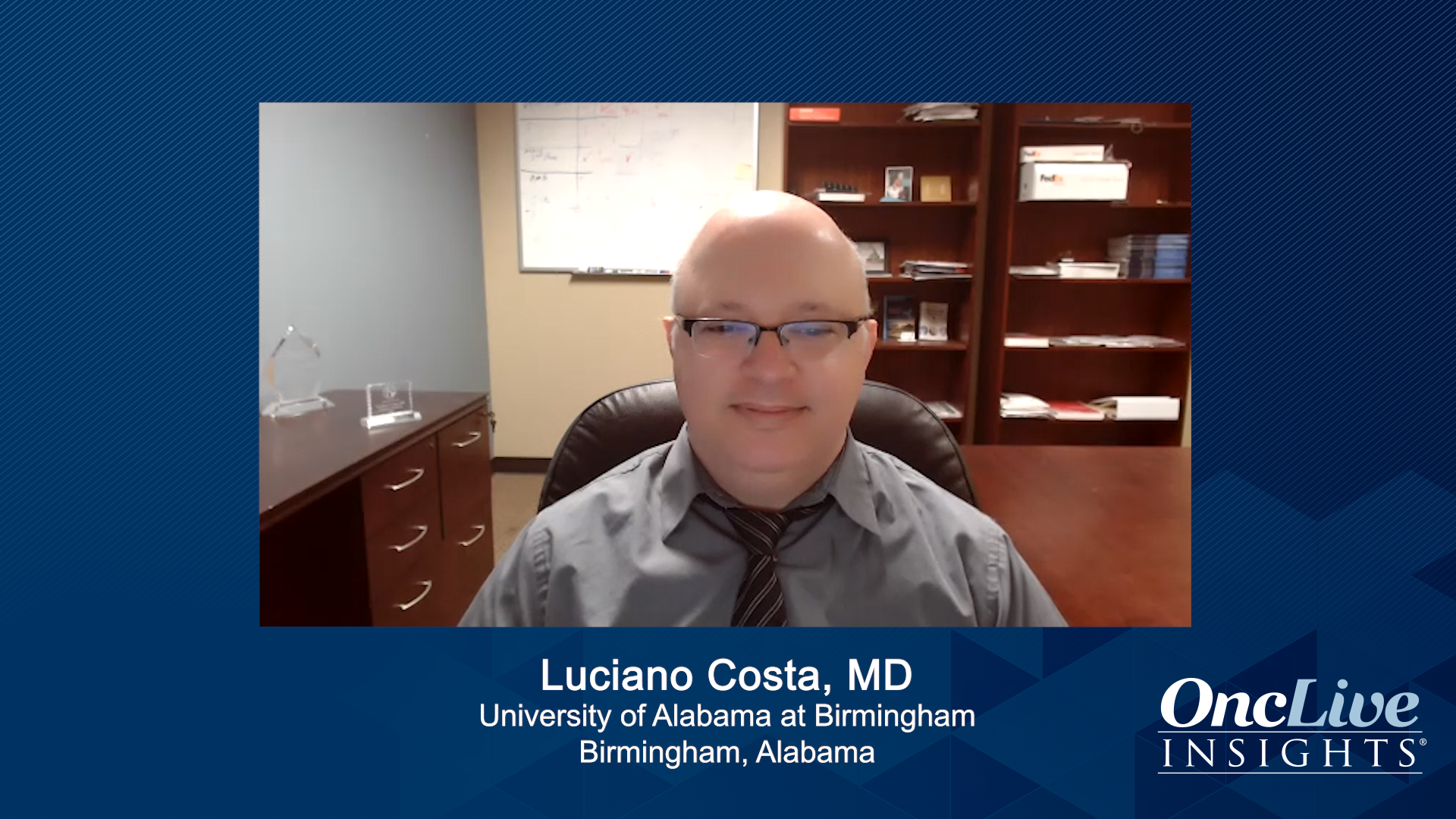
Moving on to the second clinical scenario of multiple myeloma, Luciano Costa, MD, details his care of a heavily pretreated patient.
Expert perspectives on the MajesTEC-1 trial, a study of BCMA- and CD3-targeted agent teclistamab in relapsed/refractory multiple myeloma.

Noopur Raje, MD, reviews the benefits of quadruplet regimens in the up-front and relapsed settings, treatment options for relapsed/refractory disease, and the possibilities for combinations to minimize toxicities in those who receive CAR T-cell or bispecific antibody therapies.
Shared insight on factors that help to determine optimal therapy for patients diagnosed with triple-class refractory multiple myeloma.
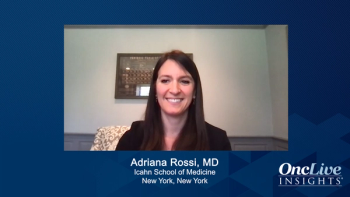
Expert hematologist-oncologist Adriana Rossi, MD, shares a real-world patient scenario of triple-class refractory multiple myeloma managed with novel bispecific antibody therapy.

The European Medicines Agency’s Committee for Medicinal Products for Human Use has recommended the approval of selinexor in combination with bortezomib and low-dose dexamethasone for use in adult patients with multiple myeloma who have previously received 1 to 3 prior lines of treatment.
Investigators have initiated a phase 1 trial exploring ACLX-001, a novel CAR T-cell therapy using the ARC-SparX platform, in patients with relapsed/refractory multiple myeloma.
The addition of isatuximab-irfc to carfilzomib and dexamethasone resulted in a significant improvement in progression-free survival vs carfilzomib plus dexamethasone alone in patients with relapsed or refractory multiple myeloma.

Paula Rodriguez-Otero, MD, PhD, discusses the rationale, design, and findings of the phase 1b TRIMM-2 trial assessing subcutaneous teclistamab in combination with daratumumab for the treatment of patients with relapsed/refractory multiple myeloma.
Noopur S. Raje, MD, discussed the presentation she gave at the 26th Annual International Congress on Hematologic Malignancies® on the CAR T-cell therapy product bb21217, other exciting myeloma treatments that were presented at ASH, and the need for increased treatment accessibility.

Thomas Martin, MD, discusses updates from the CARTITUDE-1 trial, as well as the future of CARs and bispecific T cell engagers in multiple myeloma.

Investigators have identified immunoglobulin G heavy chain, soluble B-cell maturation agent, prothrombin time and international normalized ratio, and high vector copy number in drug product as predictors for response in patients with multiple myeloma.

Ciltacabtagene autoleucel generated deep responses and demonstrated manageable safety in patients with progressive multiple myeloma who were refractory to lenalidomide.

Yi Lin, MD, PhD, discusses treatment updates in CAR T-cell therapy in multiple myeloma.
Alessandra Larocca, MD, PhD, discusses recent advancements in relapsed/refractory multiple myeloma.

Data presented at the ASH Annual Meeting and Exposition underscored the growing focus on improving screening, advancing methods of detection, and improving our understanding of the genomic, genetic, and epigenetic factors that govern progression and therapeutic resistance in multiple myeloma.
Considerations for optimizing treatment with BCMA-targeting agents for patients with relapsed/refractory multiple myeloma moving forward.
Current combination approaches, including BCMA-targeting agents like belantamab mafodotin, being explored to address treatment gaps in relapsed/refractory multiple myeloma.
An overview of novel bispecific therapies under development in relapsed/refractory multiple myeloma.
Advertisement
Advertisement
Trending on OncLive
1
Long-Term Cilta-Cel Data Show Low Rates of PFS Events in Standard-Risk R/R Myeloma
2
FDA Updates Axi-Cel Label to Remove Limitation of Use in R/R PCNSL
3
Real-World Data Support Clinical Benefit With Lifileucel in Previously Treated Advanced Melanoma
4
Single-Center, Retrospective Data Show Low Rate of Lifileucel Infusion Following Referral in Advanced Melanoma
5