





Multiple Myeloma
Latest News
Advertisement
Latest Videos







CME Content

































Advertisement
More News

Mezigdomide showed notable clinical activity and a manageable safety profile when combined with dexamethasone in patients with triple-class relapsed or refractory multiple myeloma.
OncLive® will be LIVE with OncLive® News Network: On Location at the 2022 ASH Annual Meeting. Each day, we will broadcast a series of interviews with top thought leaders, to learn their thoughts and reactions to data presented across hematologic oncology during the conference.

The GPRC5D- and CD3-directed bispecific antibody forimtamig led to high response rates in patients with relapsed or refractory multiple myeloma regardless of subcutaneous or intravenous administration, according to updated findings from a phase 1 dose-escalation study.

Administration of teclistamab in combination with daratumumab and lenalidomide demonstrated promising overall response rates and tolerability in patients with relapsed/refractory multiple myeloma who had prior lenalidomide exposure, according to initial data from the phase 1b MajesTEC-2 trial.

Sandra P. Susanibar-Adaniya, MD, discusses 2 key trials in multiple myeloma that improved the treatment landscape for transplant-eligible and ineligible patients.

S. Vincent Rajkumar, MD, previews his top 5 abstracts in multiple myeloma ahead of the 2022 ASH Annual Meeting.

Oncopeptides AB announced December 7, 2022, that the FDA has asked the company to withdraw melphalan flufenamide from the US market.

Building on research his father conducted decades earlier, Robert Orlowski, MD, PhD, redefined myeloma treatment.

Sandra P. Susanibar-Adaniya, MD, discusses the current standard of care for patients with newly diagnosed multiple myeloma.

Murali Janakiram, MD, MS, discusses future targets and research strategies for CAR T-cell therapy in multiple myeloma.

GlaxoSmithKline plc has initiated the process to withdraw the United States marketing authorization for belantamab mafodotin-blmf for the treatment of adult patients with relapsed/refractory multiple myeloma who have received at least 4 prior therapies.

Shambavi Richard, MD, discussed key studies that continue to shape the SOC in both the transplant-eligible and -ineligible populations, the role of transplant in the space, and unmet needs that remain for older and frail patients.
The increasing integration of CAR T-cell therapies into the treatment paradigm for adult patients with relapsed or refractory multiple myeloma addresses several unmet needs and improves outcomes for this historically limited patient population.
Belantamab mafodotin-blmf did not generate a progression-free survival benefit vs the combination of pomalidomide plus low-dose dexamethasone, failing to meet the primary end point of the phase 3 DREAMM-3 trial.
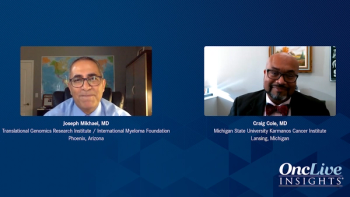
Joseph Mikhael, MD, and Craig Cole, MD, close the program by sharing examples of times culturally competent care was paramount to the treatment of their patients.

The FDA has granted a breakthrough therapy designation to elranatamab for the treatment of patients with relapsed/refractory multiple myeloma.
Peter Voorhees, MD, discusses developments in the efficacy and application of proteasome inhibitors for patients with newly diagnosed multiple myeloma.

ABBV-383 was effective and well tolerated at all administered doses in patients with relapsed/refractory multiple myeloma, according to safety and efficacy results from an ongoing first-in-human, phase 1 dose-escalation/-expansion study.
Sandra P. Susanibar-Adaniya, MD, discusses how advancements in triplet therapy have shifted the treatment paradigm for patients with newly diagnosed, transplant-ineligible multiple myeloma.
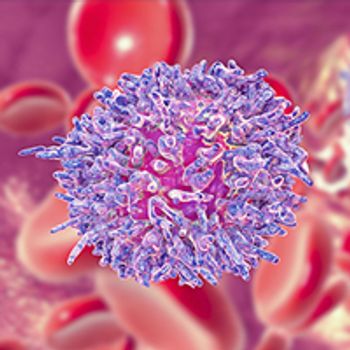
Ciltacabtagene autoleucel produced early, deep, and durable responses in patients with relapsed/refractory multiple myeloma treated at 8 sites in China.
Expert panelists share their closing thoughts on the path to improve health equity in multiple myeloma management for racial and ethnic minority groups.

Drs Mikhael and Cole discuss ways to help reduce disparities in myeloma by delivering culturally relevant care and highlight the importance of implementing shared decision-making, creating a well-informed multidisciplinary staff, and meeting patients where they are.
Craig Cole, MD, shares advice for community physicians on providing culturally competent care to patients with multiple myeloma that embraces their beliefs, spiritualities, and ethnicities.
A key opinion leader lists the factors that affect access to quality care for Black Americans with multiple myeloma.

The combination of melphalan flufenamide and daratumumab plus hyaluronidase-fihj and dexamethasone improved progression-free survival over daratumumab and dexamethasone alone in select patients with relapsed/refractory multiple myeloma.
Advertisement
Advertisement
Trending on OncLive
1
Single-Center, Retrospective Data Show Low Rate of Lifileucel Infusion Following Referral in Advanced Melanoma
2
Long-Term Cilta-Cel Data Show Low Rates of PFS Events in Standard-Risk R/R Myeloma
3
Real-World Data Support Clinical Benefit With Lifileucel in Previously Treated Advanced Melanoma
4
Dr Riedell on the Long-Term Efficacy of Tisa-Cel in R/R Follicular Lymphoma
5