







Multiple Myeloma
Latest News
Advertisement
Latest Videos





CME Content






























Advertisement
More News
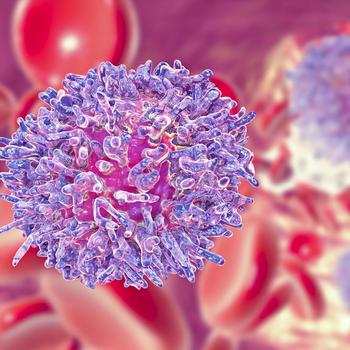
QIAGEN and INOVIO Pharmaceuticals, Inc. are extending their collaborative efforts with a new agreement to develop liquid biopsy–based companion diagnostic assays for INOVIO agents, according to a news release from INOVIO.

The addition of daratumumab to lenalidomide and dexamethasone resulted in improved progression-free survival vs Rd alone in patients with newly diagnosed multiple myeloma who were not eligible for transplant—even in frail patients.

Ciltacabtagene autoleucel has a manageable safety profile at its recommended phase 2 dose, and yielded early, deep, and durable responses in heavily pretreated patients with relapsed/refractory multiple myeloma.

Nicolaus Kröger, MD, discusses the long-term results of a phase 2 study in multiple myeloma.

Thomas G. Martin, MD, discusses the utility of aggressive frontline treatment in multiple myeloma.

Shaji K. Kumar, MD, discusses the challenges of selecting therapy for patients with heavily pretreated multiple myeloma.

Paul G. Richardson, MD, discusses the toxicity profile of melphalan flufenamide in relapsed/refractory multiple myeloma.
Paul G. Richardson, MD; Nina Shah, MD; David Siegel, MD, PhD; and Saad Z. Usmani, MD, provide closing thoughts and key takeaways on multiple myeloma from the 2020 ASH Virtual Meeting and future directions for disease management.
Insights on approaching the sequencing of BCMA-targeted agents and whether antigen loss is considered an issue in RRMM.
Examining non-BCMA BiTE (bispecific T-cell engager) approaches to therapy, such as talquetamab and BFCR4350A, for the treatment of RRMM.

Timothy M. Schmidt, MD, discusses the promise of bispecific antibodies in patients with multiple myeloma.

Saad Z. Usmani, MD, FACP, discusses the potential utility of allogeneic CAR T-cell therapy in multiple myeloma.
Parameswaran Hari, MD, MRCP, shares key considerations for the treatment of patients with relapsed/refractory multiple myeloma.

A phase 2 clinical trial has been initiated to evaluate Descartes-11, an mRNA CAR T-cell therapy, as a consolidative therapy in patients with newly diagnosed, high-risk multiple myeloma who have residual disease after induction therapy.

Teclistamab demonstrated encouraging clinical activity, along with a tolerable safety profile, in patients with relapsed/refractory multiple myeloma.
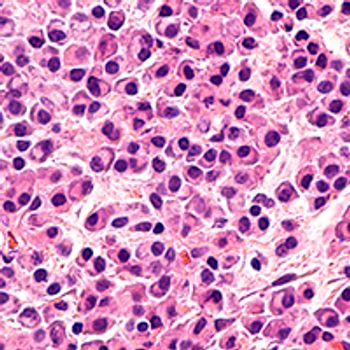
Maintenance treatment with lenalidomide was found to be a safe treatment for patients with multiple myeloma who are diagnosed with COVID-19, supporting use of the immunomodulatory drug in this patient population.

The triplet regimen of melphalan flufenamide with dexamethasone and either daratumumab or bortezomib demonstrated encouraging clinical activity and was well tolerated in patients with heavily pretreated relapsed/refractory multiple myeloma.
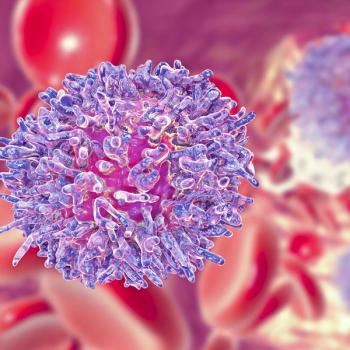
Ixazomib-based triplet regimens as induction therapy elicited higher rates of efficacy compared with ixazomib/dexamethasone alone, followed by single-agent ixazomib maintenance, in patients with transplant-ineligible newly diagnosed multiple myeloma.
Exploring other investigational BCMA-targeting agents such as teclistamab, AMG 701, and TNB-383B for the management of RRMM.
Nina Shah, MD, leads the conversation of using BCMA-targeted antibody-drug conjugate belantamab mafodotin, and the emerging role of CAR T-cell therapy when treating RRMM.

There is building evidence that novel combination therapies could be effective in treating early relapsed multiple myeloma.

Paul G. Richardson, MD, discusses the FDA approval of melphalan flufenamide in relapsed/refractory multiple myeloma.

Immune therapy has evolved rapidly in multiple myeloma, and the field is on the verge of major improvements in outcomes.

The FDA has approved melphalan flufenamide for use in combination with dexamethasone in the treatment of select adult patients with relapsed/refractory multiple myeloma.

Binod Dhakal, MD, discusses the mechanism of action of orvacabtagene autoleucel in multiple myeloma.
Advertisement
Advertisement
Trending on OncLive
1
Long-Term Cilta-Cel Data Show Low Rates of PFS Events in Standard-Risk R/R Myeloma
2
FDA Updates Axi-Cel Label to Remove Limitation of Use in R/R PCNSL
3
Real-World Data Support Clinical Benefit With Lifileucel in Previously Treated Advanced Melanoma
4
Single-Center, Retrospective Data Show Low Rate of Lifileucel Infusion Following Referral in Advanced Melanoma
5