



Multiple Myeloma
Latest News
Advertisement
Latest Videos




CME Content





























Advertisement
More News

Ajai Chari, MD, discusses current and emerging research in patients with transplant-eligible and -ineligible multiple myeloma as well as updates in smoldering multiple myeloma.

Deepu Madduri, MD, discusses ongoing trials examining CAR T-cell therapy in myeloma and the potential to use it in earlier lines of therapy.

Omar Nadeem, MD, a physician at Dana-Farber Cancer Institute and an instructor in medicine at Harvard Medical School, discusses individualizing therapy for patients with multiple myeloma.
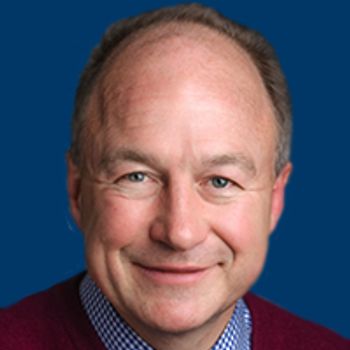
Paul G. Richardson, MD, reviews the results of the phase III ICARIA-MM trial as well as preliminary data regarding melflufen in relapsed/refractory multiple myeloma.
Paul G. Richardson, MD, clinical program leader and director of clinical research, Jerome Lipper Multiple Myeloma Center, and institute physician, Dana-Farber Cancer Institute, discusses new directions in multiple myeloma.
Noopur S. Raje, MD, director, Center for Multiple Myeloma, Massachusetts General Hospital Cancer Center, and professor of medicine, Harvard Medical School, highlights the different options available for patients with relapsed multiple myeloma.
Andrew J. Cowan, MD, an assistant professor of medicine at University of Washington School of Medicine and hematologist/oncologist at Seattle Cancer Care Alliance, discusses patient eligibility criteria for transplant in multiple myeloma.
Cristina Gasparetto, MD, an associate professor of medicine and director, Multiple Myeloma Program at Duke Cancer Institute, discusses safety concerns with venetoclax (Venclexta) in multiple myeloma.

A supplemental biologics license application has been submitted to the FDA for a new subcutaneous formulation of daratumumab (Darzalex) for the treatment of patients with multiple myeloma.
Noa Biran, MD, discusses new agents and combinations being studied for relapsed multiple myeloma.
Mounzer E. Agha, MD, discusses the approaches that are leading to prolonged survival in patients with relapsed/refractory multiple myeloma.
The FDA has accepted an application for isatuximab for the treatment of patients with relapsed/refractory multiple myeloma.
Anastasios Raptis, MD, a clinical assistant professor of medicine at the University of Pittsburgh School of Medicine Hillman Cancer Center, discusses the use of daratumumab (Darzalex), lenalidomide (Revlimid), and dexamethasone (DRd) in the treatment of patients with newly diagnosed multiple myeloma.

The quadruplet regimen of daratumumab, lenalidomide, bortezomib, and dexamethasone elicited a higher stringent complete response rate compared with lenalidomide, bortezomib, and dexamethasone alone in patients with transplant-eligible, newly diagnosed multiple myeloma, meeting the primary endpoint of the phase II GRIFFIN study.
Anastasios Raptis, MD, highlights promising combinations under investigation in the frontline setting and remaining challenges in multiple myeloma.
Andrew J. Cowan, MD, an assistant professor of medicine at University of Washington School of Medicine and hematologist/oncologist at Seattle Cancer Care Alliance, discusses treatment strategies for patients with transplant-eligible and -ineligible multiple myeloma.
Paul Richardson, MD, clinical program leader, director of clinical research, Jerome Lipper Multiple Myeloma Center, Dana-Farber Cancer Institute, RJ Corman Professor of Medicine, Harvard Medical School, discusses the FDA approval of selinexor in multiple myeloma.

Andrew J. Cowan, MD, discussed pivotal trials in multiple myeloma and potential for new treatments in the future.

Meletios A. Dimopoulos, MD, discusses where the triplet combination of elotuzumab (Empliciti), pomalidomide (Pomalyst), and low-dose dexamethasone fits into the treatment paradigm of relapsed/refractory multiple myeloma and shared unanswered questions that remain in the space.
The FDA has approved the combination of daratumumab with lenalidomide and dexamethasone for the treatment of patients with newly diagnosed multiple myeloma who are ineligible for autologous stem cell transplantation.
Advertisement
Advertisement
Trending on OncLive
1
Long-Term Cilta-Cel Data Show Low Rates of PFS Events in Standard-Risk R/R Myeloma
2
Nonresponse to Bridging Therapy and Peak ALC After Cilta-Cel Are Associated With Neurotoxicity, NRM in Myeloma
3
FDA Updates Axi-Cel Label to Remove Limitation of Use in R/R PCNSL
4
FDA Underscores Risks Associated With DPD Deficiency and Capecitabine/5-FU Use in Cancer Care
5