

Multiple Myeloma
Latest News
Advertisement
Latest Videos
CME Content































Advertisement
More News
The FDA has granted a priority review designation to a supplemental biologics license application for daratumumab in combination with bortezomib, thalidomide, and dexamethasone for the treatment of patients with newly diagnosed multiple myeloma who are eligible for autologous stem cell transplant.
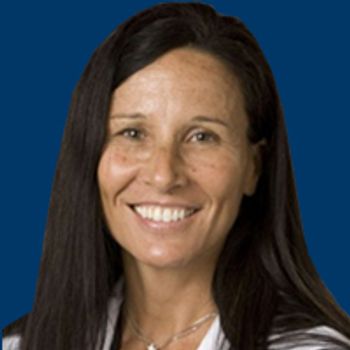
Cristina Gasparetto, MD, discusses the rapidly evolving field of relapsed/refractory myeloma.
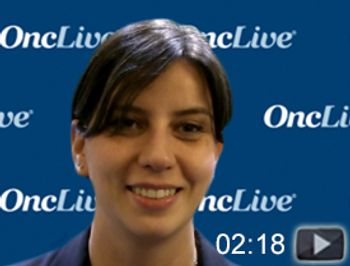
Giada Bianchi, MD, physician, Dana-Farber Cancer Institute, instructor in medicine, Harvard Medical School, discusses maintenance therapy in the treatment of patients with multiple myeloma.
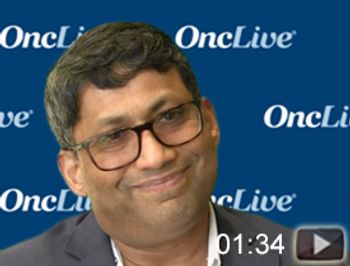
Parameswaran Hari, MD, MRCP, the Armand J. Quick/William F. Stapp Professor of Hematology, and the chief of the Division of Hematology/Oncology, Department of Medicine, at the Medical College of Wisconsin, discusses the current state of frontline therapy in multiple myeloma.
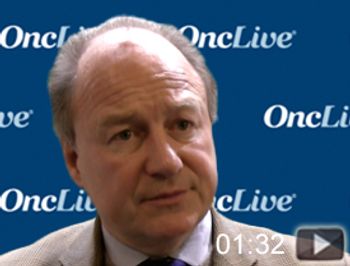
Paul G. Richardson, MD, clinical program leader and director of clinical research, Jerome Lipper Multiple Myeloma Center, and institute physician, Dana-Farber Cancer Institute, discusses advances made with immunotherapy in the treatment of patients with relapsed/refractory multiple myeloma.
The European Commission has granted an approval to lenalidomide in combination with bortezomib and dexamethasone for the treatment of adult patients with previously untreated multiple myeloma who are ineligible for stem cell transplant, as well as pomalidomide in combination with bortezomib and dexamethasone for the treatment of adult patients with myeloma who have received ≥1 prior treatment regimen that included lenalidomide.
In patients with smoldering multiple myeloma, lenalidomide induced a 72% reduction in the risk for progression to symptomatic disease at 3 years.
Saurabh Chhabra, MD, MS, assistant professor at the Medical College of Wisconsin, discusses the most impactful advances made in relapsed/refractory multiple myeloma.
The FDA has granted an orphan drug designation to the autologous CAR T-cell therapy P-BCMA-101 for the treatment of patients with relapsed/refractory multiple myeloma.
Parameswaran Hari, MD, MRCP, the Armand J. Quick/William F. Stapp Professor of Hematology, and the chief of the Division of Hematology/Oncology, Department of Medicine, at the Medical College of Wisconsin, discusses the role of minimal residual disease in myeloma.

Parameswaran Hari, MD, MRCP, discusses the rapidly evolving paradigm of myeloma with a focus on the latest updates in the frontline setting.
Saurabh Chhabra, MD, MS, highlights emerging agents in the field of relapsed/refractory myeloma that have oncologists optimistic for the future.
Therapy for patients with multiple myeloma encompasses many agents and potential combinations, but truly personalizing care will require knowing how those agents interact for maximum efficacy and incorporating patient preferences for toxicity into the care plan.
Binod Dhakal, MD, assistant professor, Medical College of Wisconsin, discusses early data with bispecific T-cell engager (BiTE) antibody constructs in multiple myeloma.
Giada Bianchi, MD, physician, Dana-Farber Cancer Institute, instructor in medicine, Harvard Medical School, discusses treatment options for transplant eligible patients with multiple myeloma.
Paul G. Richardson, MD, clinical program leader, director of clinical research, Jerome Lipper Multiple Myeloma Center, Dana-Farber Cancer Institute, and RJ Corman Professor of Medicine, Harvard Medical School, discusses treatment approaches targeting mutational burden in multiple myeloma.

Omar Nadeem, MD, highlights exciting approaches that have emerged in relapsed/refractory myeloma, such as CAR T-cell therapy, and shares unanswered questions that future research should address.
Paul G. Richardson, MD, highlights the many promising agents that have emerged in relapsed/refractory multiple myeloma in recent years, remaining challenges, and hope for continued progress.
Giada Bianchi, MD, discusses the scope of frontline therapy and subsequent maintenance strategies among patients with transplant eligible and ineligible newly diagnosed multiple myeloma.
Saad Z. Usmani, MD, FACP, chief of Plasma Cell Disorder, director of Clinical Research in Hematologic Malignancies, Levine Cancer Institute, Atrium Health, discusses the treatment of patients with newly diagnosed myeloma.
Noopur Raje, MD, professor of medicine at Harvard Medical School and director of the Center for Multiple Myeloma at Massachusetts General Hospital Cancer Center, discusses data for the standard triplet regimens in the treatment of patients with relapsed/refractory myeloma.
Juan P. Alderuccio, MD, assistant professor of clinical medicine at Sylvester Comprehensive Cancer Center, University of Miami Health System, discusses the use of proteasome inhibitors in the frontline treatment of patients with multiple myeloma.
Deepu Madduri, MD, assistant professor, medicine, hematology and medical oncology, Mount Sinai Hospital, discusses challenges in the transplant-eligible myeloma population.
James E. Hoffman, MD, assistant professor of clinical medicine at Sylvester Comprehensive Cancer Center, University of Miami Health System, discusses remaining challenges in the field of relapsed/refractory myeloma.
Advertisement
Advertisement
Trending on OncLive
1
Single-Center, Retrospective Data Show Low Rate of Lifileucel Infusion Following Referral in Advanced Melanoma
2
Real-World Data Support Clinical Benefit With Lifileucel in Previously Treated Advanced Melanoma
3
Long-Term Cilta-Cel Data Show Low Rates of PFS Events in Standard-Risk R/R Myeloma
4
Dr Riedell on the Long-Term Efficacy of Tisa-Cel in R/R Follicular Lymphoma
5