




Prostate Cancer
Latest News
Advertisement
Latest Videos








CME Content

































Advertisement
More News
Edwin M. Posadas, MD, FACP, discusses recent prostate cancer data and sheds light on where emerging therapies may fit into this landscape.
Tanya B. Dorff, MD, associate clinical professor in the Department of Medical Oncology and Therapeutics Research, and head of the genitourinary cancers program at City of Hope, discusses the use of PARP inhibitors in prostate cancer.

Based on the crucial role of BCL-2 family proteins in apoptosis regulation, targeting these proteins using BCL-2 inhibitors offers a potentially new therapeutic option for patients with various types of hematologic malignancies and, more recently, patients with solid tumors.
An application has been submitted to Japan's Ministry of Health, Labor and Welfare for darolutamide for the treatment of patients with castration-resistant prostate cancer.
Raoul S. Concepcion, MD, FACS, discusses the clinical implications of the findings from the ARAMIS trial and highlights other therapies that are coming down the pike for the treatment of patients with castration-resistant prostate cancer.
Mark T. Fleming, MD, medical oncologist, Virginia Oncology Associates, associate chair, Genitourinary Research Committee, US Oncology Network, discusses the focus on quality of life in recent prostate cancer clinical trials.

Andrew J. Armstrong, MD, associate professor of medicine and surgery, Department of Medicine, Duke University School of Medicine, Duke Cancer Institute, discusses the ARCHES trial in patients with metastatic hormone-sensitive prostate cancer.

Pre-existing cardiovascular disease was associated with an increased mortality risk during the first 6 months of abiraterone acetate treatment in patients with advanced prostate cancer.

A new drug application has been filed with the FDA for darolutamide for the treatment of patients with nonmetastatic castration-resistant prostate cancer. ​
Raoul S. Concepcion, MD, FACP, director, Comprehensive Prostate Center, discusses the potential for immunotherapy in the treatment of patients with castration-resistant prostate cancer.
Susan F. Slovin, MD, PhD, a medical oncologist at Memorial Sloan Kettering Cancer Center, discusses risk factors for androgen deprivation therapy (ADT)-associated cardiac complications in prostate cancer.

Evan Y. Yu, MD, professor, Department of Medicine, Division of Oncology, University of Washington, Seattle Cancer Care Alliance, discusses treatment strategies for patients with oligometastatic prostate cancer.
Sumit K. Subudhi, MD, PhD, discusses the promise of the combination of nivolumab and ipilimumab in patients with metastatic castration-resistant prostate cancer and the challenges that lie ahead with this treatment approach.

Benjamin A. Gartrell, MD, discusses the promise of SM-88 in this patient population, as well as other therapeutic options that are emerging for various prostate cancer subtypes.

Sumit K. Subudhi, MD, PhD, professor, Department of Genitourinary Medical Oncology, Division of Cancer Medicine, The University of Texas MD Anderson Cancer Center, discusses the rationale for the CheckMate-650 study in the treatment of patients with metastatic castration-resistant prostate cancer.
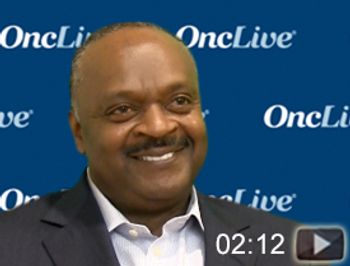
Walter Rayford, MD, PhD, MBA, a urologic oncologist with the Urology Group and associate professor of medicine at the University of Tennessee West Cancer Center, discusses the racial genomics of prostate cancer.

Harsha Ranganath, MD, a fellow in the Division of Hematology & Oncology at the University of Tennessee West Cancer Center, discusses treatment considerations in nonmetastatic prostate cancer.
It may take a restructuring of our current practice models, but we need to embrace, understand, and incorporate new technologies, both surgical and nonsurgical, to be at the forefront of precision medicine for our patients.

Evan Y. Yu, MD, highlights 2 key studies with PARP inhibitors in metastatic castration-resistant prostate cancer and discussed challenges that need to be addressed in this space in order to further progress.

Arpita Desai, MD, medical oncologist, University of California, San Francisco Helen Diller Comprehensive Cancer Center, discusses the rationale for testing MRI functional imaging for bone metastases in men with castration-resistant prostate cancer.

In a real-world setting, patients with metastatic castration-resistant prostate cancer who received radium-223 dichloride with abiraterone acetate in a layered fashion experienced a lower rate of symptomatic skeletal events compared with those who received the treatments concurrently.

The addition of enzalutamide (Xtandi) to androgen deprivation therapy significantly prolonged radiographic progression-free survival compared with ADT alone in men with metastatic hormone-sensitive prostate cancer.
Darolutamide added to androgen deprivation therapy significantly improved metastasis-free survival compared with placebo plus ADT in patients with nonmetastatic castration-resistant prostate cancer enrolled in the phase III ARAMIS trial.
Historically, urologists have been the primary caretakers for men with localized prostate cancer, which is the most prevalent solid tumor in men over 50 years of age and the second-leading cause of cancer-specific mortality in the United States today.
The 5α-reductase inhibitor finasteride (Proscar), an agent commonly used to treat lower urinary tract problems and baldness in men, was found to be safe and effective in reducing the risk of prostate cancer.
Advertisement
Advertisement
Trending on OncLive
1
Single-Center, Retrospective Data Show Low Rate of Lifileucel Infusion Following Referral in Advanced Melanoma
2
Real-World Data Support Clinical Benefit With Lifileucel in Previously Treated Advanced Melanoma
3
Long-Term Cilta-Cel Data Show Low Rates of PFS Events in Standard-Risk R/R Myeloma
4
Dr Riedell on the Long-Term Efficacy of Tisa-Cel in R/R Follicular Lymphoma
5