

Uliledlimab in combination with toripalimab generated notable response rates in patients with advanced non–small cell lung cancer who were previously ineligible to receive standard-of-care treatment.

Your AI-Trained Oncology Knowledge Connection!
Uliledlimab in combination with toripalimab generated notable response rates in patients with advanced non–small cell lung cancer who were previously ineligible to receive standard-of-care treatment.
Black patients were less likely to be included in clinical trials that investigate newer treatments for metastatic breast cancer, despite having the highest death rate and shortest survival outcomes when compared with other racial and ethnic groups in the United States.
Disparities in access to telehealth for cancer care were seen across more than 20 tumor types, according to study findings that were presented during a press briefing ahead of the 2022 ASCO Annual Meeting.

Non-White Hispanic children and those with public insurance care in a clinical trial for high-risk neuroblastoma had inferior overall survival rates compared with other children.

The safety and efficacy of encorafenib plus cetuximab with or without standard-of-care chemotherapy will be compared with that of chemotherapy alone in patients with BRAF V600E–mutated metastatic colorectal cancer as part of the phase 3 BREAKWATER trial.

The combination of the TROP2-directed antibody-drug conjugate datopotamab deruxtecan and durvalumab showcased early activity with acceptable safety when used as first-line treatment in patients with locally advanced or metastatic triple-negative breast cancer, according to data from the phase 1b/2 BEGONIA trial.
The combination of tislelizumab plus nab-paclitaxel demonstrated benefit and a tolerable safety profile in patients with high-risk non–muscle invasive bladder cancer.
The utilization of sabizabulin in patients with metastatic castration-resistant prostate cancer who progressed on androgen receptor-targeting therapy yielded significant and durable objective tumor responses, according to results of a phase 1b/2 trial (NCT03752099).

Nadofaragene firadenovec combined with immune checkpoint inhibitors such as pembrolizumab may play a synergistic role in the treatment of patients with Bacillus Calmette–Guérin-unresponsive non–muscle invasive bladder cancer.
Data from a retrospective analysis demonstrated that mitomycin gel was safe and effective when administered using an antegrade approach in real-world populations of patients with low-grade upper tract urothelial cancer.
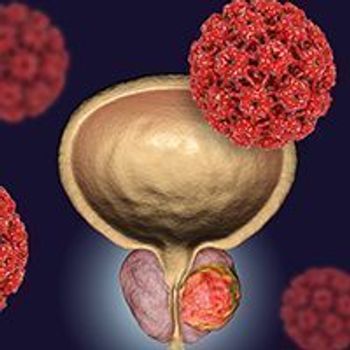
The combination of neoadjuvant tislelizumab and nab-paclitaxel elicited a high rate of pathologic complete response in patients with muscle-invasive bladder cancer, according to preliminary findings from the phase 2 TRUCE-01 trial.
Fady Ghali, MD, discusses the expression of Nectin-4 and TROP-2 in variant histology bladder cancer and urothelial cancer.
Hao G. Nguyen MD, PhD, discusses the efficacy and safety of IS-002, a prostate-specific membrane antigen–targeting fluorophore, for image-guided surgery in patients with prostate cancer undergoing robotic prostatectomy.

TROP-2 and Nectin-4, surface cell targets of sacituzumab govitecan and enfortumab vedotin, respectively, are highly expressed in urothelial cancer and variant histology bladder cancer.
Infigratinib yielded notable activity and tolerability in patients with localized upper tract urothelial carcinoma harboring FGFR1/2/3 mutations.
The novel, near-infrared, prostate-specific membrane antigen-targeted fluorophore IS-002 was safe, well-tolerated, and allowed for enhanced intraoperative tumor detection in patients undergoing robotic prostatectomy.

Patients with low-grade non-muscle invasive bladder cancer who received the chemoablative reverse thermal gel UGN-102 were found to have maintained health-related quality-of-life outcomes.

Anirban P. Mitra, MD, PhD, discusses data from an assessment of PD-1 and PD-L1 status on transurethral resection specimens collected from patients with non–muscle-invasive bladder cancer who received nadofaragene firadenovec as part of a phase 3 trial.
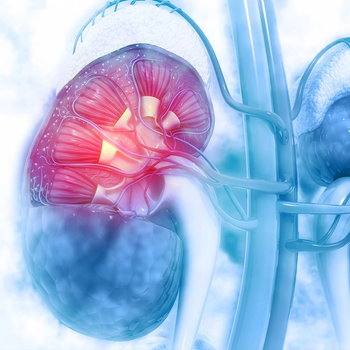
Neoadjuvant axitinib facilitated partial nephrectomy in patients with clear cell renal cell carcinoma and complex masses with an imperative indication for nephron-sparing surgery but no viable pathway to receive the procedure.

The combination of darolutamide plus androgen deprivation therapy and docetaxel presents adverse effects that are similar to those experienced with ADT plus docetaxel alone in patients with metastatic hormone-sensitive prostate cancer.
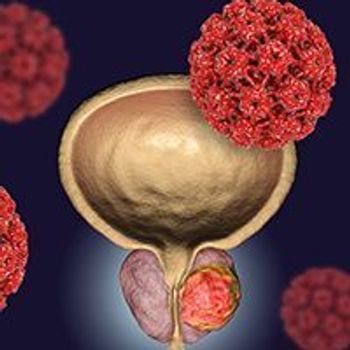
Complementary approaches to quantifying overdiagnosis generated a more beneficial harm-benefit tradeoff of prostate-specific antigen screening, compared with previous estimates that used shorter follow-up from the introduction of screening.

Cisplatin-ineligible patients with locally advanced muscle invasive bladder cancer undergoing chemotherapy may benefit from simultaneous treatment with intravenous vitamin C.
Philippe E. Spiess, MD, MS, FACS, shares key updates in the management of patients with penile cancer.
Matthew Galsky, MD, discusses long-term data from the phase 3 CheckMate 274 trial evaluating adjuvant nivolumab vs placebo in patients with high-risk, muscle-invasive urothelial cancer.

Avelumab plus best supportive care produced a benefit in overall survival in patients with advanced urothelial carcinoma that had not progressed with first-line platinum-based chemotherapy.
Darolutamide elicited consistent benefits in overall survival and prostate-specific antigen outcomes, irrespective of prior local therapy with radiotherapy or radical prostatectomy, in patients with nonmetastatic castration-resistant prostate cancer.

Results from a detailed safety analysis of the pivotal phase 3 HERO trial showed that relugolix, an oral gonadotropin-releasing hormone receptor antagonist, had an acceptable toxicity profile with favorable tolerability in patients with advanced prostate cancer.
Enzalutamide added to androgen deprivation therapy demonstrated a benefit in overall survival, radiographic progression-free survival, undetectable prostate-specific antigen rates, objective response rates, and other end points vs placebo/ADT in patients with metastatic hormone-sensitive prostate cancer regardless of whether or not they received prior local therapy.

Darolutamide was found to have a favorable safety and tolerability profile in patients with metastatic castration-resistant prostate cancer who were enrolled to the phase 1 ARAFOR study and received extended treatment with the agent for more than 4 years.
Mark C. Markowski, MD, PhD, discusses the safety and efficacy of sabizabulin in a phase 1b/2 trial in metastatic castration-resistant prostate cancer.