
ATG-101, a novel PD-L1/4-1BB bispecific antibody, demonstrated good in vivo efficacy, safety without hepatotoxicity, and pharmacokinetic/pharmacodynamic properties in cynomolgus monkeys.

Your AI-Trained Oncology Knowledge Connection!
ATG-101, a novel PD-L1/4-1BB bispecific antibody, demonstrated good in vivo efficacy, safety without hepatotoxicity, and pharmacokinetic/pharmacodynamic properties in cynomolgus monkeys.

The innate cell engager AFM24 showed greater efficacy in eliciting antibody-dependent cellular phagocytosis of EGFR wild-type and KRAS-mutant tumor cells compared with cetuximab.

The DuoBody®-CD3x5T4 was found to induce secretion of granzyme B and efficiently kill tumor cells in co-cultures of healthy donor T cells and patient-derived head and neck squamous cell carcinoma cell lines.
Surufatinib demonstrated strong antitumor activity along with a manageable safety profile in heavily treated US patients with progressive extrapancreatic neuroendocrine tumors or pancreatic NETs, according to interim phase 1 data.
The small molecule drug conjugate PEN-221 was generally well tolerated and elicited significant clinical benefit in patients with pretreated gastrointestinal neuroendocrine tumors.

Ashish Saxena, MD, PhD, discusses a challenging case of a patient with non–small cell lung cancer.
Marjorie G. Zauderer, MD, discusses the importance of optimizing care for patients with mesothelioma.

Although next-generation TKIs have helped to overcome resistance in EGFR-mutated non–small cell lung cancer, a more complete understanding of resistance mechanisms may lead to the ability to overcome resistance to the next generation of these drugs.
The era of direct inhibitors to treat KRAS G12C-mutated non-small cell lung cancer has arrived in the clinic.

The treatment algorithm in metastatic colorectal cancer has gone from accounting only for the sidedness of the primary tumor, performance status, volume of disease, and potential resectability to also include the genetics of the tumor, particularly for patients in need of second-line therapy.
With the rise of immunotherapy, patients with lung cancer are experiencing improved outcomes that have allowed for prolonged survival, but it is important to ensure that the adverse effects associated with these novel agents are effectively managed so that their achieved efficacy does not come at the cost of quality of life.

Chemoimmunotherapy is the new frontline standard of care for patients with small cell lung cancer, and other novel agents, such as, bispecific T-cell engagers are in the pipeline and gaining momentum for those who experience disease progression.
Each situation for stopping immunotherapy in lung cancer has its own complex nuances to consider before the decision is made to cease treatment.
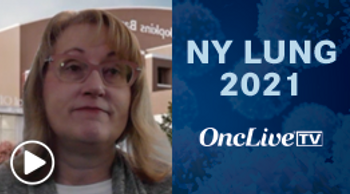
Julie Renee Brahmer, MD, MSc, discusses questions regarding the role of consolidative immunotherapy vs targeted therapy in locally advanced non–small cell lung cancer.

Mark G. Kris, MD, medical oncologist, William and Joy Ruane Chair in Thoracic Oncology, Memorial Sloan Kettering Cancer Center, discusses the next steps to improve outcomes for patients with lung cancer.

Nagashree Seetharamu, MD, MBBS, discusses the importance of utilizing a patient-centered treatment approach in lung cancer.
Marjorie G. Zauderer, MD, discusses emerging treatment strategies in mesothelioma.

Nagashree Seetharamu, MD, MBBS, discusses the importance of early and frequent genomic testing in patients with lung cancer, as well as remaining challenges faced in clinical practice and efforts being made to overcome them.
Lori J. Wirth, MD, discusses the phase 3 LIBRETTO-531 trial of selpercatinib in patients with RET-mutant medullary thyroid cancer.
Patrick Boland, MD, discusses the utility of circulating tumor DNA in patients with metastatic colorectal cancer.

Marjorie G. Zauderer, MD, previews some of the new approaches in mesothelioma.
Julie Renee Brahmer, MD, MSc, discusses remaining questions regarding immunotherapy and targeted therapy in locally advanced NSCLC, data from the phase 3 PACIFIC and ADAURA trials, and her hopes for future clinical trials in the paradigm.
Nancy E. Davidson, MD, shares how to leverage imaging technologies to inform treatment decisions in patients with breast cancer.

Expanding the definition of personalized medicine to include social determinants of health disparities is needed to ensure patients with cancer receive optimal care, said Karen Winkfield, MD, PhD, who added that lessons learned from the COVID-19 pandemic have sparked a new wave of enthusiasm to advocate for change and bridge existing gaps in oncology.

Increases investigative efforts into bispecific monoclonal antibodies could lead to their availability to treat a broad range of hematologic and solid cancers. Their current use in practice is limited to non–small cell lung cancer, leukemia, and hemophilia.

The management of endometrial cancer, a molecularly driven malignancy with 4 distinct subtypes, has witnessed significant progress with recent regulatory approvals of checkpoint blockade alone and in combination, said Bhavana Pothuri, MD, MS.
Ajai Chari, MD, discusses recommendations for minimal residual disease testing in patients with multiple myeloma.

As the COVID-19 pandemic persists, patients with cancer should receive the full vaccination with 1 of the 3 approved COVID-19 vaccines as soon as they are able, according to Steven Ludlow, PharmD, BCOP, BCPS.

The identification of prognostic markers at diagnosis in chronic lymphocytic leukemia is critical, says Deborah M. Stephens, DO, who explains that the results of testing for these markers can be used to educate patients on their prognosis, tailor therapy accordingly, and enroll eligible patients on clinical trials.

Newer modalities are exploring ways to provide more specificity on the value of minimal residual disease negativity in acute myeloid leukemia, since currently there is little definitive action that can be taken with the marker in clinical practice, according to Naval Daver, MD.