

Leonard G. Gomella, MD, professor, chair, Department of Urology, and director, Sidney Kimmel Cancer Center Network, Thomas Jefferson University Hospital, discusses the state of genetic testing in prostate cancer.

Your AI-Trained Oncology Knowledge Connection!
Leonard G. Gomella, MD, professor, chair, Department of Urology, and director, Sidney Kimmel Cancer Center Network, Thomas Jefferson University Hospital, discusses the state of genetic testing in prostate cancer.

Leonard G. Gomella, MD, discusses the state of genetic testing in prostate cancer, shares his recommendations for screening, and provides perspective on where the field is headed.

Daniel P. Petrylak, MD, discusses available treatment options in metastatic bladder cancer.

In metastatic urothelial cancer, the portfolio of immunologic therapies is robust, but the treatment paradigm for these agents requires refinement.
What may have worked before to mitigate burnout may no longer work now because we change, and so do our work environments.

Genetic advances have helped elucidate the heterogenous nature of breast cancer, however optimal strategies for patients with early-stage disease still need to be ironed out.

The inclusion of patients from the time of diagnosis and encompassing family, friends, and caregivers is central to moving survivorship care forward, especially for breast cancer survivorship, which has high survival rates for early disease and the emergence of novel treatments for advanced cancers.

Joyce A. O'Shaughnessy, MD, discusses the utility of targeting capivasertib in targeting Akt mutations in breast cancer.

Debu Tripathy, MD, discusses personalized therapy options in metastatic breast cancer.
The novel coronavirus spreading across the world represents a distinct challenge for all physicians, especially oncologists who commonly treat patients who have compromised immune systems.

Special attention to reducing the risk of cardiovascular disease should be a priority for long-term care of patients with breast cancer.

Patrick I. Borgen, MD, discusses the trend toward surgical de-escalation in patients with breast cancer.
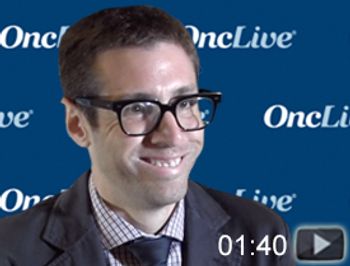
Enrique Soto Pérez de Celis, MD, MSc, discusses nuances of treating older patients with breast cancer.
Novel antibody-drug conjugates have demonstrated high response rates in patients with heavily pretreated metastatic breast cancer, and ongoing studies targeting actionable cell-surface markers may further expand their clinical utility, according to Aditya Bardia, MD, MPH.

Hope S. Rugo, MD, discusses the pending approval of tucatinib in metastatic HER2-positive breast cancer and other potentially practice-changing agents in the pipeline.

Physicians should “get out there and test early and often,” to align with a potential new paradigm for genetic testing that allows anyone on the treatment team to identify and test individuals, with the specialist ultimately providing risk management, according to Kevin S. Hughes, MD, FACS.
Breast cancer has historically been an immunologically cold disease, but recent and emerging data are carving out a space for several immunotherapies in the treatment paradigm.

Kevin Hughes, MD, discusses the role of genetic testing in breast cancer.

Gene profiling assays can accurately and reproducibly assist decision making for patients with hormone receptor-positive breast cancer, with the ultimate goal of improving outcomes or avoiding toxicity.

Mark E. Robson, MD, discusses the potential utility of tucatinib in the treatment of patients with HER2-positive breast cancer.
The release of new evidence that CDK4/6 inhibition results in survival gains for patients with hormone receptor–positive, HER2-negative metastatic breast cancer marks a new milestone for the therapeutic approach and may help set the stage for expanding use of these agents into earlier clinical settings.

Given the solid correlation between the risk of locoregional recurrence (LRR) and distant recurrence, several investigators have examined whether genomic assays that predict risk of distant recurrence can also predict risk of LRR.

There are clear biomarkers available to guide treatment decisions in the second-line setting for patients with advanced hepatocellular carcinoma, Lipika Goyal, MD, Mphil, said during a presentation at the 2020 HCC-TAG Conference.

By 2025, Anthony El-Khoueiry, MD, expects to see a larger menu of approved drugs and drug combinations for the treatment of advanced hepatocellular carcinoma, better use of molecular and immune signatures to guide treatment decisions, and, possibly, the chance to cure intermediate- and advanced-stage disease.

Michael R. Charlton, MD, MBBS, discusses the evolution of hepatocellular carcinoma treatment.

Riad Salem, MD, discusses the utility of locoregional therapy versus systemic therapy in the treatment of patients with hepatocellular carcinoma.

Amit G. Singal, MD, discusses the importance of early diagnosis for patients with hepatocellular carcinoma.

The diagnosis and management of smoldering multiple myeloma is an area of tremendous focused research and change over the past decade, with trials yielding intriguing findings that have the potential to change practice.
Following a series of negative phase III single-agent trials in hepatocellular carcinoma, investigators are finding better results with immunotherapy combination regimens.

Clinical evidence shows that patients with hepatocellular carcinoma who receive care that incorporates multiple providers from a variety disciplines leads to better results.