

The administration of CAR T-cell therapy in the outpatient setting was deemed feasible and safe in patients with relapsed/refractory NHL.

Your AI-Trained Oncology Knowledge Connection!
The administration of CAR T-cell therapy in the outpatient setting was deemed feasible and safe in patients with relapsed/refractory NHL.

Ponatinib, chemo, and alloHSCT offer long-term survival in adult Ph+ ALL, per 4-year PONALFIL trial data at 2024 EHA Congress.

Englumafusp alfa plus glofitamab showed activity and tolerability in patients with relapsed/refractory aggressive B-cell non-Hodgkin lymphoma.

Patients with new or worsening anemia from their myelofibrosis did not experience lessened clinical benefit of ruxolitinib treatment.

The CD7-targeted CAR T-cell therapy WU-CART-007 had a manageable safety profile and elicited preliminary efficacy signals in relapsed/refractory T-ALL/LBL.

Blinatumomab consolidation improved MRD clearance over chemotherapy in DS B-ALL patients, according to ALLTogether1 DS study results.

Time from diagnosis, elevated WBC count, and VAF were all significantly associated with an increased risk of disease progression of polycythemia vera.

Manali Kamdar, MD, discusses the results of the phase 3 TRANSFORM trial in relapsed/refractory large B-cell lymphoma (LBCL) that were presented during the 2021 ASH Annual Meeting & Exposition.

Ibrahim Aldoss, MD, discusses the impact of enhanced lymphodepletion on responses with WU-CART-007 in relapsed/refractory T-ALL/LBL.

HOVON-146 showed integrating blinatumomab into pre-phase and consolidation therapy improved outcomes in newly diagnosed B-ALL.

Over a 4-year period, most patients with lower-risk myelofibrosis experienced disease progression, according to the prospective MOST study.

Clinically meaningful activity was found across all subgroups in a posthoc subgroup analysis of patients with MCL treated with liso-cel.

Zanubrutinib/venetoclax elicited a 100% overall response rate in untreated chronic lymphocytic leukemia harboring 17p deletions or TP53 mutations.
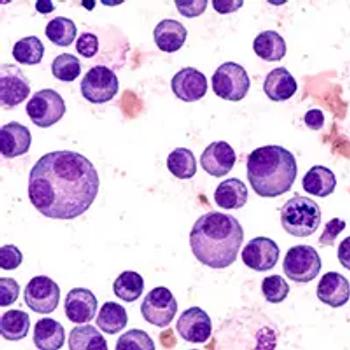
Ide-cel induced improved PFS outcomes in patients with relapsed/refractory multiple myeloma with characteristics including lower tumor burden.

Talquetamab proved safe and effective for relapsed/refractory myeloma, even in patients with comorbidities.

Clinical benefit generated from treatment with lurbinectedin plus irinotecan was noted across sensitive and resistant patient populations with SCLC.

Axi-cel administration was safe and clinically active in relapsed/refractory primary and secondary central nervous system lymphoma.
The strength of mKRAS-specific T-cell responses produced by ELI-002 7P correlated with tumor biomarker responses in pancreatic and colorectal cancer.

A novel radioligand therapy, JNJ-6420, demonstrates potential in treating mCRPCr, delivering sustained responses following only 1-2 doses.
The investigational PROTAC AR degrader ARV-766 showed promising clinical activity and tolerability in patients with metastatic castration-resistant prostate cancer.
MammaPrint high 2 HR-positive/HER2-negative early-stage breast cancer exhibited a heightened immune active state.

Linvoseltamab elicited outcomes equivalent to those seen with teclistamab in patients with triple-class exposed relapsed/refractory multiple myeloma.

Dostarlimab plus carboplatin and paclitaxel improved PFS and OS in dMMR/MSI-H primary advanced or recurrent endometrial cancer.

Pembrolizumab and platinum-based therapy elicited safe and efficacious outcomes in penile squamous cell carcinoma.
Timothy Hughes, MD, MBBS, FRACP, FRCPA discussed findings from the ASC4FIRST trial comparing asciminib vs investigator-selected TKIs in CP-CML.

Partition overall survival data indicated that nivolumab plus cabozantinib extended treatment-free survival vs sunitinib in advanced renal cell carcinoma.

Cretostimogene grenadenorepvec plus pembrolizumab sustains high CR rate in NMIBC according to the phase 2 CORE-001 trial.

Apalutamide/ADT maintains quality of life, demonstrates improved PSA progression-free survival in recurrent prostate cancer according to PRESTO trial.

Trastuzumab deruxtecan improved responses and survival vs T-DM1 in HER2+ metastatic breast cancer after prior exposure to trastuzumab and a taxane.

Retreatment with daratumumab-based regimens led to a similar ORR vs initial daratumumab treatment in relapsed/refractory myeloma.