
Illuccix has been approved in Canada for the selection of patients with mCRPC eligible for treatment with PSMA1-targeted radionuclide therapy.

Your AI-Trained Oncology Knowledge Connection!
Illuccix has been approved in Canada for the selection of patients with mCRPC eligible for treatment with PSMA1-targeted radionuclide therapy.

ELVN-001 generated prolonged signals of clinical activity with a tolerable safety profile in patients with TKI-relapsed, -refractory, or -intolerant CML.

Joseph A. Sparano, MD, details the next generation of CDK inhibitors such as BLU-222 targeting CDK2 and PF-07220060 targeting CDK4.

HLX11—a pertuzumab biosimilar—plus trastuzumab/docetaxel met the pCR end point in a phase 3 trial in early or locally advanced HER2-positive breast cancer.

Grzegorz S. Nowakowski, MD, discusses the methods and objectives of the part B expansion portion of the TakeAim Lymphoma study in patients with PCNSL.


Atezolizumab administered concurrently with chemoradiation failed to improve OS and PFS outcomes compared with standard chemoradiation alone in LS-SCLC.

Perioperative nivolumab receives FDA approval for resectable NSCLC, acalabrutinib sNDA gets priority review for MCL, and more from OncLive this week.

Yuan Yuan, MD, PhD, discusses the management of node-positive breast cancer and the need for guidance surrounding the use of ctDNA in breast cancer.
Here is your snapshot of all treatment options that the FDA approved in September 2024.

Isabel Preeshagul, DO, MBS, discusses considerations for treatment selection in the first and second line for patients with EGFR-mutated NSCLC.
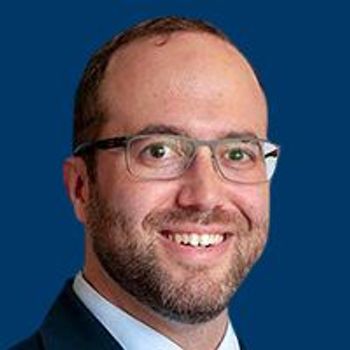
Seth Wander, MD, PhD on novel anti-estrogen therapies that could expand treatment options in estrogen receptor–positive advanced breast cancer.

Clinical trials may be inappropriately excluding some people with "Duffy-null phenotype," a trait found in people of African or Middle Eastern descent.

An update on PFS and OS data from the phase 1 MAGIC-G1 study of MTX110 in recurrent glioblastoma has been released.
The FDA has approved Cologuard Plus, a next-generation multitarget stool DNA test, for adults at least 45 years of age who are at average risk for CRC.

Chandler Park, MD, FACP, and Yan Leyfman, MD, discuss their partnership with OncLive and future goals for MedNews Week.
Grzegorz S. Nowakowski, MD, discusses the unique mechanism of action of emavusertib and highlights the phase 1/2 TakeAim Lymphoma trial in PCNSL.

Maria Vittoria Dieci, MD, discusses the prognostic value of tumor-infiltrating lymphocytes in patients with early HER2-positive breast cancer.

Luspatercept generated high rates of durable transfusion independence for patients with lower-risk myelodysplastic syndrome in a real-world analysis.

Mayo Clinic will enhance and expand access to cancer care and clinical trials for patients and communities, thanks to a philanthropic commitment.
In case you missed any, read a recap of every episode of OncLive On Air that aired in September 2024.
The FDA has approved nivolumab with platinum chemotherapy as neoadjuvant treatment, followed by single-agent nivolumab after surgery, in resectable NSCLC.
The FDA granted priority review to acalabrutinib for previously untreated mantle cell lymphoma.

A committee recommended a phase 1/2 study of ribaxamase for the prevention of acute graft-vs-host-disease proceed with enrollment for a third cohort.

Jared Weiss, MD, discusses survival benefits seen with the therapeutic cancer vaccine Versamune HPV plus first-line pembrolizumab in HPV16-positive HNSCC.

Maurie Markman, MD, discusses concerns regarding the scientific validity of peer-reviewed publications in oncology and their ramifications for the field.
The KIF18A inhibitor VLS-1488 has received fast track designation from the FDA for platinum-resistant high-grade serous ovarian cancer.

MRD negativity was sustained at 1 year following the cessation of maintenance lenalidomide in multiple myeloma.
The second-generation, BCMA-directed CAR T-cell therapy HBI0101 led to an objective response rate of 92% in patients with relapsed/refractory multiple myeloma.

No significant differences in patient-reported outcomes were observed with BPd vs PVd among patients with relapsed/refractory multiple myeloma.