
Autologous hematopoietic cell transplantation lowered relapse and progression rates and improved survival outcomes vs CAR T-cell therapy in patients with relapsed large B-cell lymphoma who experienced complete remission with interim treatment.

Your AI-Trained Oncology Knowledge Connection!
Autologous hematopoietic cell transplantation lowered relapse and progression rates and improved survival outcomes vs CAR T-cell therapy in patients with relapsed large B-cell lymphoma who experienced complete remission with interim treatment.

Obecabtagene autoleucel elicited durable responses in patients with relapsed or refractory B-cell acute lymphoblastic leukemia independent of leukemic burden at lymphodepletion, although better outcomes were observed in those with lower burden.

Up-front treatment with navitoclax plus ruxolitinib significantly reduced spleen volume by 35% or more at week 24 vs ruxolitinib plus placebo in patients with myelofibrosis; however, a significant difference was not observed in total symptom score v. 4.0 between the arms, according to data from the phase 3 TRANSFORM-1 study.
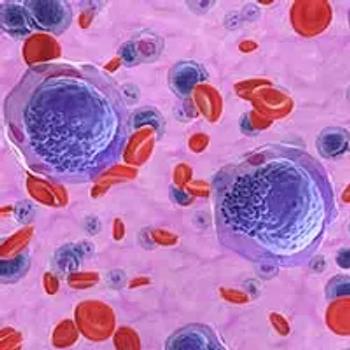
The presence of molecular minimal residual disease following induction chemotherapy can be used to determine patients with NPM1-mutated acute myeloid leukemia who may benefit from allogeneic transplant in first remission, including those with FLT3 ITD–mutated disease.

The high-precision cell therapy Orca-T demonstrated high rates of relapse-free survival, overall survival, and graft-vs-host disease RFS at 1 year, as well as a low incidence of GVHD in patients with intermediate- to high-risk myelodysplastic syndrome.

The use of Orca-T with myeloablative chemotherapy conditioning had comparable safety and efficacy in younger and older patients with hematologic malignancies, according to data from a phase 1b study.

The administration of axicabtagene ciloleucel in the second-line setting improved overall survival and progression-free survival vs standard-of-care treatment in patients with relapsed/refractory large B-cell lymphoma who are at least 65 years of age.

Venetoclax-based therapy generated durable responses both overall and in the second or third line following covalent BTK inhibitor discontinuation in real-world patients with chronic lymphocytic leukemia or small lymphocytic lymphoma.

The use of the BCMA-directed CAR T-cell therapy D8 Fab CAR and the dual-targeting AUTO8 CAR T-cell therapy is safe and feasible in patients with relapsed/refractory multiple myeloma.
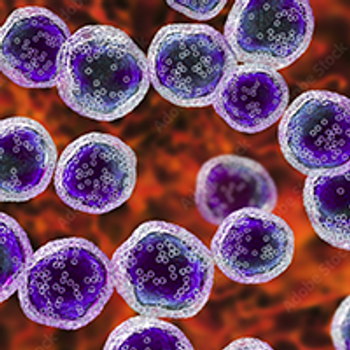
Golidocitinib displayed antitumor activity and an acceptable safety profile in patients with refractory/relapsed peripheral T-cell lymphoma, according to data from the pivotal phase 2 JACKPOT8 study.
Pirtobrutinib continued to showcase clinically meaningful efficacy in heavily pretreated patients with chronic lymphocytic leukemia or small lymphocytic lymphoma who had prior exposure to a covalent BTK inhibitor.

The utilization of remote patient monitoring within the first 30 days of outpatient CAR T-cell therapy can promote patient safety, reduce costs, and decrease hospitalization rates by allowing patients with hematologic malignancies to connect with a virtual care platform.

Zanubrutinib continued to demonstrate improved progression-free survival benefit over ibrutinib in the treatment of patients with relapsed/refractory chronic lymphocytic leukemia and small lymphocytic lymphoma, according to extended follow-up data from the phase 3 ALPINE trial.

Dana-Farber Cancer Institute is launching a first-of-its-kind, integrated clinic to increase early detection of precancerous conditions and to prevent cancer from arising in individuals at increased risk for the disease.
Idecabtagene vicleucel resulted in meaningful improvements in symptoms, functioning, overall health status, and health-related quality of life vs standard regimens in select patients with triple-class exposed relapsed/refractory multiple myeloma, according to updated data from the phase 3 KarMMa-3 trial.

Although the use of bridging therapy prior to treatment with axicabtagene ciloleucel did not improve efficacy or safety outcomes for patients with relapsed/refractory large B-cell lymphoma, responses to bridging therapy may be prognostic of favorable outcomes after axi-cel administration.

Brexucabtagene autoleucel is safe and effective in real-world patients with relapsed/refractory mantle cell lymphoma, regardless of the presence of high-risk features.

Revumenib, decitabine/cedazuridine, plus venetoclax elicited an objective response rate of 100% with acceptable safety in patients with relapsed/refractory acute myeloid leukemia enrolled in the small phase 1/2 SAVE study.

The T-cell redirecting bispecific antibody teclistamab-cqyv demonstrated efficacy and a tolerable safety profile in a real-world population of patients with relapsed/refractory multiple myeloma consistent with that of those enrolled in the phase 2 MajesTEC-1 trial.
A machine learning, artificial intelligence algorithm analyzing diagnostic bone marrow biopsy digital whole-slide images was able to effectively differentiate with 92.3% accuracy between prefibrotic primary myelofibrosis and essential thrombocythemia.

Treatment with an all-oral regimen of arsenic trioxide, all-trans retinoic acid, and ascorbic acid led to both 3-year overall survival and relapse-free survival rates of 97% in patients with acute promyelocytic leukemia.

Beyond genomic testing, endocrine therapy response should be used to determine whether patients with hormone receptor–positive, HER2-negative, N0-1 early breast cancer.

Neoadjuvant nivolumab and non–anthracycline containing chemotherapy produced promising pathologic complete response rates regardless of whether nivolumab was administered before or during treatment with carboplatin and paclitaxel in patients with stage I to IIB triple-negative breast cancer.

Neoadjuvant pembrolizumab combined with chemotherapy followed by adjuvant pembrolizumab compared with placebo plus chemotherapy continued to show a clinically meaningful improvement in event-free survival in patients with high-risk, early-stage triple-negative breast cancer.

Zanidatamab in combination with palbociclib and fulvestrant resulted in positive progression-free survival outcomes and exhibited an acceptable safety profile in patients with hormone receptor–positive, HER2-positive metastatic breast cancer.

The addition of atezolizumab to neoadjuvant trastuzumab plus pertuzumab (HP) and chemotherapy led to a numerical, but not statistically significant, increase in pathologic complete response vs HP/chemotherapy alone in patients with HER2-positive operable breast cancer.
Real-world data support the use of the MammaPrint index as a predictor of neoadjuvant chemosensitivity in patients with hormone receptor–positive, HER2-negative early-stage breast cancer.

Clinical, transcriptomic, and genomic differences that may contribute to aggressive tumor biology were observed between Latin-American and non-Hispanic White patients with breast cancer.

Adjuvant ado-trastuzumab emtansine continued to improve overall survival and invasive disease-free survival vs trastuzumab after 8.4 years of follow-up in patients with HER2-positive early breast cancer and residual invasive disease following neoadjuvant therapy enrolled in the phase 3 KATHERINE trial.

The brain-penetrant oral selective estrogen receptor degrader SIM0270 exhibited a favorable safety profile and early signals of antitumor activity in patients with estrogen receptor-positive, HER2-negative locally advanced or metastatic breast cancer, including those with ESR1 mutations.