
Hans Lee, MD, discusses unmet needs in patients with relapsed/refractory multiple myeloma, highlights key efficacy and safety findings from the LINKER-MM1 trial, and how these data may inform the future of the multiple myeloma treatment paradigm.

Your AI-Trained Oncology Knowledge Connection!
Hans Lee, MD, discusses unmet needs in patients with relapsed/refractory multiple myeloma, highlights key efficacy and safety findings from the LINKER-MM1 trial, and how these data may inform the future of the multiple myeloma treatment paradigm.
This month, researchers reduce the risk of infections after pancreatic surgery and discover the best cost-effective treatment combination for prostate cancer patients.

China’s Center for Drug Evaluation of the National Medical Products Administration has granted a breakthrough therapy designation to glecirasib for the treatment of patients with pancreatic cancer harboring a KRAS G12C mutation and who have progressed after frontline standard-of-care treatment.
Finding effective treatments beyond the first line for patients with locally advanced or metastatic estrogen receptor-positive, HER2-negative breast cancer and an ESR1 mutation remains a challenge following development of resistance to agents.
David F. McDermott, MD, discusses how combining HIF-2α inhibition with CDK4/6 inhibition could be an effective treatment regimen in patients with renal cell carcinoma and shared details from the LITESPARK-024 trial.
The development of etrumadenant as a potential treatment option for patients with metastatic castration-resistant prostate cancer will be discontinued after data from the phase 1/2 ARC-6 trial did not demonstrate a sufficient clinical benefit for etrumadenant plus zimberelimab and docetaxel compared with docetaxel alone.

The FDA has granted accelerated approval to talquetamab-tgvs for the treatment of adult patients with relapsed or refractory multiple myeloma who have received at least 4 prior lines of therapy, including a proteasome inhibitor, an immunomodulatory agent, and an anti-CD38 antibody.
The FDA has issued a complete response letter to the new drug application seeking the approval of avasopasem manganese as a treatment for radiotherapy-induced severe oral mucositis in patients with head and neck cancer undergoing standard-of-care treatment.
Dana Chase, MD, FACOG, discusses key efficacy, safety, and quality of life data from the RUBY trial supporting the FDA approval of dostarlimab and explains how this approval could help improve the efficacy of current chemotherapy regimens in advanced-stage or recurrent endometrial cancer.
Bhuvaneswari Ramaswamy, MD, and colleagues highlight treatment for patients with HR-positive breast cancer, discuss the role of pembrolizumab plus chemotherapy in early-stage triple-negative breast cancer, and expand on unmet needs for patients with metastatic HER2-positive breast cancer.

The FDA has granted regular approval to pralsetinib (Gavreto) for adult patients with metastatic RET fusion–positive non–small cell lung cancer, as detected by an FDA-approved test.
Seth Wander, MD, PhD, discusses evidence to support the investigation of PROTACs in patients with hormone receptor–positive breast cancer; preliminary efficacy and safety findings with vepdegestrant; and potential strategies for targeting acquired ESR1 resistance mutations.

The ranking by U.S. News & World Report marks the latest recognition for the organization as one of the nation’s elite cancer hospitals.
Treatment with the long-acting interleukin-2 superkine led to durable tumor control and no dose-limiting toxicities in patients with advanced solid tumors, according to data from the dose-escalation portion of the phase 1/2 ABILITY-1 trial.

Kedar Kirtane, MD, speaks on the unique mechanism of action of A2B530 and how the agent could represent a huge leap forward in the application of CAR T-cell agents for patients with solid tumors if the EVEREST-1 study proves to be positive.
The PD-1 inhibitor pembrolizumab displayed activity with a manageable safety profile in patients with certain rare and ultra-raresarcoma histotypes.
Experts from various institutions were interviewed by OncLive® at the 24th Annual International Lung Cancer Congress® about the ongoing platinum chemotherapy shortage in the United States.
Michelina Cairo, MD, discusses key insights from trials including SONIA and CAPItello-291; how adverse effects inform treatment decisions across the breast cancer spectrum; and where the future is headed for ADCs and oral SERDs in patients with breast cancer.
Balazs Halmos, MD, explains why a national effort is needed to mitigate current and future drug shortages in oncology and discusses strategies being used to navigate the current cisplatin and carboplatin shortages.
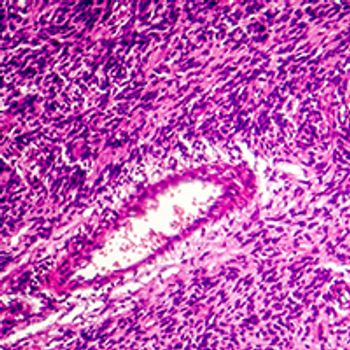
Treatment with camsirubicin led to a reduction in tumor size in patients with advanced soft tissue sarcoma.
The FDA has granted orphan drug designation to LSTA1 for use as a potential therapeutic option in patients with malignant glioma, according to an announcement from Lisata Therapeutics, Inc.

The University of Chicago Medical Center ranks among the nation’s best hospitals in 10 specialties, according to results of the U.S. News & World Report’s annual survey.
The FDA has approved the therascreen PDGFRA RGQ PCR kit for use as a companion diagnostic, co-developed by Qiagen and Blueprint Medicines, to assist in the identification of patients with gastrointestinal stromal tumors who may be candidates to receive avapritinib.
Pamela Kunz, MD, details key clinical trial updates across the gastrointestinal cancer arena presented during the 2023 ASCO Annual Meeting, including the phase 3 PROSPECT trial in locally advanced rectal cancer and the phase 3 IMbrave050 trial in patients with resected in hepatocellular carcinoma at high risk of recurrence.
Lionel Kankeu Fonkoua, MD, discusses the need for diverse representation across cancer clinical trials and research, emphasizes some of the disparities in enrollment criteria for these research efforts, and details some of the planned and ongoing initiatives at the Mayo Clinic that seek to facilitate change in the field.
The FDA has granted clearance for a global, registrational, phase 3 study examining lisaftoclax in combination with a BTK inhibitor in patients with relapsed/refractory chronic lymphocytic leukemia or small lymphocytic lymphoma who received prior treatment with a BTK inhibitor.
Michael D. Chuong, MD, discusses the role of MRI-guided radiation therapy in pancreatic cancer and other solid tumors; the benefits of the MRIdian system; and future directions regarding MRIdian operation training and research investigating this approach in combination with chemotherapy.
Rimas V. Lukas, MD, reflects on the key points of his presentation delivered at the 2023 Best of ASCO Meeting, which comprised existing unmet needs in low-grade glioma, key efficacy and safety findings from the INDIGO trial, and the viability of vorasidenib-based combination regimens for future investigation.
Guru P. Sonpavde, MD, discusses key data presented from the phase 3 THOR and SWOG S1011 studies at the 2023 ASCO Annual Meeting, and details ongoing trials that could help advance precision medicine approaches for patients with bladder cancer.
Tony S.K. Mok, MD, BMSc, FRCPC, FASCO, provides perspective on the use of tumor treating fields in lung cancer, the use of anti–PD-L1 inhibitors approved in China, and the potential impact of the microbiome on response with immunotherapy.