
The combination of toripalimab, bevacizumab, and platinum-based chemotherapy elicited responses in patients with refractory, recurrent or metastatic cervical cancer.

Your AI-Trained Oncology Knowledge Connection!
The combination of toripalimab, bevacizumab, and platinum-based chemotherapy elicited responses in patients with refractory, recurrent or metastatic cervical cancer.

Maintenance niraparib did not produce a statistically significant overall survival benefit compared with placebo in patients with recurrent ovarian cancer, according to data from an updated exploratory OS analysis of the phase 3 ENGOT-OV16/NOVA study.
Treatment with the oral, small-molecule Wee1 kinase inhibitor adavosertib was clinically active but not well tolerated in patients with recurrent or persistent uterine serous carcinoma who previously received platinum-based chemotherapy.

The combination of durvalumab, tremelimumab, and hypofractionated radiotherapy demonstrated early tolerability in patients with gynecologic malignancies and elicited objective responses in those with PD-L1–high tumors.

Women with ovarian cancer may be effectively assessed for frailty status via the Carolina Frailty Index Score.

Iovance Biotherapeutics has submitted a rolling biologics license application to the FDA seeking the approval of the tumor infiltrating lymphocyte therapy lifileucel for the treatment of patients with advanced unresectable or metastatic melanoma who progressed on or after prior anti–PD-1/L1 therapy and targeted therapy.

The recommended phase 2 dose of olaparib plus selumetinib generated a clinical benefit in patients with endometrial or ovarian cancer harboring RAS mutations, according to findings from the dose-expansion portion of the phase 1b SOLAR trial.

The use of an individualized starting dose and dose modifications due to treatment-emergent adverse effects did not impact the efficacy of maintenance niraparib in patients with newly diagnosed ovarian cancer, irrespective of BRCA mutation status.

Neoadjuvant treatment with the combination of durvalumab plus tremelimumab and chemotherapy elicited a promising 12-month progression-free survival rate in patients with advanced-stage ovarian cancer.

A University of Arizona project, with funding from the state's New Economy Initiative, creates humanlike cancer models and growth environments to help improve prevention, diagnosis and treatment.

The gynecological cancer lymphedema questionnaire and the lower extremity lymphedema screening questionnaire showed moderate to substantial agreement across different cutoff points.

Administration of hyperthermic intraperitoneal chemotherapy with cytoreductive surgery did not have a negative impact on health-related quality of life compared with cytoreductive surgery alone in patients with newly diagnosed ovarian cancer, according to findings from a phase 2 trial.
Craig Sauter, MD, discussed the common limitations of CAR T-cell therapy through timely referral and the existing questions for patients with LBCL who progress on CAR T-cell therapy.

Investigators identified a set of microbiome-based biomarkers that may be used to optimize patient selection or increase personalization of treatment for patients with B-cell lymphoma receiving CAR T-cell therapy.

Total ablation of all metastases in addition to standard systemic therapy did not improve progression-free survival or overall survival compared with standard systemic therapy alone in patients with oligometastatic breast cancer.

The safety and efficacy of the immune checkpoint inhibitor atezolizumab plus the VEGF TKI tivozanib is being investigated in patients with unresectable or metastatic castrate-resistant prostate cancer, as well as those with several other immunologically cold tumors as part of the phase 1b/2 IMMCO-1 trial.

A one-time treatment with isolated hepatic perfusion with melphalan improved median progression-free survival compared with best alternative treatment for patients with previously untreated isolated liver metastases from uveal melanoma.

The FDA has issued a complete response letter for ruxolitinib extended-release tablets for use once daily in the treatment of patients with certain types of myelofibrosis, polycythemia vera, and graft-vs-host disease.

The American Cancer Society, in partnership with Winship Cancer Institute of Emory University, announced a new project that aims to significantly accelerate cancer research and improve patient outcomes.
Cancer screenings rapidly decreased during the COVID-19 pandemic as health care practices considered not urgent came to a halt.
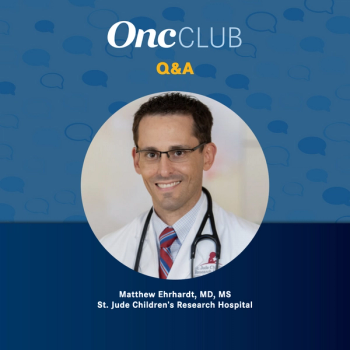
Matthew J. Ehrhardt, MD, MS, discusses the importance of taking a multifactorial approach to improve long-term outcomes for survivors of childhood cancer, and expands on the findings from the study of the factors associated with risk of late mortality.

Acalabrutinib has received conditional approval from the National Medical Products Administration in China for the treatment of patients with mantle cell lymphoma who have received at least one prior therapy.
Jimmy Hwang, MD, discusses findings supporting the use of immunotherapy in hepatocellular carcinoma and biliary tract cancer, the potential benefits of antibody-drug conjugates in metastatic colorectal cancer, and unmet needs in esophageal squamous cell carcinoma and rectal cancer.

To expand access to cancer care and research, Stand Up To Cancer® has launched a 4-team initiative across the United States designed to fill in these gaps in care and remove barriers to entry.

Brian S. Henick, MD, discusses the importance of expanding on the current knowledge of biomarkers and the tumor microenvironment to enhance treatment approaches for patients with non–small cell lung cancer.

Sunitinib demonstrated synergistic activity with the BET inhibitors JQ1 and NHWD-870 in melanoma cell lines.

Cleveland Clinic has opened a new state-of-the-art cancer facility, named the Fatima bint Mubarak Center, at Cleveland Clinic Abu Dhabi.
Frontline treatments that achieve transfusion independence are of paramount importance for patients with lower-risk myelodysplastic syndrome.

Kevin Kalinsky, MD, MS, discusses genetic sequencing in triple-negative breast cancer, the significance of breast cancer tumor board discussions for informing further research and optimizing patient care, and how future directions in breast cancer treatment are building off the current benefits of drugs classes like antibody-drug conjugates.

The addition of zolbetuximab to CAPOX led to a statistically significant improvement in progression-free survival and overall survival compared with placebo plus CAPOX for patients with Claudin-18.2–positive/HER2-negative, unresectable, locally advanced or metastatic gastric or gastroesophageal junction adenocarcinoma.