
Although tumor mutational burden is established as a clinically informative feature of tumors, its optimal use in therapeutic decision-making faces many challenges, and we are only beginning to fully understand its strengths and limitations.

Your AI-Trained Oncology Knowledge Connection!
Although tumor mutational burden is established as a clinically informative feature of tumors, its optimal use in therapeutic decision-making faces many challenges, and we are only beginning to fully understand its strengths and limitations.

The combination of lenalidomide and rituximab demonstrated durable safety and efficacy that was comparable to that achieved with rituximab plus chemotherapy in previously untreated patients with follicular lymphoma, according to 6-year data from the phase 3 RELEVANCE trial.
Successful, established immunotherapies that have been approved for use in the metastatic setting are rapidly moving forward into the adjuvant and neoadjuvant settings, and novel agents are emerging in later lines.
The FDA has approved betibeglogene autotemcel (Zynteglo) for the treatment of adult and pediatric patients with beta-thalassemia who require regular red blood cell transfusions.
Katherine Tkaczuk, MD, discusses practice-changing data across breast cancer subtypes that were discussed at the 2022 ASCO Annual Meeting, including data from DESTINY-Breast04 and the phase 3 PALOMA-2 trial, plus the utilization of CDK4/6 inhibitors and PARP inhibitors for select patients with breast cancer.
Won Seog Kim, MD, PhD, discusses the potential clinical role of Anbalcabtagene autoleucel in relapsed/refractory diffuse large B-cell lymphoma and the continued evolution of CAR T-cell therapy.

Treatment with avapritinib led to clinically meaningful and statistically significant improvements in patient-reported symptoms and objective measures of mast cell burden in patients with non-advanced systemic mastocytosis.
The FDA has accepted a new drug application for momelotinib for the treatment of patients with myelofibrosis.
CDK4/6 inhibitors have carved out a substantial role in the treatment of patients with hormone receptor–positive, HER2-negative breast cancer.
Maintenance rituximab following first-line bendamustine plus rituximab or a combination of rituximab plus cyclophosphamide, doxorubicin, vincristine, and prednisone prolonged first-line treatment benefits and improved survival outcomes vs either induction regimen alone.
The Guardant Reveal assay has been expanded for the detection of minimal residual disease and disease recurrence in patients with early-stage breast cancer and lung cancer.

The FDA has approved the Oncomine Dx Target Test as a companion diagnostic to identify patients with NSCLC harboring an activating HER2 mutation who may derive clinical benefit from treatment with fam-trastuzumab deruxtecan-nxki.
A combination regimen comprised of ruxolitinib and pomalidomide was found to be safe and feasible in a cohort of intermediate-2 and high-risk patients with primary or secondary myelofibrosis and anemia, according to data from the phase 1b/2 MPNSG-0212 trial.
The FDA has accepted a supplemental biologics license application for the combination of polatuzumab vedotin and R-CHP as a treatment for patients with previously untreated diffuse large B-cell lymphoma.
The FDA has granted priority review to a supplemental new drug application seeking the approval of olaparib in combination with abiraterone acetate and prednisone or prednisolone in adult patients with metastatic castration-resistant prostate cancer.
At the start of his career, Weijing Sun, MD, FACP, was motivated to explore potential new treatments for gastrointestinal malignancies, and is now an internationally known GI cancer expert.
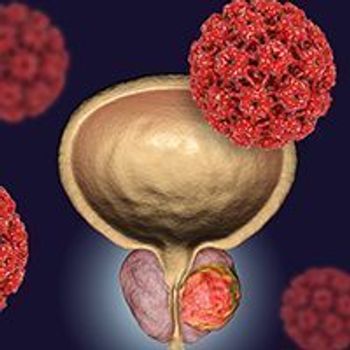
The European Commission has granted an orphan medicinal product designation to INBRX-109 for use as a potential therapeutic option in patients with chondrosarcoma.
Raul Cordoba, MD, PhD, discussed the efficacy and safety findings from cohort 4 of the EPCORE NHL-2 trial, the benefits observed with epcoritamab monotherapy in patients who did not proceed to transplant, and what the addition of epcoritamab to R-DHAX/C could mean for patients with relapsed/refractory DLBCL.
Sacituzumab govitecan elicited a statistically significant and clinically meaningful improvement in overall survival vs standard chemotherapy in patients with hormone receptor–positive, HER2-negative breast cancer who received prior treatment with endocrine therapy, CDK4/6 inhibitors, and 2 to 4 lines of chemotherapy, according to findings from the second interim analysis of the phase 3 TROPiCS-02 trial.
Eric Jonasch, MD, discusses the efficacy and safety of belzutifan observed in the LITESPARK-001 trial for patients with advanced clear cell RCC and the next steps for investigating belzutifan in this patient population.
Saad Z. Usmani, MD, MBA, FACP, discusses key efficacy findings that support the use of teclistamab in patients with relapsed/refractory multiple myeloma who have had prior exposure to BCMA-targeted agents.
The anti–interleukin-1β monoclonal antibody canakinumab did not generate a disease-free survival benefit vs placebo in adult patients with stages II to IIIA and IIIB completely resected non–small cell lung cancer, failing to meet the primary end point of the phase 3 CANOPY-A trial.
Trastuzumab deruxtecan led to a statistically significant improvement in progression-free survival and overall survival vs treatment with physician’s choice in patients with HER2-positive unresectable and/or metastatic breast cancer previously treated with trastuzumab emtansine.
American Oncology Network, LLC, a high-growth medical oncology provider with a focus on supporting the long-term viability of cancer treatment in community-based settings, recently announced the appointment of Karen Pilley, as the organization’s Chief Revenue Cycle Officer.
Vivek Subbiah, MD, discusses the significance of the approval of dabrafenib plus trametinib for adult and pediatric patients 6 years or older with unresectable or metastatic BRAF V600E–mutant solid tumors and highlights future directions for tumor agnostic drug development.
Maurie Markman, MD, discusses maintenance therapy and how it differs from other strategies in cancer care.

The dual immunotherapy combination comprised of nivolumab given at 1 mg/kg and ipilimumab given at 3 mg/kg provided durable responses and long-term survival benefit in patients with advanced hepatocellular carcinoma following treatment with sorafenib.

Jacob Berchuck, MD, discusses the effect of the approval of darolutamide tablets on the standard of care for patients with metastatic hormone sensitive prostate cancer.

Recent data highlight the value of the newly approved indications for nivolumab plus ipilimumab and nivolumab plus chemotherapy for patients with advanced esophageal squamous cell carcinoma.