
A biologics license application for sintilimab injection plus pemetrexed and platinum-based chemotherapy for the frontline treatment of patients with nonsquamous non–small cell lung cancer has been accepted for FDA review.

Your AI-Trained Oncology Knowledge Connection!
A biologics license application for sintilimab injection plus pemetrexed and platinum-based chemotherapy for the frontline treatment of patients with nonsquamous non–small cell lung cancer has been accepted for FDA review.
Tumor-infiltrating lymphocytes, a neoantigen-targeting therapy, has been shown to be a potentially curative treatment for patients with metastatic melanoma, and has led to clinical responses in this population even after failure with checkpoint inhibitors
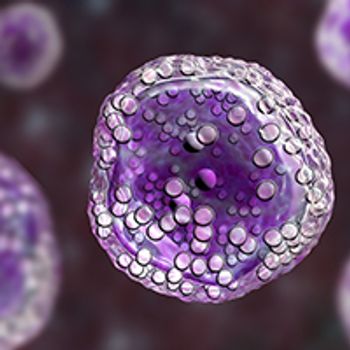
The FDA has lifted a partial clinical hold that had been placed on the enrollment of patients with follicular lymphoma and diffuse large B-cell lymphoma to monotherapy trials examining the bispecific antibody odronextamab.
The combination of ibrutinib and venetoclax were found to act on distinct subpopulations of chronic lymphocytic leukemia that have different proliferative capacities in an ex vivo model of the disease, suggesting that the dual-targeted approach has the potential to eradicate residual disease in patients with CLL.

Despite a modest central nervous system overall response rate, the combination of pertuzumab and high-dose trastuzumab was found to induce clinical benefit in 68% of patients with HER2-positive metastatic breast cancer enrolled to the phase 2 PATRICIA trial.
Enobosarm has been shown to induce a clinical benefit rate of 50% at 24 weeks in evaluable patients with measurable metastatic androgren receptor–positive, estrogen receptor–positive, metastatic breast cancer that has progressed on treatment with palbociclib.

Jose Pacheco, MD, discusses key agents that have significantly improved the care of patients with NSCLC harboring RET or NTRK fusions and efforts being made to address resistance challenges.
The coronavirus disease 2019 pandemic has forever changed our world. We must remember the heavy societal burden this virus has wrought, including lives lost, the significant and debilitating late effects for survivors, and the mental health crisis for survivors, caregivers, and the general population.

The addition of the first-in-class chimeric monoclonal antibody zolbetuximab to frontline epirubicin, oxaliplatin, and capecitabine chemotherapy resulted in prolonged progression-free survival and overall survival compared with EOX alone in patients with advanced Claudin 18.2-positive gastric and gastroesophageal junction adenocarcinoma, according to the primary results of the phase 2 FAST trial.
As one of the highest honors in the scientific field, Lieping Chen, MD, PhD, was elected to the National Academy of Sciences
Investigators are evaluating the addition of nivolumab to standard neoadjuvant therapy in patients with high-risk, estrogen-receptor–positive/ HER2-negative breast cancer to determine whether the PD-1 immune checkpoint inhibitor can improve recurrence rates.
Missak Haigentz Jr, MD, discusses the movement of osimertinib from the metastatic to adjuvant settings and ongoing research poised to improve outcomes for patients with EGFR-mutant NSCLC.
Katelyn M. Atkins, MD, PhD, examines the evolving role of radiotherapy in the treatment of patients with gastric cancer, the subgroups who might derive the most benefit from this approach, and ongoing research efforts that are seeking to address remaining questions with this modality.

Natural killer T cells that co-express GD2-CAR and interleukin-15 were found to be safe and to demonstrate evidence of in vivo expansion and localization to metastatic sites in patients with stage IV relapsed/refractory neuroblastoma.

The FDA has approved pegcetacoplan (Empaveli) for the treatment of adults with paroxysmal nocturnal hemoglobinuria who are treatment naïve and those who are switching from the C5 inhibitors eculizumab (Soliris) and ravulizumab (Ultomiris).
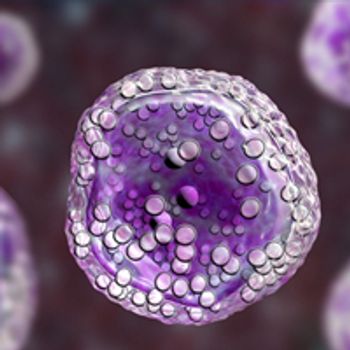
An off-the-shelf, allogeneic CD30-CAR Epstein Barr virus–specific T-cell therapy has demonstrated favorable safety and encouraging clinical activity, even when given at lower dose levels, in patients with relapsed/refractory CD30-positive lymphoma.

UCARTCS1A demonstrated early antitumor activity in heavily pretreated patients with relapsed/refractory multiple myeloma in whom previous CAR T-cell therapy and/or transplant had failed, according to preliminary data from the phase 1 MELANI-01 trial.
Joshua M. Bauml, MD, discusses the use of osimertinib in EGFR-mutant NSCLC, the utility of the agent as adjuvant therapy, and emerging targeted agents for patients with EGFR exon 20 insertions.

Opinion leaders provide a glimpse into the future of what approaches adopted during COVID-19 may persist in oncology after the pandemic ends.

The use of 18F-fluciclovine-PET/CT in guiding salvage treatment with radiotherapy after prostatectomy reduced the likelihood of biochemical recurrence or suboptimal response to treatment in patients with prostate cancer without evidence of extrapelvic disease with conventional imaging.
Novel combinations are paramount for patients with relapsed/refractory multiple myeloma who are in second relapse or beyond; some isatuximab-irfc–containing regimens have the potential to move to the frontline setting and combining melphalan flufenamide with proteasome inhibitors and anti-CD38 monoclonal antibodies is an active area of interest.

Amitkumar Mehta, MD, the safety profile of liso-cel and how it is advancing the relapsed/refractory large B-cell lymphoma treatment paradigm.

Jun Gong, MD, discusses the impact of the IMbrave150 trial on the advanced HCC treatment paradigm and challenges faced with sequencing.

One in 6 patients with colorectal cancer harbor genetic changes that substantially increase their risk for cancer, especially in those who are younger at the time of diagnosis.
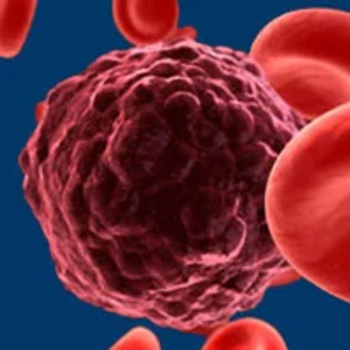
A second treatment with CD19-directed CAR T-cell therapy plus ibrutinib (Imbruvica) following failed prior CD19-directed CAR T-cell therapy and salvage treatment with ibrutinib led to greater efficiency and anti-CD19 CAR T-cell amplification, but also higher grades of cytokine release syndrome and more serious hematologic toxicity in patients with refractory B-cell non-Hodgkin lymphoma.
The PD-1 inhibitor cemiplimab resulted in a 31% reduction in the risk of death compared with chemotherapy in patients with recurrent or metastatic cervical cancer who have progressed on chemotherapy.
Nikhil C. Munshi, MD, discusses how idecabtagene vicleucel has potentially marked the beginning of a new chapter for cellular therapy in multiple myeloma.

Three months of adjuvant capecitabine plus oxaliplatin represents a potential option for select patients with high-risk stage II colorectal cancer due to its convenience, reduced toxicity, and cost, although noninferiority to the 6-month standard duration was not demonstrated.
Neoadjuvant pembrolizumab in combination with chemotherapy followed by adjuvant pembrolizumab monotherapy resulted in a significant improvement in event-free survival and pathologic complete response vs neoadjuvant chemotherapy alone in patients with high-risk, early-stage triple-negative breast cancer.
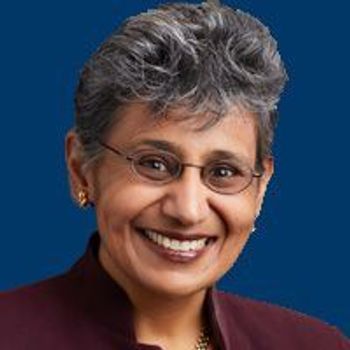
Anees Chagpar, MD, MBA, MPH, FACS, FRCS(C), Professor of Surgery (Oncology) and a member of the Cancer Prevention and Control Research Program at Yale Cancer Center was named a Fellow of the American Society of Clinical Oncology.