
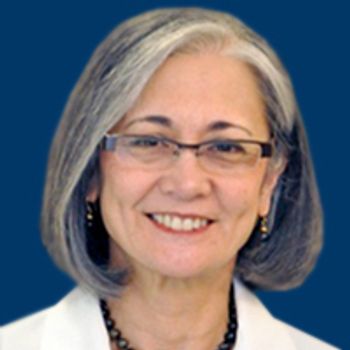
Celestia S. Higano, MD, FACP, provides perspective on data from the CARD trial and their implications on clinical practice.

Your AI-Trained Oncology Knowledge Connection!
Celestia S. Higano, MD, FACP, provides perspective on data from the CARD trial and their implications on clinical practice.
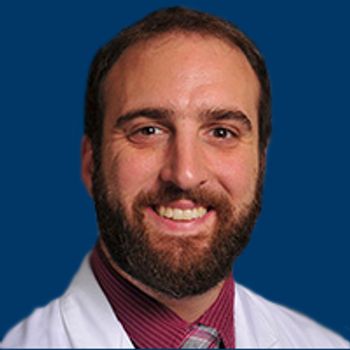
Jonathan E. Brammer, MD, discusses the role of minimal residual disease and transplant in acute lymphoblastic leukemia, as well as the introduction of CAR T-cell therapy and other novel agents to the armamentarium.
The RET inhibitor pralsetinib demonstrated encouraging and durable responses in patients with RET fusion–positive non–small cell lung cancer who were both treatment-naïve and received prior treatment with platinum-based chemotherapy.

The FDA has approved pembrolizumab for the treatment of patients with Bacillus Calmette-Guerin–unresponsive, high-risk, non-muscle invasive bladder cancer with carcinoma in situ with or without papillary tumors who are ineligible for or have elected not to undergo cystectomy.
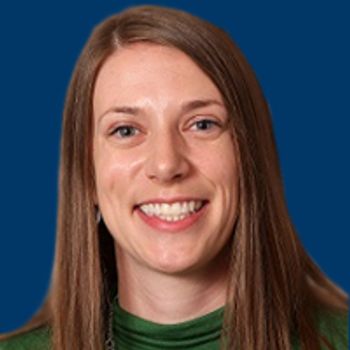
Jennifer A. Woyach, MD, discusses the evolving treatment paradigm and sequencing challenges in chronic lymphocytic leukemia.
Internationally renowned medical oncologist Thomas J. Lynch Jr, MD, has been named the new president and director of the Fred Hutchinson Cancer Research Center.
Hussein Aoun, MD, discusses the use of novel imaging modalities and contrasted them with conventional imaging tools in prostate cancer.
Maria Chaudhry, MBBS, discusses recent and ongoing research in newly diagnosed and relapsed/refractory multiple myeloma.
The combination of pembrolizumab and chemotherapy improved progression-free survival compared with chemotherapy alone as a first-line treatment for patients with extensive-stage small cell lung cancer.
A. Craig Lockhart, MD, MHS, discusses the current treatment landscape of pancreatic cancer and how the introduction of olaparib in the frontline maintenance setting may benefit patients.

The United Kingdom’s National Institute for Health and Care Excellence did not recommend granting marketing authorization to atezolizumab (Tecentriq) in combination with carboplatin and etoposide for the treatment of patients with treatment-naïve extensive-stage small cell lung cancer.
The combination of itacitinib and corticosteroids did not induce a statistically significant improvement in overall response rate at day 28 compared with placebo plus corticosteroids in patients with treatment-naïve acute graft-versus-host disease, missing the primary endpoint of the phase III GRAVITAS-301 trial.

Ajjai Shivaram Alva, MBBS, highlights ongoing advances made in the treatment of patients with metastatic renal cell carcinoma.

Frontline maintenance therapy with avelumab plus best supportive care demonstrated a statistically significant improvement in overall survival compared with best supportive care alone in patients with previously untreated locally advanced or metastatic urothelial carcinoma, regardless of PD-L1 expression.
Afonso Ribeiro, MD, discusses imaging modalities as well as challenges and future goals for the pancreatic cancer paradigm.

Kaushal Parikh, MD, MBBS, reflects on pivotal lung cancer data shared at recent major oncology meetings.
Mike Cusnir, MD, discusses the evolving gastric cancer paradigm.
Clara Hwang, MD, discusses key trials that have shaped the current treatment paradigms of metastatic castration-sensitive prostate cancer and metastatic castration-resistant prostate cancer.
Poziotinib did not meet its primary endpoint of overall response rate in patients with previously treated EGFR-mutant non–small cell lung cancer who have exon 20 insertion mutations.
In the first 11 months following the FDA approval of the CDK4/6 inhibitor abemaciclib as a single agent and in combination with endocrine therapy for the treatment of hormone receptor-positive, HER2-negative metastatic breast cancer, it is being used heterogeneously, including in patients with characteristics indicative of worse prognosis.
The FDA has accepted a biologics license application to review eflapegrastim for the management of chemotherapy-induced neutropenia.

Ulka Vaishampayan, MD, discusses the role of frontline immunotherapy and patient selection in metastatic renal cell carcinoma. 
Nathan Pennell, MD, PhD, discusses the emerging widespread role of liquid biopsies in lung cancer and how to best utilize the approach in clinical practice.
The FDA has approved olaparib for the maintenance treatment of adult patients with germline BRCA-mutated metastatic pancreatic adenocarcinoma.
The FDA has accepted a biologics license application for sacituzumab govitecan as a treatment for patients with metastatic triple-negative breast cancer who have received at least 2 prior therapies for metastatic disease.
Jean L. Koff, MD, MS, highlights exciting advances made in follicular lymphoma and the promise of CAR T-cell therapies in other lymphoma subtypes.
William G. Blum, MD, discusses the introduction of novel agents into acute myeloid leukemia treatment and how this is impacting the role of molecular testing for patients.
An application has been submitted to the FDA for selinexor for the treatment of patients with relapsed/refractory diffuse large B-Cell lymphoma who have received at least 2 prior multiagent therapies and who are ineligible for stem cell transplantation, including CAR T-cell therapy.
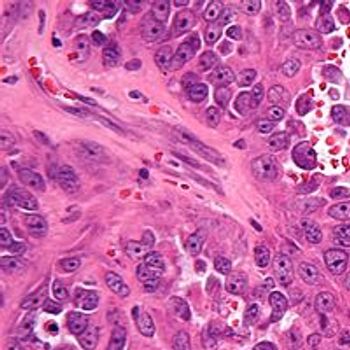
The FDA has granted a Regenerative Medicine Advanced Therapy designation to ADP-A2M4 (MAGE-A4) as a treatment for patients with synovial sarcoma.
The FDA has granted fast track designation to the potent reversible LSD1 inhibitor SP-2577 (seclidemstat) for the treatment of relapsed/refractory patients with Ewing sarcoma.