The rationale for frontline chemoimmunotherapy in stage IV nonsquamous non–small cell lung cancer, now made evident by several phase III trials, stems from its synergistic activity, stimulatory effects on neoantigens, and tolerable safety profile.

Your AI-Trained Oncology Knowledge Connection!
The rationale for frontline chemoimmunotherapy in stage IV nonsquamous non–small cell lung cancer, now made evident by several phase III trials, stems from its synergistic activity, stimulatory effects on neoantigens, and tolerable safety profile.
In an effort to improve outcomes for intermediate- or poor-risk patients with renal cell carcinoma, the phase III COSMIC-313 trial is being initiated, which will evaluate cabozantinib (Cabometyx) in combination with nivolumab and ipilimumab in patients with previously untreated advanced disease.

The FDA has approved a supplemental new drug application for ivosidenib as a single agent for the first-line treatment of adult patients with IDH1-mutant acute myeloid leukemia, as detected by an FDA-approved test, who are ≥75 years old or are ineligible to receive intensive chemotherapy.
Eric S. Winer, MD, highlights the targeted therapies that have made the biggest clinical impact for patients with acute myeloid leukemia.
Jacqueline S. Garcia, MD, highlights key progress made in acute myeloid leukemia and remaining questions with maintenance strategies.
Lowell B. Anthony, MD, FACP, sheds light on important data that have shaped the current neuroendocrine tumors treatment paradigm and highlights notable ongoing studies.
Timothy Fenske, MD, MS, discusses promising ongoing research in mantle cell lymphoma that will look to further advanced the evolving paradigm.
Although TKIs have significantly improved life expectancy for patients with chronic myeloid leukemia, investigators are actively examining ways to safely discontinue treatment without sacrificing benefit.

Regional Cancer Care Associates LLC, one of the nation’s largest networks of oncology specialists, has appointed Iuliana Shapira, MD, its chief medical officer.
Sandoz has entered into an agreement with EirGenix, Inc., to commercialize the proposed trastuzumab biosimilar EG12014 for use as a treatment of patients with HER2-positive breast and select gastric cancers.
Nathan T. Connell, MD, MPH, shares key updates in the rapidly evolving treatment paradigms of benign hematologic disorders.
A supplemental new drug application has been submitted to the FDA for the approval of apalutamide (Erleada) for use as a treatment of patients with metastatic castration-sensitive prostate cancer.

The European Medicines Agency's Committee for Medicinal Products for Human Use has backed approval of talazoparib (Talzenna) for adult patients with HER2-negative locally advanced or metastatic breast cancer harboring germline BRCA1/2 mutations.
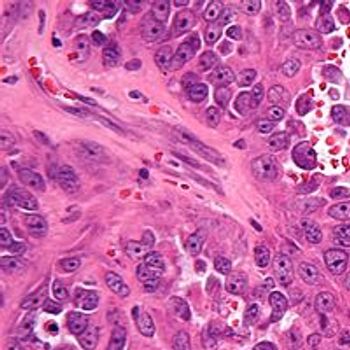
The European Medicines Agency’s Committee for Medicinal Products for Human Use has recommended that the conditional marketing authorization for olaratumab be revoked following results of the ANNOUNCE study, which did not demonstrate a survival benefit with the PDGFRα antagonist in combination with doxorubicin versus doxorubicin alone in patients with advanced or metastatic soft tissue sarcoma.
OncLive has announced its steering committee for the first OncLive® Global Expo, which will take place Oct. 11-13, 2019, at the Orlando World Center Marriott in Orlando, Florida.
The European Medicines Agency's Committee for Medicinal Products for Human Use issued a positive opinion recommending approval of cemiplimab for the treatment of adult patients with metastatic or locally advanced cutaneous squamous cell carcinoma who are not candidates for curative surgery or curative radiation, according to Regeneron Pharmaceuticals, the manufacturer of the PD-1 inhibitor.
USC Norris Comprehensive Cancer Center has launched a study to determine how financial assistance for costs associated with clinical trial participation might increase enrollment, particularly among low-income patients and racial and ethnic minorities.
The FDA has granted a priority review designation to a new drug application for darolutamide for use as a treatment for patients with nonmetastatic castration-resistant prostate cancer.
The European Committee for Medicinal Products for Human Use has recommended approval of olaparib as a frontline maintenance treatment for patients with BRCA-mutant advanced high-grade epithelial ovarian, fallopian tube, or primary peritoneal cancer who are in complete or partial response following first-line platinum-based chemotherapy.
Christine N. Duncan, MD, discusses the current components of CAR T-cell therapy in pediatric acute lymphoblastic leukemia.
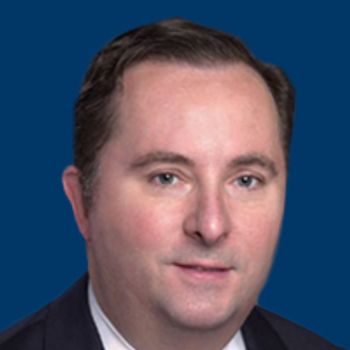
Ronan J. Kelly, MD, MBA, addresses the paradigm shift in stage III unresectable non–small cell lung cancer before delving into the complex field of ALK-rearranged disease.

A marketing authorization application has been submitted to the European Medicines Agency for luspatercept for the treatment of adult patients with very low- to intermediate-risk myelodysplastic syndrome–associated anemia with ring sideroblasts who require red blood cell transfusions and have not received or are ineligible to receive erythropoiesis-stimulating agents.

The combination of pembrolizumab (Keytruda) and chemotherapy did not improve overall survival or progression-free survival compared with standard chemotherapy alone for the frontline treatment of patients with advanced gastric or gastroesophageal junction adenocarcinoma.

Eli Lilly and Company has announced that it is withdrawing its PDGFRα antagonist olaratumab from the market for the treatment of patients with advanced soft tissue sarcoma.
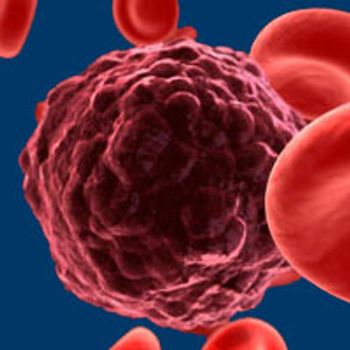
The combination of lenalidomide (Revlimid) with rituximab (Rituxan), cyclophosphamide, doxorubicin, vincristine, and prednisone (R-CHOP; R2-CHOP) did not improve progression-free survival compared with placebo and R-CHOP as a frontline therapy in patients with activated B-cell-type diffuse large B-cell lymphoma, missing the primary endpoint of the phase III ROBUST trial.

OncLive® is proud to announce the inductees of the 2019 Giants of Cancer Care® recognition program.

Aditya Bardia, MD, MPH, discusses the potential role of circulating tumor cells and circulating tumor DNA testing in patients with breast cancer.
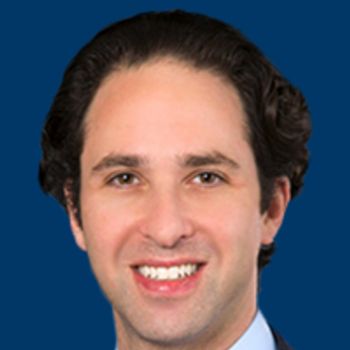
Eric S. Nadler, MD, discusses key data with immunotherapy in the treatment of patients with metastatic squamous non–small cell lung cancer.
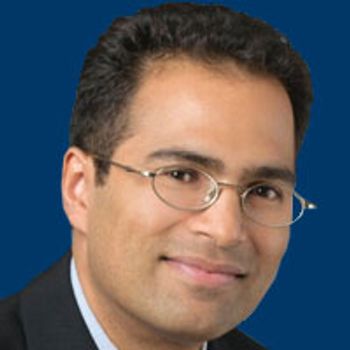
Tagraxofusp led to a 90% overall response rate as a first-line therapy in patients with blastic plasmacytoid dendritic cell neoplasm.

Kartik Konduri, MD, discusses the use of combination therapies and newer agents in patients with targetable driver mutations.