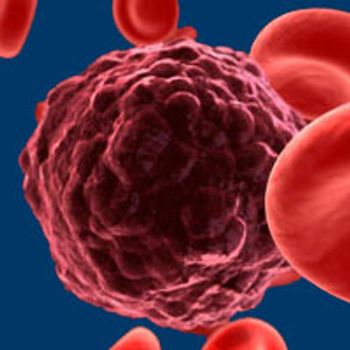
Clinical outcomes were found to be consistent among transplant-eligible patients with mantle cell lymphoma, irrespective of the chemoimmunotherapy induction regimen that was administered.

Your AI-Trained Oncology Knowledge Connection!
Clinical outcomes were found to be consistent among transplant-eligible patients with mantle cell lymphoma, irrespective of the chemoimmunotherapy induction regimen that was administered.
David P. Mason, MD, discusses the available treatment approaches for patients with locally advanced non–small cell lung cancer.
Kristen Ciombor, MD, MSCI, discusses the promise of liquid biopsies in the rapidly evolving metastatic colorectal cancer paradigm and the potential implications of the COLOMATE trial.

Rutgers Cancer Institute of New Jersey, the state’s only Comprehensive Cancer Center as recognized by the National Cancer Institute, has been awarded a $15.1 million grant as part of its successful 2019 redesignation.

A new VENTANA HER2 dual in situ hybridization companion diagnostic assay has launched to identify HER2 amplification for patients with breast cancer and gastric cancer who could be eligible to receive trastuzumab.
Wistar’s Cancer Center became the first National Cancer Institute-designated basic cancer center in the nation in 1972 and has held this national recognition for the past 46 years.

Geoffrey Y. Ku, MD, discusses data of durvalumab plus tremelimumab in a biomarker-selected patient population and sheds light on the role of immunotherapy in patients with advanced gastric cancer.

Omar Nadeem, MD, highlights exciting approaches that have emerged in relapsed/refractory myeloma, such as CAR T-cell therapy, and shares unanswered questions that future research should address.

Marcus Smith Noel, MD, discusses the early promise of SM-88 in the metastatic pancreatic cancer treatment landscape.
Paul G. Richardson, MD, highlights the many promising agents that have emerged in relapsed/refractory multiple myeloma in recent years, remaining challenges, and hope for continued progress.
The FDA has approved pembrolizumab in combination with axitinib for the frontline treatment of patients with advanced renal cell carcinoma.
The FDA has scheduled an Oncologic Drugs Advisory Committee hearing for May 14, 2019, to discuss a new drug application for pexidartinib for the treatment of adult patients with symptomatic tenosynovial giant cell tumor.

Matthew S. Davids, MD, MMSc, discusses recent shifts in the chronic lymphocytic leukemia paradigm with the use of novel therapies and the need to increase personalized treatment with these agents.

Giada Bianchi, MD, discusses the scope of frontline therapy and subsequent maintenance strategies among patients with transplant eligible and ineligible newly diagnosed multiple myeloma.
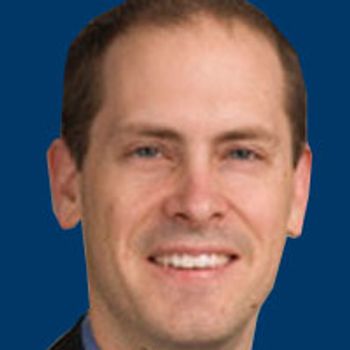
Michael J. Overman, MD, discusses an immunotherapy combination regimen in metastatic colorectal cancer and highlights existing challenges that still need to be addressed in future research.
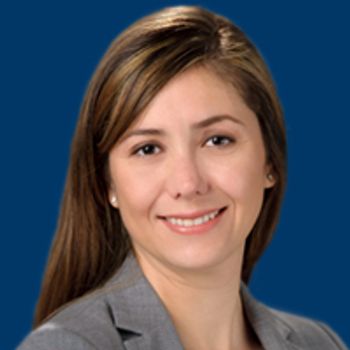
Mariana Chavez Mac Gregor, MD, MSc, discussex recent shifts in the treatment of patients with metastatic triple-negative breast cancer.
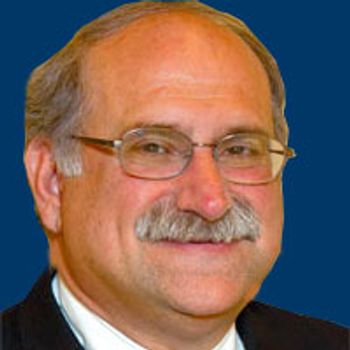
Leonard G. Gomella, MD, underscores the need for genetic testing in prostate cancer, sheds light on important biomarkers in the space, and explains how these tests are helping oncologists facilitate a precision medicine approach.

Although biological criteria carry prognostic value in mantle cell lymphoma, initial observation based solely on clinical criteria was found to be an effective management strategy that did not compromise patient outcomes.
The Sidney Kimmel Cancer Center – Jefferson Health recently welcomed Anjali Mishra, PhD, and Nitin Chakravarti, PhD, to a growing team of researchers focused on hematologic cancers.
Cindy Osborne, MD, highlights the many advances that have been made in the treatment paradigms of locally advanced and metastatic HER2-positive breast cancer.
City of Hope recently received $7.5 million in grant awards to study a rare type of blood cancer that affects the skin: cutaneous T cell lymphoma.
The FDA has expanded the approval of the PD-L1 IHC 22C3 pharmDX assay, allowing the test to be used as a companion diagnostic to identify more patients with stage III or metastatic non–small cell lung cancer who can undergo first-line treatment with pembrolizumab (Keytruda).
Ann S. LaCasce, MD, MMSc, highlights the therapeutic progress in the treatment of patients with mantle cell lymphoma , key remaining challenges, and where future research is headed.
Aaron S. Mansfield, MD, discusses recent progress in small cell lung cancer and remaining challenges in the field.

Joyce A. O’Shaughnessy, MD, discusses the clinical implications of the TEXT and SOFT trials for women with premenopausal HR-positive, HER2-negative breast cancer, as well as unanswered questions that remain with adjuvant endocrine therapy.

Neeraj Agarwal, MD, discusses the recent encouraging data reported in mRCC and highlighted the next steps needed to move the needle forward in this space.

Daratumumab was associated with low overall response rates in patients with relapsed/refractory diffuse large B-cell lymphoma, follicular lymphoma, and mantle cell lymphoma, missing the primary endpoint of a phase II trial published in Clinical Lymphoma, Myeloma & Leukemia.1
Vassiliki A. Papadimitrakopoulou, MD, highlights the implications of the NILE study on clinical practice and sheds light on the potential future utility of liquid biopsies in non–small cell lung cancer.
Mariana Chavez Mac Gregor, MD, MSc, discusses the optimal applications of these assays in patients with early-stage, HR-positive/HER2-negative breast cancer and shed light on the overall outlook of personalized medicine in this setting.

The combination of the PARP inhibitor olaparib (Lynparza) and the pan-HER TKI neratinib (Nerlynx) proved to be highly synergistic and demonstrated significant activity in preclinical models of HER2-positive uterine serous carcinoma.