







Breast Cancer
Latest News
Advertisement
Latest Videos





CME Content































Advertisement
More News

Anees B. Chagpar, MD, FACS, associate professor, Department of Surgery, Yale School of Medicine, assistant director, Global Oncology, Yale Comprehensive Cancer Center, discusses the management of the axilla in breast cancer.

Identifying patients with ductal carcinoma in situ who are more likely to develop invasive breast cancer remains a challenge, despite decades of research and the development of stratification methods to predict progression and recurrence.

Jennifer Litton, MD, associate professor in the Department of Breast Medical Oncology at The University of Texas MD Anderson Cancer Center, discusses the impact of PARP inhibitors in breast cancer.

Patrick I. Borgen, MD, chair, Department of Surgery, director, Breast Cancer, Maimonides Medical Center, discusses the opioid crisis related to the treatment of patients with breast cancer.

There has been much progress in the treatment of estrogen receptor-positive metastatic breast cancer over the past 40 years, and novel therapies are further expanding therapeutic options.

CtDNA will continue to gain importance in precision oncology as physicians continue to uncover the role and interplay of genomic alterations that promote tumor heterogeneity.

Since 2006, the European Medicines Agency has granted marketing authorization for more than 40 biosimilars, and, in less than 4 years, the FDA has approved 17, yet the knowledge gap in the understanding of biosimilarity poses a unique challenge to the agents’ assimilation into clinical practice and possible impact on access and cost savings, experts say.
Although the first checkpoint inhibitor has just been approved for patients with breast cancer, findings from dozens of ongoing studies may eventually change the paradigm for large subsets of those with the malignancy.

The development of antibody-drug conjugates represents a promising strategy for patients with metastatic triple-negative breast cancer, with early clinical trial results suggesting that novel agents could eventually change the landscape for this patient population.
With tremendous advances and the accelerated approval of atezolizumab plus nab-paclitaxel for patients with unresectable locally advanced or metastatic PD-L1–positive triple-negative breast cancer, provider education in identifying associated toxicities from checkpoint inhibitor therapy is critical.
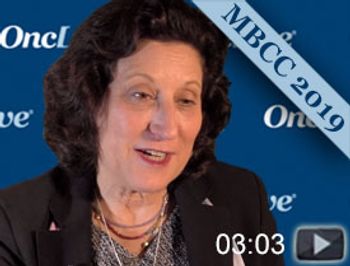
Hope S. Rugo, MD, director, Breast Oncology and Clinical Trials Education, University of California San Francisco Comprehensive Cancer Center, discusses the therapeutic advancements in the breast cancer space in the past 20 years.
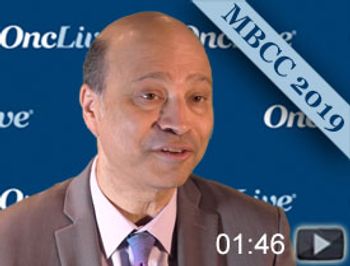
Debu Tripathy, MD, professor and chairman, Department of Breast Medical Oncology, Division of Cancer Medicine, The University of Texas MD Anderson Cancer Center, discusses combination strategies being investigated with CDK4/6 inhibitors in breast cancer.

The introduction of PARP inhibitors into the breast cancer treatment paradigm is a clinically meaningful advance for patients with germline BRCA1/2 mutations but much more research must be conducted to optimize their use.

The previously demonstrated progression-free survival benefit from the addition of alpelisib to fulvestrant appeared consistent among subgroups of patients with hormone receptor–positive/HER2-negative advanced breast cancer who have a PIK3CA mutation.

For more than 100 years, endocrine therapy has been used for the treatment of breast cancer; since that time, we have learned much about the role of estrogen in the biology of normal breast cancer development.

Each gene expression-based test available for risk prediction in patients with breast cancer has unique properties and they are not interchangeable, placing importance on the clinical studies used to validate the clinical utility of each assay.

Elizabeth A. Mittendorf, MD, PhD, director of the Breast Immuno-Oncology Program at Dana-Farber/Brigham and Women's Cancer Center, discusses the frontline approval of atezolizumab in combination with nab-paclitaxel in patients with locally advanced or metastatic PD-L1

Ciara O'Sullivan, MB, BCh, senior associate consultant, assistant professor of oncology, Division of Medical Oncology, Department of Oncology, Mayo Clinic, discusses how HER2-targeted treatment can be more individualized in the treatment of patients with HER2-positive breast cancer.

The FDA has approved the frontline combination of atezolizumab plus nab-paclitaxel for patients with unresectable locally advanced or metastatic PD-L1–positive triple-negative breast cancer.

After nearly 30 years as a breast cancer surgeon, Patrick I. Borgen, MD, finds that the most enduring theme in the field is constant change.
The breast cancer field is experiencing rapid advancements in the understanding of disease biology and the development of novel therapeutic strategies for several subtypes, with a clear direction toward personalized or precision medicine.

Data from the SHAVE and SHAVE2 trials, in terms of long-term outcomes vis-à-vis local recurrence, may lend some insight into the impact of adjuvant therapy on reducing the ramifications of a positive margin.

Novel and emerging agents are creating exciting new options for patients with hormone receptor–positive metastatic breast cancer, resulting in the need to consider how best to introduce and sequence these agents into the treatment timeline.

Breast surveillance is essential when determining whether or not therapy is beneficial and to avoid toxicity, usual care for patients with metastatic breast cancer includes monitoring of symptoms and cancer burden.

Neelima Denduluri, MD, medical oncologist, Virginia Cancer Specialists, discusses treatment for patients with estrogen receptor (ER)-positive, HER2-negative breast cancer.
Advertisement
Advertisement
Trending on OncLive
1
Long-Term Cilta-Cel Data Show Low Rates of PFS Events in Standard-Risk R/R Myeloma
2
FDA Updates Axi-Cel Label to Remove Limitation of Use in R/R PCNSL
3
Real-World Data Support Clinical Benefit With Lifileucel in Previously Treated Advanced Melanoma
4
Nonresponse to Bridging Therapy and Peak ALC After Cilta-Cel Are Associated With Neurotoxicity, NRM in Myeloma
5