







Breast Cancer
Latest News
Advertisement
Latest Videos






CME Content































Advertisement
More News


Kimberly S. Corbin, MD, sheds light on the use of proton radiation therapy in the breast cancer space and which patients may benefit from this approach.
Oscar J. Manrique, MD, discusses the current treatments for patients with lymphedema who have breast cancer and the challenges that remain in this space.

Patrick I. Borgen, MD, chair, Department of Surgery, director, Breast Cancer, Maimonides Medical Center, discusses a plan to remove opioids from surgical oncology and the treatment of breast cancer.

Judy C. Boughey, MD, discusses the surgical management of the axilla in patients with node-positive breast cancer and less invasive approaches for disease management.

Rachel C. Jankowitz, MD, discusses the range of risk associated with HR-positive, HER2-negative breast cancer and the importance of communicating with patients about associated adverse events.

Peter Schmid, MD, PhD, lead at the Centre for Experimental Cancer Medicine, Barts Cancer Institute, discusses the phase Ib study of pembrolizumab (Keytruda) in combination with chemotherapy for patients with triple negative breast cancer (TNBC).

Ruth O’Regan, MD, division head, Hematology and Oncology, Department of Medicine, University of Wisconsin School of Medicine and Public Health, discusses the role of chemotherapy as treatment continues to advance in breast cancer.

Terry L. Evans, MD, discusses the impact of CDK4/6 inhibitors in the metastatic breast cancer space and challenges that still need to be addressed.

African-American patients with early breast cancer had worse outcomes than Caucasian patients following adjuvant therapy, despite having a similar risk of recurrence and receiving similar types of therapy, according to subgroup analysis of the phase III TAILORx trial.

Chemotherapy for breast cancer caused significantly more acute symptoms as compared with endocrine therapy, although the adverse effects of endocrine therapy increased over time.

Chimeric antigen receptor T cells targeting the tyrosine kinase receptor ROR1 can be transferred into patients safely and the cells expand in vivo.

Early-stage breast cancer survivors who completed a telephone-based lifestyle intervention program lost weight and tended to have higher rates of disease-free survival.

The combination of olaparib and durvalumab in patients with HER2-negative metastatic breast cancer with germline BRCA mutations is well tolerated and has promising activity, especially in earlier settings.

Younger patients with breast cancer who underwent lumpectomy had better quality of life than women who had a mastectomy.

Women who took part in a supervised exercise program during adjuvant treatment for breast cancer had better cardiovascular function than women who did not participate in the program.

The combination of palbociclib and trastuzumab demonstrated safety and efficacy in patients with advanced estrogen receptor–positive/HER2-positive breast cancer.
Oxybutynin helped to reduce the frequency and intensity of hot flashes among women who could not take hormone replacement therapy in survivorship.

Combining the BCL-2 inhibitor venetoclax with endocrine therapy elicited notable activity with a tolerable safety profile in patients with estrogen receptor–positive and BCL-2–positive metastatic breast cancer.
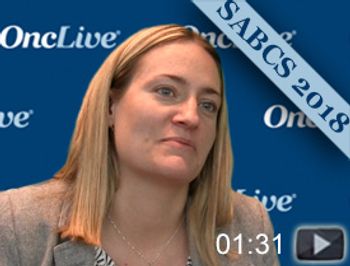
Laura Spring, MD, medical oncologist at Massachusetts General Hospital Cancer Center and instructor in medicine at Harvard Medical School, discusses the association between pathologic complete response (pCR) and neoadjuvant chemotherapy in patients with breast cancer at the 2018 San Antonio Breast Cancer Symposium.

Roberto A. Leon Ferre, MD, oncologist, Mayo Clinic, discusses the randomized trial evaluating the effectiveness of oxybutynin chloride in the management of hot flashes in patients with breast cancer at the 2018 San Antonio Breast Cancer Symposium.

Additional analyses from the SOLAR-1 study show that alpelisib, an investigational alpha-specific PI3K inhibitor, combined with fulvestrant extended progression-free survival compared with fulvestrant alone in patients with PIK3CA-mutant advanced breast cancer regardless of line of therapy or prior CDK4/6 inhibitor treatment.
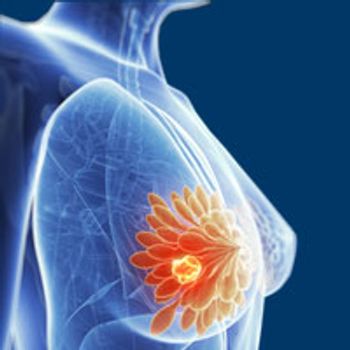
U3-1402, an investigational antibody-drug conjugate targeting HER3, induced objective response in more than 40% of heavily pretreated patients with HER3-expressing breast cancer.
Advertisement
Advertisement
Trending on OncLive
1
Long-Term Cilta-Cel Data Show Low Rates of PFS Events in Standard-Risk R/R Myeloma
2
Real-World Data Support Clinical Benefit With Lifileucel in Previously Treated Advanced Melanoma
3
FDA Updates Axi-Cel Label to Remove Limitation of Use in R/R PCNSL
4
Dr Riedell on the Long-Term Efficacy of Tisa-Cel in R/R Follicular Lymphoma
5