

Breast Cancer
Latest News
Advertisement
Latest Videos

CME Content































Advertisement
More News
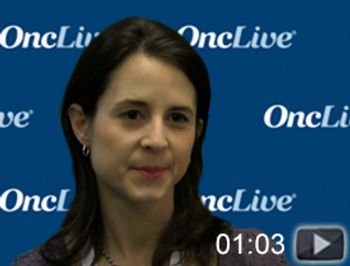
Jane L. Meisel, MD, an assistant professor in the Department of Gynecology & Obstetrics at Emory School of Medicine, Winship Cancer Institute, discusses emerging treatment strategies in triple-negative breast cancer (TNBC).
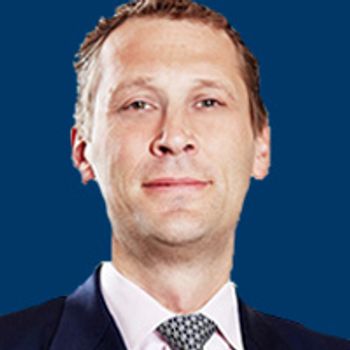
The combination of the PD-1 inhibitor pembrolizumab and platinum/taxane chemotherapy in the neoadjuvant setting induced high rates of pathologic complete response in patients with locally advanced triple-negative breast cancer.
Stephanie L. Graff, MD, director of the Breast Program at the Sarah Cannon Cancer Institute of HCA Midwest Health, and associate director of the Breast Cancer Research Program at Sarah Cannon Research Institute, discusses patient factors used to consider optimal treatment duration of tamoxifen in patients with breast cancer.
Jane L. Meisel, MD, discusses recent breakthroughs in the previously stagnant field of triple-negative breast cancer and what these advances mean for patients.
Komal Jhaveri, MD, medical oncologist at Memorial Sloan Kettering Cancer Center, discusses the potential for immunotherapy in the treatment of patients with triple-negative breast cancer (TNBC) based on results from the IMpassion130 trial.
Stephanie L. Graff, MD, discusses data surrounding escalation and de-escalation in patients with early-stage, hormone receptor–positive breast cancer.
Laura J. Esserman, MD, MBA, a 2018 Giants of Cancer Care® award winner in the Cancer Diagnostics category led the way in designing the I-SPY clinical trials, a groundbreaking effort to match patients with breast cancer to potential therapies based on molecular drivers of disease. She also has advocated for a greater understanding of the biological drivers of breast cancer, rather than relying on mass screening programs, to better analyze early disease.
During a recent OncLive Peer Exchange®, a panel of breast cancer experts discussed emerging agents in triple-negative breast cancer, which include an anti–PD-L1 antibody, 2 PARP inhibitors, and a novel antibody–drug conjugate.
Howard "Skip" A. Burris, III, MD, chief medical officer, Sarah Cannon Research Institute, 2019 ASCO president-elect, and a 2014 Giant of Cancer Care® in Drug Development, discusses the impact of molecular profiling in breast cancer.
Earlier diagnosis and more effective therapeutic options are enabling physicians to deliver better rates of disease control and improved quality of life to patients with hormone receptor–positive, HER2-negative metastatic breast cancer.
Massimo Cristofanilli, MD, discusses the clinical utility of liquid biopsies—specifically focusing on circulating tumor cells and cell-free DNA—and highlights ongoing research in the space.
Denise Yardley, MD, senior investigator, Sarah Cannon Research Institute, discusses the importance of tailoring treatment approaches to the different subtypes of patients with breast cancer.

Komal Jhaveri, MD, discusses the 3 major classes of drugs showing potential in the TNBC pipeline.
Denise A. Yardley, MD, discusses key data presented at the 2018 SABCS and the impact of the SOLAR-1 findings.
Howard A. “Skip” Burris, MD, highlights some of the exciting updates from the 2018 San Antonio Breast Cancer Symposium and what can be expected in the breast cancer field in the year ahead.
Stephanie L. Graff, MD, director of the Breast Program at the Sarah Cannon Cancer Institute of HCA Midwest Health, and associate director of the Breast Cancer Research Program at Sarah Cannon Research Institute, discusses the use of tamoxifen in the treatment of patients with breast cancer.
Massimo Cristofanilli, MD, professor of medicine (hematology and oncology), Robert H. Lurie Comprehensive Cancer Center, Northwestern University Feinberg School of Medicine, discusses using circulating tumor cells to risk stratify patients with advanced breast cancer.
Stephanie L. Graff, MD, discusses the latest updates on escalation and de-escalation of therapy in patients with HR-positive breast cancer.
Susan Domcheck, MD, discusses the updated results of the MEDIOLA trial in patients with germline BRCA-mutated metastatic breast cancer and speaks to the next phase of development with the combination.
Laura J. Esserman, MD, MBA, professor, University of California, San Francisco Helen Diller Comprehensive Cancer Center, 2018 Giant of Cancer Care® for Cancer Diagnostics, discusses the elements of the I-SPY 2 trial in breast cancer.
Kevin Kalinsky, MD, MS, highlights the recent data with alpelisib and CDK4/6 inhibitors, the toxicity differences between the 3 available CDK4/6 agents, and the next steps for both classes of agents.
Joseph A. Sparano, MD, associate director for clinical research, Albert Einstein Cancer Center, Montefiore Medical Center, discusses ways to improve the clinical utility of liquid biopsies in the treatment of patients with breast cancer.
Erika P. Hamilton, MD, discusses the findings from the phase II nextMONARCH 1 study of abemaciclib in HR-positive, HER2-negative advanced breast cancer.
Paula Klein, MD, discusses the research surrounding extended adjuvant therapy in early-stage hormone receptor-positive breast cancer.
Stephen C. Malamud, MD, reflects on the intriguing and practice-changing data presented at the 2018 SABCS.
Advertisement
Advertisement
Trending on OncLive
1
Single-Center, Retrospective Data Show Low Rate of Lifileucel Infusion Following Referral in Advanced Melanoma
2
Long-Term Cilta-Cel Data Show Low Rates of PFS Events in Standard-Risk R/R Myeloma
3
Real-World Data Support Clinical Benefit With Lifileucel in Previously Treated Advanced Melanoma
4
Dr Riedell on the Long-Term Efficacy of Tisa-Cel in R/R Follicular Lymphoma
5