







Breast Cancer
Latest News
Advertisement
Latest Videos






CME Content

































Advertisement
More News

The selective estrogen receptor degrader amcenestrant has demonstrated antitumor activity with acceptable safety in patients with estrogen receptor–positive breast cancer.

Robert Wesolowski, MD, discusses the possibility of home administration of fixed dose pertuzumab and trastuzumab plus chemotherapy in patients with HER2-positive early breast cancer.

No statistically significant difference in Global Health Status or quality of life was observed with alpelisib vs placebo plus fulvestrant in patients with hormone receptor–positive, HER2-negative advanced breast cancer; however, symptom subscales for known adverse effects associated with PI3K inhibitors favored placebo vs alpelisib.

Nicole O. Williams, MD, discusses treatment considerations for selecting between CDK4/6 inhibitors in hormone receptor–positive, HER2-negative breast cancer.

Triaging individuals with the highest likelihood of cancer detection with their clinical indication and individual risk factors during periods of reduced capacity could be an efficient way of identifying the most cancers with the least examinations compared with a non–risk-based approach.

Keerthi Gogineni, MD, MSHP, discusses the efficacy of CDK4/6 inhibitors plus endocrine therapy in patients with hormone receptor–positive, HER2-negative early breast cancer.

The FDA's Oncologic Drugs Advisory Committee voted 7 to 2 in support of maintaining the indication of atezolizumab in combination with nab-paclitaxel as a treatment for adult patients with unresectable locally advanced or metastatic triple-negative breast cancer whose tumors are PD-L1 positive.

Current breast cancer screening practices in the Caribbean exclude the majority of the younger patient population, thereby leaving many cases of breast cancer undiagnosed.

The FDA’s Oncologic Drugs Advisory Committee is poised to move forward this week with a public review of 6 indications for immune checkpoint inhibitors granted under the agency’s accelerated approval process that later failed to reach thresholds for statistical significance for key end points in confirmatory clinical trials.

William Gradishar, MD, discusses the phase 2 data evaluating the activity with IV cetirizine and its potential use in patients with breast cancer.

Olwen Hahn, MD, discusses future research directions with tucatinib (Tukysa) in the treatment of patients with breast cancer.

Sara A. Hurvitz, MD, can remember the exact moment she decided to become an oncologist. It was her first day at the University of Southern California School of Medicine, which she had entered in 1995 without a firm idea of what discipline she wanted to pursue.

William Gradishar, MD, discusses the importance of pretreatment to prevent drug-induced infusion reactions in patients with breast cancer and other malignancies.

Jane L. Meisel, MD, discusses sequencing therapies for patients with metastatic HER2-positive breast cancer.
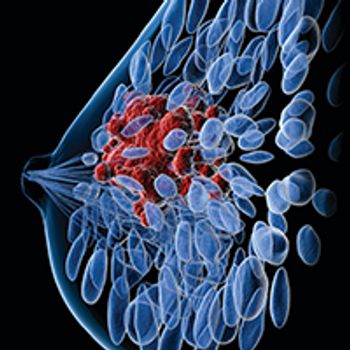
The National Institute for Health and Care Excellence has published draft guidance that recommends fam-trastuzumab deruxtecan-nxki for the treatment of patients with unresectable or metastatic HER2-positive breast cancer following 2 or more anti-HER2 therapies.

William Gradishar, MD, discusses the efficacy of pretreatment with intravenous cetirizine in the prevention of infusion reactions in patients with breast cancer and other malignancies.

Manali Bhave, MD, discusses promising combination strategies in triple-negative breast cancer.

Although anticancer therapies that leverage T cells have commanded the most attention in the immuno-oncology era of the past decade, strategies based on natural killer cells have recently emerged as attractive approaches.
The addition of SDX-7320, a novel inhibitor of methionine aminopeptidase 2, to palbociclib was found to inhibit MCF-7 tumor growth and reduce the expression of proteins associated with resistance to palbociclib.

Postoperative survival after surgery for spinal metastases has improved over the past 20 years, particularly in patients with kidney, breast, lung, and colon tumors metastatic to the spine.
A triplet combination regimen that targets PIK3CA mutations, ER, and CDK4/6 can reduce and inhibit tumor growth in preclinical models of estrogen receptor–positive breast cancer that is resistant to fulvestrant plus a CDK4/6 inhibitor or PI3K inhibitor.

Considerations on the evolving landscape and ongoing unmet needs for patients with HER2+ breast cancer.

Volkmar Mueller, MD, shares insight on the potential sequencing of available therapeutics for patients with metastatic HER2+ breast cancer.

Genetic assays such as those utilized in the phase 3 TAILORx, MINDACT, and RxPONDER trials are helping to provide valuable insight to inform treatment decisions in patients with breast cancer.

Experts discuss the clinical implications of the approval of tucatinib in Europe, specifically for patients with active brain metastases.
Advertisement
Advertisement
Trending on OncLive
1
Single-Center, Retrospective Data Show Low Rate of Lifileucel Infusion Following Referral in Advanced Melanoma
2
Outcomes With Bridging Therapy Correlate With Cilta-Cel Efficacy, Safety in Multiple Myeloma
3
Real-World Data Support Clinical Benefit With Lifileucel in Previously Treated Advanced Melanoma
4
Long-Term Cilta-Cel Data Show Low Rates of PFS Events in Standard-Risk R/R Myeloma
5