





Breast Cancer
Latest News

Advertisement
Latest Videos






CME Content

































Advertisement
More News

Nicole O. Williams, MD, discusses the role of PI3K inhibitors in hormone receptor–positive, HER2-negative breast cancer.

Novel therapeutic strategies are poised to expand in adjuvant settings for patients with early-stage disease facing recurrence risks in the treatment paradigms for a range of tumor types after positive data from large phase 3 clinical trials were highlighted at the 2021 American Society of Clinical Oncology Annual Meeting
Considerations for approaching the treatment of HR-positive metastatic breast cancer through insights on key prognostic factors.
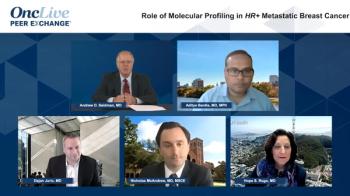
Andrew D. Seidman, MD; Aditya Bardia, MD, MPH; Dejan Juric, MD; Nicholas McAndrew, MD, MSCE; and Hope S. Rugo, MD, discuss when it is appropriate to order molecular testing and the impact of testing on the treatment of HR-positive metastatic breast cancer.

The combination of balixafortide and eribulin did not significantly improve objective response rate over eribulin alone in the treatment of patients with HER2-negative, locally recurrent or metastatic breast cancer, missing the co-primary end point of the phase 3 FORTRESS study.

Joseph Sparano, MD, will lead Hematology and Medical Oncology and will be Deputy Director of The Tisch Cancer Institute.

Holly Pederson, MD, discusses the importance of ancestrally-unbiased polygenic risk assessment in patients with breast cancer.

Aditya Bardia, MD, MPH, discusses the rationale for the ongoing phase 3 AMEERA-5 trial in estrogen receptor–positive, HER2-negative breast cancer.

Alison Schram, MD, discusses the results of the phase 1/2 eNRGy trial, which were presented during the 2021 ASCO Annual Meeting, in NRG1 fusion–positive solid tumors.

Yael Simons, MD, discusses the racial disparities seen in African Americans patients with luminal breast cancer.

Judy Garber, MD, MPH, discusses the efficacy of adjuvant olaparib in patients with high-risk, HER2-negative breast cancer, as demonstrated in the phase 3 OlympiA trial.

Dr. Masten reflects on the main challenges that arose during the COVID-19 lockdown with regard to surgery in patients with breast cancer, the steps that were taken as the lockdown started to lift, and the changes that have been made with regard to managing patients around the time of surgery and in the operating room.
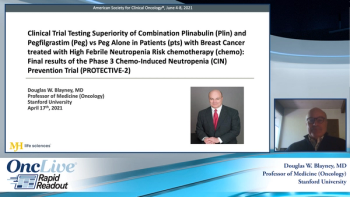
Douglas W. Blayney, MD, presents data from the 2021 American Society of Clinical Oncology Annual Meeting on the final results from the phase 3 PROTECTIVE-2 trial of Plinabulin and Pegfilgrastim in breast cancer patients treated with high febrile neutropenia risk chemotherapy.

Julia Blanter, MD, discusses the risk of developing distant metastases after initial breast cancer diagnosis among Black vs White women.

Kent Hoskins, MD, discusses the impact of race on breast cancer outcomes.
Rates of clinical trial initiation, novel drug development, and collaborative research and development deals were oncology.

The expansion of HER2-directed treatments and formulations, the availability of CDK4/6 inhibitors, and the broad activity of sacituzumab govitecan-hziy is a testament to the successful development of personalized medicine in breast cancer.

Frontline Trastuzumab Deruxtecan Under Exploration With or Without Pertuzumab in HER2+ Breast Cancer
Fam-trastuzumab deruxtecan-nxki is under investigation with or without pertuzumab vs a standard-of-care regimen comprised of a taxane, trastuzumab, and pertuzumab in the frontline treatment of patients with HER2-positive metastatic breast cancer as part of the phase 3 DESTINY-Breast09 trial.

Dr. Bardia on Ongoing Research With Amcenestrant and Palbociclib in ER+/HER2- Advanced Breast Cancer
Aditya Bardia, MD, MPH, discusses ongoing research with amcenestrant and palbociclib in estrogen receptor–positive, HER2-negative advanced breast cancer.

Sarat Chandarlapaty, MD, PhD, highlights responses to amcenestrant and palbociclib in patients with estrogen receptor–positive, HER2-negative metastatic breast cancer, as seen in the phase 1/2 AMEERA 1 trial.

Although circulating tumor cell analysis of patients with HER2-negative metastatic breast cancer identified patients with CTC amplification, the utility of subsequent HER2-directed treatment with trastuzumab plus vinorelbine in this patient population was low.

The antibody-drug conjugate vic-trastuzumab duocarmazine was found to significantly improve progression-free survival over physician’s choice of treatment in patients with pretreated HER2-positive unresectable locally advanced or metastatic breast cancer, meeting the primary end point of the phase 3 TULIP trial.

Dr Gradishar and colleagues highlight key clinical trials such as DESTINY-Breast01, HER2CLIMB, NALA, and SOPHIA in the setting of advanced HER2-positive breast cancer and discuss the practical considerations of these data.
Dr Gradishar and colleagues take an in-depth look at data from select clinical trials in the neoadjuvant and adjuvant settings for patients with HER2-positive breast cancer.
In the first segment, Dr Gradishar and colleagues examine the unmet needs clinicians face despite recent advances in the treatment of patients with HER2-positive breast cancer.
Advertisement
Advertisement
Trending on OncLive
1
Single-Center, Retrospective Data Show Low Rate of Lifileucel Infusion Following Referral in Advanced Melanoma
2
Outcomes With Bridging Therapy Correlate With Cilta-Cel Efficacy, Safety in Multiple Myeloma
3
Real-World Data Support Clinical Benefit With Lifileucel in Previously Treated Advanced Melanoma
4
Long-Term Cilta-Cel Data Show Low Rates of PFS Events in Standard-Risk R/R Myeloma
5