





Gastrointestinal Cancer
Latest News
Advertisement
Latest Videos



CME Content































Advertisement
More News
Alan P. Venook, MD, professor, Department of Medicine (Hematology/Oncology), University of California, San Francisco, discusses implications from the CALGB/SWOG 80405 trial of targeted therapies administered in colorectal cancer.

The FDA has approved the noninvasive stool-based DNA test Cologuard for the detection of colorectal cancer or cancer precursors in asymptomatic patients at average risk.
Margaret A. Tempero, MD, director, Pancreas Center, University of California, San Francisco, discusses screening tools used for patients at high risk for pancreatic cancer.





There is a tension in the air these days when it comes to the manner in which evidence-based oncology research should be conducted in this revolutionary era, and that tension is evident on the pages of peer-reviewed articles describing novel findings in clinical molecular oncology, in editorials discussing these studies, and in commentaries related to future approaches to discovery.

Andrea Wang-Gillam, MD, PhD, assistant professor, Department of Medicine, Oncology Division, Washington University School of Medicine in St. Louis, discusses the mechanism of action of MM-398, a novel encapsulation of irinotecan in a long-circulating nanoliposome.
Melanie B. Thomas, MD, medical oncologist, associate director for clinical trials, Hollings Cancer Center, Medical University of South Carolina, discusses the potential utility for the monoclonal antibody PF-03446962 in hepatocellular carcinoma (HCC).
Tanios Bekaii-Saab, MD, discusses an analysis of two targeted drugs for the treatment of patients with colorectal cancer (CRC).
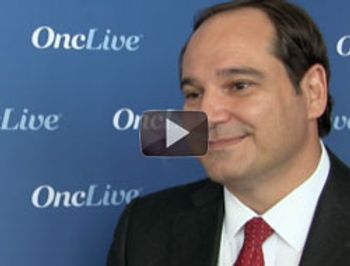
Paulo Marcelo Hoff, MD, PhD, FACP, University of São Paulo, Brazil, discusses a meta-analysis of randomized trials that examined the effect of chemotherapy delivered until progression versus complete stop on the overall survival of patients with metastatic colorectal cancer (mCRC).

The combination of the immunotherapy CRS-207 and the vaccine GVAX Pancreas has received a breakthrough therapy designation from the FDA for its potential as a treatment for patients with metastatic pancreatic cancer.
Ghassan K. Abou-Alfa, MD, Gastrointestinal Oncology Service, Memorial Sloan Kettering Cancer Center, discusses the findings from the STORM trial, a phase III randomized, double-blind, placebo-controlled trial of adjuvant sorafenib after resection or ablation to prevent recurrence of hepatocellular carcinoma (HCC).
Advertisement
Advertisement
Trending on OncLive
1
Long-Term Cilta-Cel Data Show Low Rates of PFS Events in Standard-Risk R/R Myeloma
2
FDA Updates Axi-Cel Label to Remove Limitation of Use in R/R PCNSL
3
Real-World Data Support Clinical Benefit With Lifileucel in Previously Treated Advanced Melanoma
4
Nonresponse to Bridging Therapy and Peak ALC After Cilta-Cel Are Associated With Neurotoxicity, NRM in Myeloma
5