





Gastrointestinal Cancer
Latest News

Advertisement
Latest Videos








CME Content






























Advertisement
More News

Vincent Chung, MD, discusses findings from a pilot study evaluating the safety of adding dietary supplements to chemotherapy in patients with unresectable pancreatic cancer.
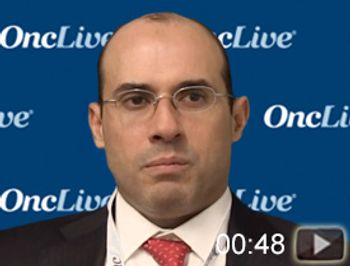
Ahmed O. Kaseb, MD, discusses the safety profile of the combination of atezolizumab and bevacizumab in hepatocellular carcinoma.

The use of circulating tumor DNA via baseline tumor tissue or rebiopsy led to the identification of several MET mutations previously unidentified upon progression on savolitinib in patients with gastric cancer, as well as MET amplifications as drivers of resistance to the agent during monotherapy treatment of those with MET-amplified disease.

Yelena Y. Janjigian, MD, discusses data examining surgery plus extensive intraoperative peritoneal lavage versus surgery alone in patients with gastric cancer.
Ryan W. Huey, MD, highlights the evolving treatment options in the hepatocellular carcinoma paradigm and discusses challenges and next steps in the field.

The FDA has approved pemigatinib for the treatment of patients with previously treated, locally advanced or metastatic cholangiocarcinoma with FGFR2 fusions or rearrangements, as detected by an FDA-approved test.
The FDA has granted Fast Track Designations to surufatinib for the treatment of advanced and progressive pancreatic neuroendocrine tumors and extra-pancreatic neuroendocrine tumors in patients who are not amenable for surgery.

Tanios S. Bekaii-Saab, MD, FACP, discusses the need for umbrella trials in biliary tract cancer.

Neehar Parikh, MD, discusses criteria for determining transplant eligibility in hepatocellular carcinoma.

Michael A. Choti, MD, discusses the role of upfront surgery in pancreatic adenocarcinoma.

Peter R. Galle, MD, PhD, discusses the PROs analysis from the IMbrave150 trial in HCC and the importance of understanding patient experience during treatment.

Data from the phase II FIGHT-202 study of pemigatinib in advanced or metastatic FGFR2-positive cholangiocarcinoma have been published as the FDA considers a new drug application for the treatment in this setting.

Manish A. Shah, MD, discusses an optimal sequencing strategy in gastroesophageal cancer.

Amit Singal, MD, MS, discussess optimal models for multidisciplinary care in hepatocellular carcinoma in light of the practice-changing IMbrave150 trial.
Yelena Y. Janjigian, MD, discusses results from the phase III JAVELIN Gastric 100 study evaluating avelumab in gastric or gastroesophageal cancer.

Eileen O'Reilly, MD, discusses the potential role of veliparib in pancreatic cancer.

David H. Ilson, MD, PhD, discusses the utility of zolbetuximab in claudin-positive gastric cancers.

Riad Salem, MD, discusses the role of locoregional therapy in hepatocellular carcinoma.
Matthew H.G. Katz, MD, FACS, discusses the benefit of neoadjuvant chemotherapy in patients with pancreatic cancer.
Ghassan K. Abou-Alfa, MD, discusses sequencing challenges in metastatic hepatocellular carcinoma.

Vincent Chung, MD, discusses the importance of genomic testing in pancreatic cancer.
The FDA has approved the combination of encorafenib and cetuximab for the treatment of adult patients with metastatic colorectal cancer with a BRAF V600E mutation, following prior therapy.

Gonzalo Sapisochin, MD, discusses the benefits of living donor liver transplantation in hepatocellular carcinoma.

Eileen O'Reilly, MD, discusses germline testing in pancreatic cancer.

We had the pleasure of speaking with John L. Marshall, MD, who discussed the evolving treatment landscape of HER2-targeted treatment strategies in colorectal cancer.
Advertisement
Advertisement
Trending on OncLive
1
Long-Term Cilta-Cel Data Show Low Rates of PFS Events in Standard-Risk R/R Myeloma
2
FDA Updates Axi-Cel Label to Remove Limitation of Use in R/R PCNSL
3
Real-World Data Support Clinical Benefit With Lifileucel in Previously Treated Advanced Melanoma
4
Nonresponse to Bridging Therapy and Peak ALC After Cilta-Cel Are Associated With Neurotoxicity, NRM in Myeloma
5