


Hematologic Oncology
Latest News
Advertisement
Latest Videos
CME Content































Advertisement
More News

Omar Nadeem, MD, a physician at Dana-Farber Cancer Institute and an instructor in medicine at Harvard Medical School, discusses sequencing challenges in multiple myeloma.
Christine N. Duncan, MD, discusses the current components of CAR T-cell therapy in pediatric acute lymphoblastic leukemia.

A marketing authorization application has been submitted to the European Medicines Agency for luspatercept for the treatment of adult patients with very low- to intermediate-risk myelodysplastic syndrome–associated anemia with ring sideroblasts who require red blood cell transfusions and have not received or are ineligible to receive erythropoiesis-stimulating agents.
The combination of lenalidomide (Revlimid) with rituximab (Rituxan), cyclophosphamide, doxorubicin, vincristine, and prednisone (R-CHOP; R2-CHOP) did not improve progression-free survival compared with placebo and R-CHOP as a frontline therapy in patients with activated B-cell-type diffuse large B-cell lymphoma, missing the primary endpoint of the phase III ROBUST trial.

Charles G. Mullighan, MBBS, MSc, MD, member, St. Jude Faculty, deputy director, Comprehensive Cancer Center, co-leader, Hematological Malignancies Program, medical director, St. Jude Biorepository, William E. Evans Endowed Chair, St. Jude Children’s Research Hospital, discusses germline predisposition to acute lymphoblastic leukemia (ALL).
Tagraxofusp led to a 90% overall response rate as a first-line therapy in patients with blastic plasmacytoid dendritic cell neoplasm.
Neil P. Shah, MD, PhD, professor of medicine, Division of Hematology and Oncology, University of California, San Francisco Helen Diller Family Comprehensive Cancer Center, discusses TKI treatment discontinuation in patients with chronic myeloid leukemia.
Advancements in targeted therapy and immunotherapy have led to a rapidly increasing number of patients with metastatic cancer becoming patients with chronic cancer.

Omar Nadeem, MD, highlights exciting approaches that have emerged in relapsed/refractory myeloma, such as CAR T-cell therapy, and shares unanswered questions that future research should address.
Paul G. Richardson, MD, highlights the many promising agents that have emerged in relapsed/refractory multiple myeloma in recent years, remaining challenges, and hope for continued progress.

The FDA has scheduled an Oncologic Drugs Advisory Committee hearing for May 14, 2019, to discuss a new drug application for pexidartinib for the treatment of adult patients with symptomatic tenosynovial giant cell tumor.

Daratumumab was associated with low overall response rates in patients with relapsed/refractory diffuse large B-cell lymphoma, follicular lymphoma, and mantle cell lymphoma, missing the primary endpoint of a phase II trial published in Clinical Lymphoma, Myeloma & Leukemia.1
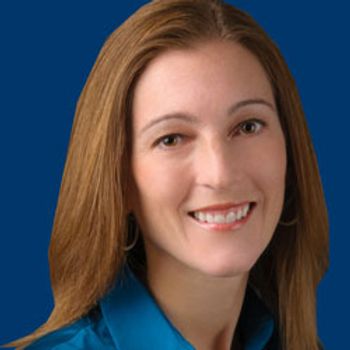
Courtney D. DiNardo, MD, MSCE, discusses the findings of the phase I dose-escalating study that led to the initial approval of ivosidenib for adult patients with relapsed or refractory acute myeloid leukemia with an IDH1 mutation.
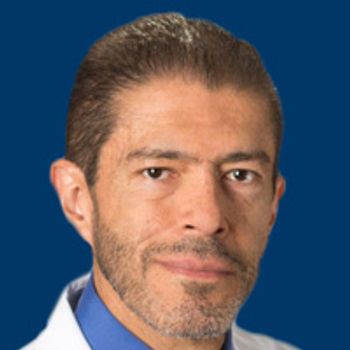
Quizartinib, a novel small molecule FLT3 inhibitor, is moving through the pipeline of new drugs under development for patients with FLT3-mutated acute myeloid leukemia, part of a menu of targeted treatment options that is expanding as investigators learn more about the molecular heterogeneity of the disease.

Investigators at Cleveland Clinic have demonstrated that the direct oral anticoagulant rivaroxaban significantly reduces venous thromboembolism (VTE) and VTE-related death for patients with high-risk cancers treated in the outpatient setting.
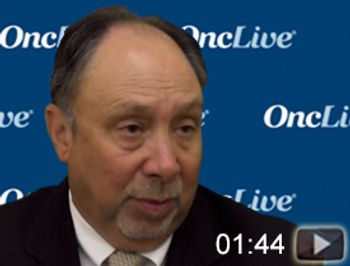
Craig Moskowitz, MD, physician-in-chief, Oncology Service Line, Sylvester Comprehensive Cancer Center, University of Miami Health System, discusses the use of PET-adapted therapy in the treatment of patients with advanced-stage Hodgkin lymphoma.

The optimal anticoagulant takes into consideration a variety of components, including patient preference, the indication for anticoagulation, comorbidities, reversibility, and other factors relevant to the clinical scenario.

The R2 regimen of lenalidomide plus rituximab significantly reduced the risk of disease progression or death compared with rituximab alone in patients with relapsed/refractory indolent non-Hodgkin lymphoma, according to results from the pivotal phase III AUGMENT trial.
A supplemental biologics license application has been submitted to the FDA for luspatercept for the treatment of adult patients with very low- to intermediate-risk myelodysplastic syndrome–associated anemia with ring sideroblasts who require red blood cell transfusions, and also for adult patients with beta-thalassemia–associated anemia who require such transfusions.
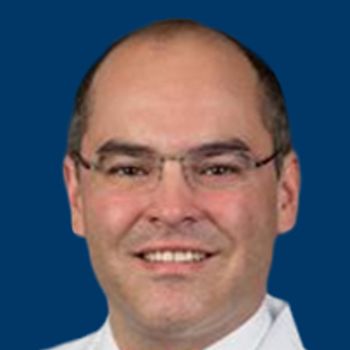
Alvaro Jose Alencar, MD, highlights advances made in the treatment of patients with hematologic disorders, offers advice on how to choose between available agents, and sheds light on future research.
Paul J. Shaughnessy, MD, medical director of adult blood and marrow transplant at the Texas Transplant Institute, discusses unanswered questions in the field of diffuse large B-cell lymphoma (DLBCL).

Kidney complications often occur following successful hematopoietic stem cell transplantation from a myriad of underlying etiologies.
The FDA has added 3 months to the review period for a new drug application for quizartinib for the treatment of adult patients with relapsed/refractory FLT3-ITD–positive acute myeloid leukemia, allowing the agency to review additional data provided by Daiichi Sankyo.

Terrence J. Bradley, MD, discusses approved and investigational agents that patients with myelofibrosis and polycythemia vera can turn to.
While complex, criteria for diagnosing transplant-associated thrombotic microangiopathy following hematopoietic stem cell transplantation should be closely followed and should begin with screening.
Advertisement
Advertisement
Trending on OncLive
1
Single-Center, Retrospective Data Show Low Rate of Lifileucel Infusion Following Referral in Advanced Melanoma
2
Long-Term Cilta-Cel Data Show Low Rates of PFS Events in Standard-Risk R/R Myeloma
3
Real-World Data Support Clinical Benefit With Lifileucel in Previously Treated Advanced Melanoma
4
Dr Riedell on the Long-Term Efficacy of Tisa-Cel in R/R Follicular Lymphoma
5