


Hematologic Oncology
Latest News
Advertisement
Latest Videos
CME Content
































Advertisement
More News
Chimeric antigen receptor T-cell therapies have quickly moved from early phase clinical trials to FDA approval for diffuse large B-cell lymphoma, with research now exploring ways to shift these agents earlier in the treatment paradigm.
Gabriela S. Hobbs, MD, discusses how discontinuing tyrosine kinase inhibitors will change the treatment landscape and other strategies for treating patients with chronic myeloid leukemia.
Jacqueline D. Barrientos, MD, MS, CLL Research and Treatment Program, Northwell Health Systems, discusses the current challenges oncologists are faced with in the field of chronic lymphocytic leukemia.
Alexander M. Lesokhin, MD, assistant attending, Department of Medicine and Myeloma Service, Memorial Sloan Kettering Cancer Center, discusses some of the exciting advancements currently happening in the field of multiple myeloma.
Robert L. Talley, MD, hematologist/medical oncologist, Centerpoint Medical Center, Sarah Cannon Cancer Institute, discusses clinical trials for patients with chronic leukemias.
Suman Kambhampati, MD, co-medical director, Blood Cancer Program, Sarah Cannon Research Institute, discusses BCL-2 inhibition in acute myeloid leukemia (AML).
A supplemental New Drug Application has been submitted to the FDA for venetoclax (Venclexta) for use in combination with a hypomethylating agent or low-dose cytarabine for the first-line treatment of patients with acute myeloid leukemia.
Combining ibrutinib with standard R-CHOP did not improve event-free survival versus R-CHOP alone in the first-line setting for patients with diffuse large B-cell lymphoma.
Ian Flinn, MD, director of the Blood Cancer Research Program, Sarah Cannon Research Institute, discusses chimeric antigen receptor (CAR) T-cell therapy in non-Hodgkin lymphoma (NHL).
Jeremy S. Abramson, MD, clinical director, Center for Lymphoma, Massachusetts General Hospital, discusses lisocabtagene maraleucel (JCAR017; liso-cel) as a treatment for patients with non-Hodgkin lymphoma.
Trine Alma Knudsen, MD, PhD student, Department of Haematology, Zealand University Hospital, Roskilde, Denmark, discusses the rationale of the DALIAH trial in patients with myeloproliferative neoplasms.
Robert L. Talley, MD, hematologist/medical oncologist, Centerpoint Medical Center, Sarah Cannon Cancer Institute, discusses the CAPTIVATE trial in patients with chronic lymphocytic leukemia (CLL).
Michael Link, MD, Lydia J. Lee Professor in Pediatric Cancer, professor, Pediatrics, Stanford Cancer Institute, and a 2018 Giant of Cancer Care in Pediatric Oncology, discusses the randomized trial testing nelarabine in patients with T-cell malignancies.
Judith Trotman, MBChB, FRACP, FRCPA, clinical professor of medicine, Concord Clinical School, director of Clinical Research Unit, Haematology Department, Concord Hospital, discusses zanubrutinib in patients with Waldenstrom's Macroglobulinemia.
Ajai Chari, MD, associate professor of medicine, Hematology and Medical Oncology, Mount Sinai Hospital, discusses the subgroup analysis of MMY1001 in multiple myeloma.

The European Medicines Agency’s Committee for Medicinal Products for Human Use has recommended approval of CPX-351, a fixed-combination of daunorubicin and cytarabine, for adult patients with newly diagnosed therapy-related acute myeloid leukemia or acute myeloid leukemia with myelodysplasia-related changes.
Robert J. Kreitman, MD, chief, Clinical Immunotherapy Section, Laboratory of Molecular Biology, Center for Cancer Research, National Cancer Institute, discusses the findings of moxetumomab pasudotox as a treatment for patients with relapsed/refractory hairy cell leukemia.

The FDA has granted a priority review to a new drug application for glasdegib for use in combination with chemotherapy for the frontline treatment of patients with acute myeloid leukemia.
Paul Richardson, MD, clinical program leader, director of Clinical Research, Jerome Lipper Multiple Myeloma Center, Dana-Farber Cancer Institute, RJ Corman Professor of Medicine, Harvard Medical School, discusses the results of the OPTIMISMM trial in patients with multiple myeloma.
Ruxolitinib combined with corticosteroids induced an overall response rate of 55% at day 28 in patients with steroid-refractory acute graft-versus-host disease, meeting the primary endpoint of the phase II REACH1 trial.

The European Commission has granted blinatumomab full marketing authorization for the treatment of adult patients with Philadelphia chromosome-negative relapsed/refractory B-cell precursor acute lymphoblastic leukemia, according to Amgen, the developer of the anti-CD19 immunotherapy.
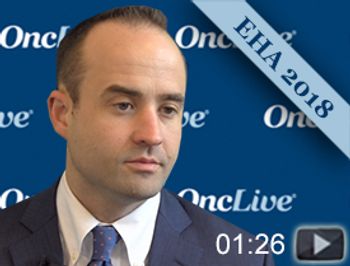
David Sallman, MD, assistant member, Moffitt Cancer Center, discusses the combination of APR-246 and azacitidine as a treatment for patients with TP53-mutant myelodysplastic syndrome and acute myeloid leukemia.
Quizartinib reduced the risk of death by 24% compared with salvage chemotherapy in patients with FLT3-ITD–positive relapsed/refractory acute myeloid leukemia after first-line treatment with or without hematopoietic stem cell transplantation.
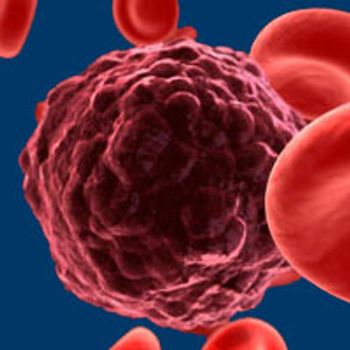
A CAR T-cell therapy specific for CD22 was safe and provided high response rates for pediatric patients with B-cell acute lymphoblastic leukemia who had failed chemotherapy and/or a CD19-targeted CAR T-cell treatment.
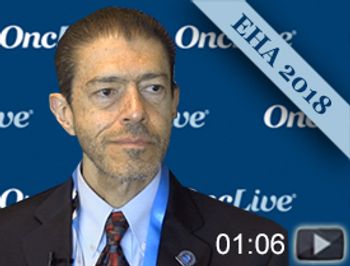
Jorge E. Cortes, MD, professor and deputy chair, Department of Leukemia, The University of Texas MD Anderson Cancer Center, discusses the results of quizartinib in patients with relapsed/refractory acute myeloid leukemia.
Advertisement
Advertisement
Trending on OncLive
1
Single-Center, Retrospective Data Show Low Rate of Lifileucel Infusion Following Referral in Advanced Melanoma
2
Real-World Data Support Clinical Benefit With Lifileucel in Previously Treated Advanced Melanoma
3
Outcomes With Bridging Therapy Correlate With Cilta-Cel Efficacy, Safety in Multiple Myeloma
4
Long-Term Cilta-Cel Data Show Low Rates of PFS Events in Standard-Risk R/R Myeloma
5