


Hematologic Oncology
Latest News
Advertisement
Latest Videos
CME Content

























Advertisement
More News

CMS has proposed a different way to handle payment for chimeric antigen receptor T-cell therapy, one that the medical and manufacturing community thinks is unworkable.
Saad Z. Usmani, MD, Department of Hematologic Oncology and Blood Disorders, Levine Cancer Institute/Carolinas HealthCare System, discusses immunotherapy in hematologic malignancies.
Talal Hilal, MB, BCh, assistant professor of medicine, Mayo Clinic, discusses the meta-analysis of rituximab maintenance for patients with mantle cell lymphoma.
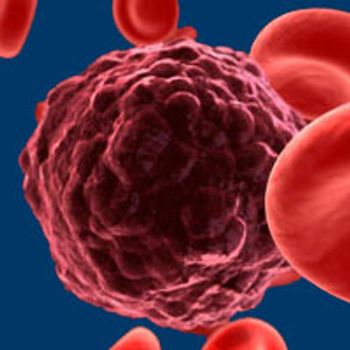
Combining the BTK inhibitor ibrutinib (Imbruvica) with the PI3K inhibitor buparlisib induced an objective response in 18 of 37 patients with relapsed/refractory non-Hodgkin lymphoma.
Several studies presented at the 2018 ASCO Annual Meeting helped further refine and inform treatment strategies for the budding class of CAR T-cell therapies, with a focus on predicting adverse events and optimizing efficacy.
Nilanjan Ghosh, MD, PhD, physician, Levine Cancer Institute, discusses the role of bleomycin in the treatment of patients with classical Hodgkin lymphoma.
Ivosidenib induced an overall response rate of 41.6% (95% CI, 32.9-50.8) in patients with IDH1-positive relapsed/refractory acute myeloid leukemia.
Moxetumomab pasudotox, a first-in-class recombinant immunotoxin targeting CD22, produced deep and durable responses in a substantial proportion of pretreated patients with relapsed/refractory hairy cell leukemia.
Half of a small group of patients with relapsed or refractory non-Hodgkin’s lymphoma (NHL) had major responses to treatment with an anti-CD47 antibody plus rituximab (Rituxan).
The FDA has granted a priority review to a supplemental new drug application for eltrombopag (Promacta) for use in combination with standard immunosuppressive therapy as a frontline treatment for patients with severe aplastic anemia.
Key opinion leaders spoke with OncLive ahead of the 2018 ASCO Annual Meeting to share the top abstracts they believe could have the greatest impact on clinical practice and patient outcomes across lymphomas, gastrointestinal cancers, genitourinary cancers, and lung cancer.
The FDA has granted crizotinib a breakthrough therapy designation for the treatment of patients with metastatic non–small cell lung cancer with MET exon 14 alterations, and for use in patients with relapsed/refractory ALK+ anaplastic large cell lymphoma.
The FDA has granted a priority review to a new drug application for gilteritinib for the treatment of adult patients with FLT3 mutation–positive relapsed or refractory acute myeloid leukemia.
A panel of experts discuss the latest data on several novel agents for ALL and provided insights on how to align these treatments in challenging settings.
Anthony G. Letai, MD, PhD, discusses the complex nature of apoptosis and efforts to target the process.
David S. Snyder, MD, associate chair and professor, Department of Hematology and Hematopoietic Cell Transplantation, City of Hope, discusses emerging agents in myelofibrosis.
Maung Myo Htut, MD, assistant clinical professor of hematology and hematopoietic cell transplantation, City of Hope, discusses the use of immunotherapy in the treatment of patients with multiple myeloma.
Adding ofatumumab (Arzerra) to bendamustine (Treanda) failed to improve progression-free survival in patients with indolent B-cell non-Hodgkin lymphoma who did not respond to rituximab (Rituxan) monotherapy.
Myeloid cell leukemia 1 has emerged as an intriguing target for anticancer drug development as researchers turn their attention to strategies directed at evasion of apoptosis.
Jing Ai, MD, discusses the treatment of patients with myelodysplastic syndrome.
Nilanjan Ghosh, MD, PhD, discusses the advances and ongoing research in frontline treatment of patients with Hodgkin lymphoma.
SL-401, a novel therapy that targets a cancer stemness pathway, is being investigated in patients with blastic plasmacytoid dendritic cell neoplasm in a phase I/II trial.
Nilanjan Ghosh, MD, PhD, physician, Levine Cancer Institute, discusses frontline immunotherapy in Hodgkin lymphoma.
Adding nelarabine to escalating-dose methotrexate induced a 4-year disease-free survival rate of 91% in a cohort of pediatric and young adult patients with newly diagnosed T-cell cancers.

Although mutant RAS has proved to be a challenging therapeutic target, recent success with tipifarnib, a biologically active drug known as a farnesyltransferase inhibitor, brings promise for treating solid tumors and hematological malignancies.
Advertisement
Advertisement
Trending on OncLive
1
Long-Term Cilta-Cel Data Show Low Rates of PFS Events in Standard-Risk R/R Myeloma
2
FDA Updates Axi-Cel Label to Remove Limitation of Use in R/R PCNSL
3
Nonresponse to Bridging Therapy and Peak ALC After Cilta-Cel Are Associated With Neurotoxicity, NRM in Myeloma
4
Real-World Data Support Clinical Benefit With Lifileucel in Previously Treated Advanced Melanoma
5