



Hematologic Oncology
Latest News
Advertisement
Latest Videos
CME Content































Advertisement
More News
Koen van Besien, MD, PhD, shares his insights on challenges with bone marrow transplant and on the potential future for these technologies in a time when the landscape is undergoing many changes.
Nitya Nathwani, MD, assistant clinical professor, Hematology and Hematopoietic Cell Transplantation, City of Hope, discusses the standard of care in patients with newly diagnosed multiple myeloma.
The FDA has approved the SYK inhibitor fostamatinib as a second-line treatment for patients with chronic immune thrombocytopenia following insufficient response to a previous therapy.
Ruben Mesa, MD, director, The Mays Cancer Center, the newly named center of UT Health San Antonio MD Anderson Cancer Center, discusses the management of patients with myeloproliferative neoplasms.
Investigators found that autologous stem-cell transplantation improved overall survival and reduced treatment-related mortality in patients with immunoglobulin light chain amyloidosis.
Ruben Mesa, MD, director, The Mays Cancer Center, the newly named center of UT Health San Antonio MD Anderson Cancer Center, discusses emerging treatment for myeloproliferative neoplasms (MPNs).
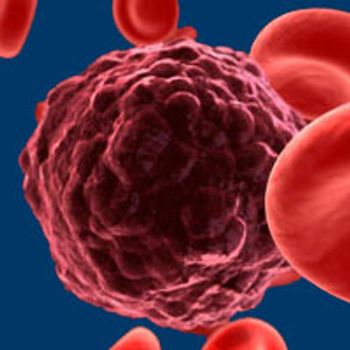
The FDA has granted a priority review to moxetumomab pasudotox for the treatment of adult patients with hairy cell leukemia who have received at least 2 prior lines of therapy.
Molecular minimal residual disease was associated with a higher rate of relapse and a lower rate of relapse-free survival and overall survival for patients with newly-diagnosed acute myeloid leukemia.
Michael J. Mauro, MD, a hematologist and leader of the Myeloproliferative Neoplasms Program at Memorial Sloan Kettering Cancer Center, discusses updates in chronic myeloid leukemia.
Older patients with active, relapsed, or refractory acute myeloid leukemia have a low survival rate, very poor risk assessments, and limited therapeutic options, with conventional care consisting primarily of salvage chemotherapy.
In an extended follow-up of results from the CheckMate-205 trial, nivolumab (Opdivo) induced an overall objective response rate of 69% in patients with relapsed/refractory classical Hodgkin lymphoma after autologous hematopoietic cell transplantation.
Stuart L. Goldberg, MD, hematologist, John Theurer Cancer Center, discusses the use of 4 FDA-approved agents for patients with acute myeloid leukemia (AML) with varying genetic alterations.

Stuart L. Goldberg, MD, discusses the management of patients with acute myeloid leukemia as well as those with myelodysplastic syndrome.
Advertisement
Advertisement
Trending on OncLive
1
Long-Term Cilta-Cel Data Show Low Rates of PFS Events in Standard-Risk R/R Myeloma
2
Real-World Data Support Clinical Benefit With Lifileucel in Previously Treated Advanced Melanoma
3
FDA Updates Axi-Cel Label to Remove Limitation of Use in R/R PCNSL
4
Dr Riedell on the Long-Term Efficacy of Tisa-Cel in R/R Follicular Lymphoma
5