




Hematologic Oncology
Latest News

Advertisement
Latest Videos



CME Content

































Advertisement
More News

Hematologists and oncologists are uniquely poised to aid in the identification of patients with hereditary hemorrhagic telangiectasia and assist in their care, and it is important for the practicing clinician to familiarize oneself with the symptoms of hereditary hemorrhagic telangiectasia to avoid overlooking the diagnosis.

Closing out their discussion on the management of acute myeloid leukemia, expert panelists share their excitement for the future evolution of the treatment landscape.

A comprehensive review of emerging treatment options and how they may fit into the treatment landscape of acute myeloid leukemia.

Eunice Wang, MD, discusses the current standards for classifying and treating unfit patients with AML, treatment considerations for patients unfit for hypomethylating agents, and the potential role of investigational menin inhibitors and immunotherapies in this population.

Mayur Narkhede, MD, discusses the early findings for the use of siltuximab to manage cytokine release syndrome and immune effector cell–associated neurotoxicity syndrome in patients following CAR T-cell therapy and expands on the next steps for investigating this agent during the phase 2 trial.

The FDA has granted an orphan drug designation to EP0042 for use as a potential therapeutic option in patients with acute myeloid leukemia with acquired resistance to FLT3 inhibitors.
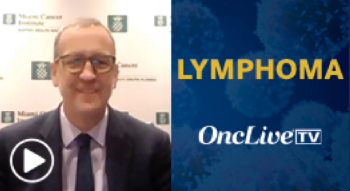
Craig Sauter, MD, discusses where BTK inhibitors could fit into the frontline treatment landscape for patients with central nervous system lymphoma and research aiming to address other unmet needs for this patient population.

Shared insight on how treatments can be optimally sequenced in patients with relapsed/refractory acute myeloid leukemia.
Expert perspectives on the potential role of IDH1-targeted therapy, olutasidenib, in patients with relapsed/refractory acute myeloid leukemia.

The FDA has approved nelarabine for injection for the treatment of patients with T-cell acute lymphoblastic leukemia and T-cell lymphoblastic lymphoma, according to an announcement from Shorla Oncology.

Heterogeneous patterns of polycythemia vera management indicate the need for continued research in this disease and increased guideline specificity across treatment centers in Italy.
FDA Receives Type A Meeting Request for Synthetic Hypericin in Early-stage Cutaneous T-cell Lymphoma
Soligenix has submitted a Type A meeting request to the FDA to discuss the contents of a refusal to file letter from the regulatory agency regarding the new drug application for synthetic hypericin for the treatment of early-stage cutaneous T-cell lymphoma.

Experts close by summarizing key advances and remaining unmet needs across all MDS risk groups, and share their hopes for the future.
A brief discussion centered on MDS/MPN-RS-T overlap syndromes, considerations for diagnosis, available treatment options, and updates in the space.
The FDA’s Office of Therapeutic Products has accepted a resubmission of the biologics license application (BLA) for remestemcel-L for the treatment of pediatric patients with steroid-refractory, acute graft-vs-host-disease.
The advent of effective first-generation TKIs has allowed for improvements among patients with Philadelphia chromosome–positive disease, which is traditionally associated with a poor prognosis, as it generally does not respond to conventional chemotherapy options.

The European Commission has granted a full marketing authorization to luspatercept-aamt for use in adult patients with anemia associated with non–transfusion-dependent β-thalassemia.
Centering its discussion on relapsed/refractory acute myeloid leukemia, the panel highlights broader treatment strategies in this setting.
Before closing out their discussion on first-line treatment options for patients with AML, expert oncologists reflect on the role of stem cell transplant in AML.

The panelists touch on emerging data in the higher-risk MDS space, including updates presented at ASH 2022.
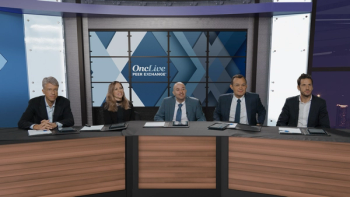
The panel turns their focus to higher-risk MDS, starting with a discussion of first- and second-line treatment options, followed by a third and final case presentation and discussion led by Dr Platzbecker.

Yi-Bin Chen, MD, discusses key data on the use of vedolizumab in lower gastrointestinal acute Graft-Versus-Host Disease according to the phase 3 GRAPHITE study.

Lori Muffly, MD, discusses the clinical outcomes with the use of a novel conditioning regimen featuring the anti-CD117 monoclonal antibody briquilimab plus low-dose irradiation and fludarabine prior to allogeneic hemopoietic stem cell transplant in older patients with acute myeloid leukemia.

Warren Fingrut, MD, discusses the association between non-European ancestry and low socioeconomic status with the receipt of HLA-disparate grafts.
Joanne Kurtzberg, MD, discusses the long-term survival outcomes from an observational cohort study evaluating remestemcel-L in pediatric patients with steroid-refractory acute graft-vs-host disease.
Advertisement
Advertisement
Trending on OncLive
1
Single-Center, Retrospective Data Show Low Rate of Lifileucel Infusion Following Referral in Advanced Melanoma
2
Real-World Data Support Clinical Benefit With Lifileucel in Previously Treated Advanced Melanoma
3
Outcomes With Bridging Therapy Correlate With Cilta-Cel Efficacy, Safety in Multiple Myeloma
4
Long-Term Cilta-Cel Data Show Low Rates of PFS Events in Standard-Risk R/R Myeloma
5