



Hematologic Oncology
Latest News
Advertisement
Latest Videos

CME Content































Advertisement
More News
Dr Brunner presents the patient profile of a 75-year-old man with transfusion-dependent, lower-risk MDS and symptomatic anemia.
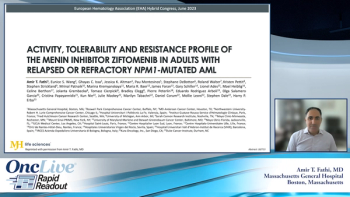
Expert Amir Fathi, MD, reviews recent clinical data with ziftomenib in patients with relapsed/refractory acute myeloid leukemia.

ADC Therapeutics has voluntarily paused enrollment to the phase 2 LOTIS-9 trial investigating the combination of loncastuximab tesirine and rituximab for use in unfit or frail patients with previously untreated diffuse large B-cell lymphoma.

Dose-dense and dose-intense doxorubicin, bleomycin, vinblastine, dacarbazine, and granulocyte colony–stimulating factor (ABVD) generated an improvement in progression-free survival and other efficacy end points compared with PET-adapted ABVD in previously untreated patients with advanced classical Hodgkin lymphoma.

Harry P Erba, MD, PhD, discusses the safety profile and preliminary activity of the investigational menin inhibitor ziftomenib in acute myeloid leukemia.

Moving into their last module, expert panelists consider how they might inform best selection and sequencing of therapy in patients with relapsed/refractory diffuse large B-cell lymphoma.
Andrew Brunner, MD, reviews the available second-line treatment options for lower-risk MDS with symptomatic anemia.

Following their discussion on axicabtagene ciloleucel and lisocabtagene maraleucel, panelists reflect on the real-world use of CAR T-cell therapy in relapsed/refractory diffuse large B-cell lymphoma.
Dr Madanat defines erythropoiesis-stimulating agent (ESA) treatment failure in lower-risk MDS with symptomatic anemia and describes his approach to monitoring patients.

The National Comprehensive Cancer Network has announced a guideline update concerning the treatment of patients with acute lymphoblastic leukemia, B-cell lymphomas, pediatric ALL, and pediatric aggressive mature B-cell lymphoma.

The FDA has lifted a partial clinical hold on the phase 1/2 TakeAim Leukemia trial evaluating emavusertib monotherapy and in combination with azacitidine and venetoclax in patients with relapsed/refractory acute myeloid leukemia or high-risk myelodysplastic syndrome.

Administration of glofitamab after pretreatment with obinutuzumab provided encouraging antitumor activity with high and durable complete response rates and a manageable safety profile in heavily pretreated patients with Richter syndrome.
Expert oncologists discuss unmet needs and share final thoughts on the future of treatment of patients with lower-risk MDS.
Ralph Boccia, MD, FACP, highlights emerging therapies and the importance of next-generation sequencing for patients with MDS.

Treatment with the irreversible BTK inhibitor abivertinib led to responses and disease control in patients with relapsed/refractory marginal zone lymphoma.
The FDA has approved a new drug application for 200-mg/mL vials of cyclophosphamide injection for use in combination therapy in the treatment of patients with various types of cancers, including malignant lymphoma, multiple myeloma, and various types of leukemia.

The panel shares at what point they decide to start treatment for patients with lower-risk MDS and symptomatic anemia.

A brief review of data behind lisocabtagene maraleucel and its role as CAR T-cell therapy in patients with relapsed/refractory diffuse large B-cell lymphoma.

Shared insight on the role of CAR T-cell therapy in relapsed/refractory diffuse large B-cell lymphoma, with a focus on axicabtagene ciloleucel.
Yazan Madanat, MD, details the available options for first-line treatment of patients with lower-risk MDS and symptomatic anemia.
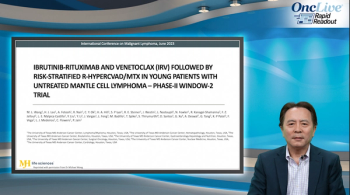
After reviewing the first patient scenario of myelofibrosis, experts from the John Theurer Cancer Center reflect on best practices in diagnosing and risk stratifying patients.
Dr Short discusses data in acute lymphoblastic leukemia that were presented at the 2023 ASCO Annual Meeting and EHA Congress.

Although the highly potent, selective, allosteric, oral, small molecule BRG1/BRM inhibitor FHD-286 elicited signs of clinical activity and safety as monotherapy in patients with metastatic uveal melanoma in the dose-escalation portion of a phase 1 trial, further development in this indication will not be pursued.
Expert oncologists discuss management strategies for patients with lower-risk MDS considering upcoming treatment options.
Advertisement
Advertisement
Trending on OncLive
1
Single-Center, Retrospective Data Show Low Rate of Lifileucel Infusion Following Referral in Advanced Melanoma
2
Long-Term Cilta-Cel Data Show Low Rates of PFS Events in Standard-Risk R/R Myeloma
3
Real-World Data Support Clinical Benefit With Lifileucel in Previously Treated Advanced Melanoma
4
Dr Riedell on the Long-Term Efficacy of Tisa-Cel in R/R Follicular Lymphoma
5