





Hematologic Oncology
Latest News
Advertisement
Latest Videos




CME Content































Advertisement
More News

Ajai Chari, MD, discusses the significance of the FDA approval of talquetamab in patients with relapsed/refractory multiple myeloma.

The FDA has placed a clinical hold on the phase 1 PLAT-08 trial evaluating SC-DARIC33 in pediatric and young-adult patients with relapsed/refractory CD33-positive acute myeloid leukemia.
Acute GVHD presentation and diagnosis is assessed for the clinical scenario previously discussed.
GVHD prophylaxis techniques are analyzed by the panelists.
Single-agent IBI322 elicited responses with favorable safety in patients with classical Hodgkin lymphoma that had become resistant to anti–PD-1/PD-L1 therapy, according to data from a phase 1 trial.

The addition of the chimeric monoclonal antibody CAEL-101 to standard therapy with cyclophosphamide, bortezomib, and dexamethasone with or without daratumumab demonstrated a manageable toxicity profile with prolonged clinical benefit in patients with amyloid light-chain amyloidosis.

Dr Zeidan highlights ongoing clinical trials for treatment of higher-risk MDS.
Dr Brunner presents updated data on the treatment of lower-risk MDS with IRAK1/IRAK4 inhibitors.
Dr. Chaudhary and Dr. Merin discuss potential areas for exploration and unmet needs in the chronic GvHD treatment landscape.
Discussion centered around real-world data following the approval of ruxolitinib as a treatment option for patients with chronic GvHD as well as discussing treatment selection for patients with chronic GvHD, with special consideration for treatment sequencing.
Shared insight on the safety profile of pacritinib and how best to mitigate or manage adverse events when they occur in patients with myelofibrosis.
Experts continue their conversation on pacritinib in myelofibrosis by reviewing its potential impact on anemia and ACVR1.
Dr. Gooptu explains the risk factors associated with both acute and chronic GVHD.

Closing out their discussion on the management of relapsed/refractory diffuse large B-cell lymphoma, expert panelists highlight unmet needs and share excitement for future evolutions in the treatment landscape.
Eno-Abasi Inyang, PharmD, BCPS, BCOP provides an overview of the various conditioning regimens employed for allogeneic stem cell transplantation.

Pembrolizumab produced sustained antitumor activity in patients with relapsed/refractory primary mediastinal large B-cell lymphoma, according to data from the final analysis of the phase 2 KEYNOTE-170 trial.

Matthew J. Frank, MD, PhD, discusses remaining questions regarding treatment sequencing following preliminary results from a phase 1 trial of a CD22-directed CAR-T therapy in relapsed/refractory large B-cell lymphoma.
The FDA has released a complete response letter to its biologics license application resubmission, indicating that it needs more data to support approval for remestemcel-L for the treatment of pediatric patients with steroid-refractory acute graft-vs-host disease.
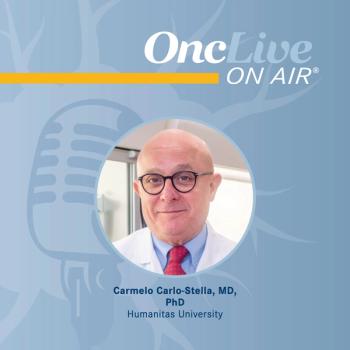
Dr Carlo-Stella discusses the FDA approval of glofitamab in relapsed/refractory DLBCL, key efficacy and safety findings from the NP30179 trial, and the benefits of glofitamab’s mechanism of action.
The addition of the type 1 FLT3 inhibitor gilteritinib to induction and consolidation chemotherapy, followed by maintenance gilteritinib monotherapy, was safe and tolerable with promising initial efficacy in patients with newly diagnosed acute myeloid leukemia.
Dr Carraway discusses data updates on oral hypomethylating agents (HMAs) decitabine and azacitidine for the treatment of lower-risk MDS.
Dr Zeidan shares data presented at ASCO 2023 on the first-in-class agent Imetelstat for the treatment of lower-risk MDS.

Prioty Islam, MD, MSc, reviews the benefits of using covalent BTK inhibitors in CLL and MCL; considerations for choosing first-generation vs next-generation covalent BTK inhibitors in patients with these B-cell malignancies; and the potential future role for ibrutinib in the CLL treatment paradigm.

Prioty Islam, MD, MSc, discusses findings from the BRUIN trial, highlights the potential benefits of using noncovalent BTK inhibitors instead of or before covalent BTK inhibitors in patients with MCL or CLL, and previewed ongoing clinical trials investigating this class of agents in earlier treatment lines in these populations.

Prioty Islam, MD, MSc, discusses the importance of shared decision making between patients and clinicians when selecting among available BTK inhibitors in the treatment of chronic lymphocytic leukemia or mantle cell lymphoma.
Advertisement
Advertisement
Trending on OncLive
1
Long-Term Cilta-Cel Data Show Low Rates of PFS Events in Standard-Risk R/R Myeloma
2
Real-World Data Support Clinical Benefit With Lifileucel in Previously Treated Advanced Melanoma
3
FDA Updates Axi-Cel Label to Remove Limitation of Use in R/R PCNSL
4
Dr Riedell on the Long-Term Efficacy of Tisa-Cel in R/R Follicular Lymphoma
5