





Lung Cancer
Latest News
Advertisement
Latest Videos


CME Content































Advertisement
More News

Less than 2 years after checkpoint blockade immunotherapy first became available for patients with non-small cell lung cancer, the PD-1 inhibitor pembrolizumab is poised to reshape the treatment paradigm for previously untreated individuals without molecular mutations.
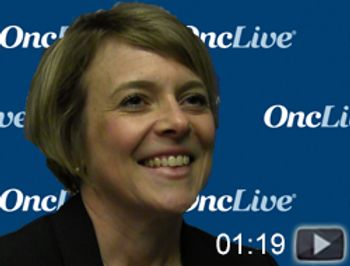
Melissa L. Johnson, MD, medical oncologist, Sarah Cannon Research Institute, discusses potential immunotherapy regimens for patients with lung cancer.
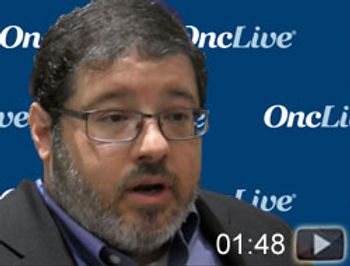
H. Jack West, MD, a thoracic oncologist of Swedish Cancer Institute at Swedish Medical Center, discusses the FDA approval of ceritinib (Zykadia) as a first-line treatment for patients with ALK-positive, metastatic non–small cell lung cancer (NSCLC).
The FDA has approved ceritinib (Zykadia) for the treatment of patients with ALK-positive, metastatic non–small cell lung cancer.

The EMA’s Committee for Medicinal Products for Human Use has recommended approval of ceritinib (Zykadia) for the treatment of patients with ALK-positive, metastatic non–small cell lung cancer, according to Novartis, the manufacturer of the second-generation ALK inhibitor.

Adjuvant gefitinib reduced the risk of disease recurrence by 40% versus standard chemotherapy in patients with EGFR-positive non­–small cell lung cancer, study reports.

The FDA has granted a breakthrough therapy designation to entrectinib for use as a treatment for adult and pediatric patients with NTRK-positive, locally advanced or metastatic solid tumors who have either progressed following prior therapies or who have no acceptable standard therapies.

An epigenetic strategy under study at Cleveland Clinic combines THU, a cytidine deaminase inhibitor, with decitabine and nivolumab (Opdivo) in patients with non-small cell lung cancer. The results of early studies demonstrate that THU may help prime the immune system.

Ramaswamy Govindan, MD, discusses the rapid therapeutic changes in NSCLC and the sequencing questions physicians are currently asking.

Durvalumab (Imfinzi) significantly improved progression-free survival when used as a sequential treatment in patients with locally-advanced, unresectable non-small cell lung cancer who had not progressed following standard care with platinum-based chemotherapy and radiotherapy.

Ramaswamy Govindan, MD, professor, Department of Medicine, Oncology Division, Medical Oncology, Washington University School of Medicine in St. Louis, discusses the future treatment landscape of EGFR-mutant non–small cell lung cancer (NSCLC).
Daniel Morgensztern, MD, associate professor, Department of Medicine, Oncology Division, Medical Oncology, Washington University School of Medicine in St. Louis, discusses the monumental impact that immunotherapy has had on the field of non–small cell lung cancer (NSCLC).
Advertisement
Advertisement
Trending on OncLive
1
Long-Term Cilta-Cel Data Show Low Rates of PFS Events in Standard-Risk R/R Myeloma
2
Single-Center, Retrospective Data Show Low Rate of Lifileucel Infusion Following Referral in Advanced Melanoma
3
Real-World Data Support Clinical Benefit With Lifileucel in Previously Treated Advanced Melanoma
4
Dr Riedell on the Long-Term Efficacy of Tisa-Cel in R/R Follicular Lymphoma
5