





Lung Cancer
Latest News
Advertisement
Latest Videos




CME Content

































Advertisement
More News
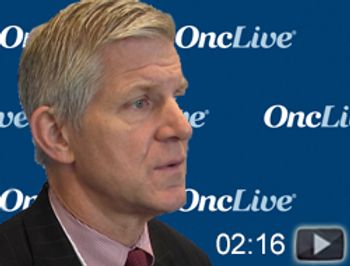
Scott J. Swanson, MD, co-director of Minimally Invasive Surgery and chief surgical officer at Brigham and Women’s Hospital, professor of Surgery at Harvard Medical School, discusses treating multifocal lung cancer.
Mark B. Stoopler, MD, discusses ongoing developments in immunotherapy and his vision for the future of non-small cell lung cancer treatment.

Daniel Costin, MD, shares insight on understanding the deeper biology of the immune system, the emerging research with immunotherapy, and the importance of managing associated adverse events.

Alexander Drilon, MD, medical oncologist, Memorial Sloan Kettering Cancer Center, discusses immunotherapy in patients with lung cancer.
Vassiliki A. Papadimitrakopoulou, MD, professor, Department of Thoracic/Head and Neck Medical Oncology, The University of Texas MD Anderson Cancer Center, discusses trials investigating combinations of immunotherapy regimens in lung cancer.

Daniel B. Costa, MD, PhD, discusses biomarker testing in non-small cell lung cancer and the necessary next steps for PD-L1 testing.

David Spigel, MD, chief scientific officer, director, Lung Cancer Research Program, principal investigator, Sarah Cannon Research Institute, discusses the results of cohort G from the KEYNOTE-021 trial, which explored pembrolizumab (Keytruda) combined with pemetrexed/carboplatin as a frontline treatment for patients with nonsquamous non–small cell lung cancer (NSCLC).

David M. Jackman, MD, medical director of Clinical Pathways, Dana-Farber Cancer Institute, assistant professor of Medicine, Harvard Medical School, discusses overcoming resistance to EGFR inhibitors in non–small cell lung cancer (NSCLC).

The China Food and Drug Administration has approved osimertinib for the treatment of patients with locally-advanced or metastatic EGFR T790M-positive non-small cell lung cancer with progression following treatment with an EGFR tyrosine kinase inhibitor.

Jared Weiss, MD, offers his expert insight into the actual impact of the immunotherapy advances in lung cancer.

Hatim Husain, MD, assistant professor of Hematology-Oncology at the University of California San Diego Moores Cancer Center, discusses the future of monitoring the emergence of EGFR T790M circulating tumor DNA in urine from EGFR-mutated non–small cell lung cancer (NSCLC).
Tracey L. Evans, MD, associate professor of Clinical Medicine at Penn Medicine, discusses the challenges associated with immunotherapy for the treatment of patients with lung cancer.

Vassiliki A. Papadimitrakopoulou, MD, discusses recent developments with immunotherapy in non­-small cell lung cancer and the continued significance of EGFR and ALK inhibitors in the field.

Stacie Levine, MD, associate professor of Medicine, director, Geriatrics and Hospice and Palliative Medicine Fellowship Program, University of Chicago Medicine, discusses the benefits of palliative care for patients with non–small cell lung cancer (NSCLC).

Mark A. Socinski, MD, executive medical director of the Florida Hospital Cancer Institute, discusses the type of milestone that immunotherapy has had on the field of lung cancer.

Joshua Sabari, MD, medical oncology fellow, Memorial Sloan Kettering Cancer Center, discusses the future that immunotherapy has in the field of small cell lung cancer (SCLC).
Alexander Drilon, MD, medical oncologist, Memorial Sloan Kettering Cancer Center, discusses NTRK rearrangement in patients with lung cancer.

The European Commission has approved alectinib (Alecensa) as a treatment for patients with metastatic ALK-positive non–small cell lung cancer following progression on crizotinib (Xalkori).
The EMA’s Committee for Medicinal Products for Human Use has recommended approval of the combination of dabrafenib (Tafinlar) and trametinib (Mekinist) as a treatment for patients with advanced or metastatic BRAF V600E-mutant non-small cell lung cancer.

Treatment with pembrolizumab could elicit long-term survival rates of 21% to 25% for previously-treated patients with PD-L1–positive non–small cell lung cancer compared with 3% to 4% for docetaxel.

The FDA has granted a priority review to ceritinib as a first-line treatment for patients with ALK-positive, metastatic non–small cell lung cancer.
Advertisement
Advertisement
Trending on OncLive
1
Single-Center, Retrospective Data Show Low Rate of Lifileucel Infusion Following Referral in Advanced Melanoma
2
Long-Term Cilta-Cel Data Show Low Rates of PFS Events in Standard-Risk R/R Myeloma
3
Real-World Data Support Clinical Benefit With Lifileucel in Previously Treated Advanced Melanoma
4
Dr Riedell on the Long-Term Efficacy of Tisa-Cel in R/R Follicular Lymphoma
5