


Lung Cancer
Latest News

Advertisement
Latest Videos





CME Content

































Advertisement
More News
A BLA is seeking the approval of subcutaneous amivantamab for all currently approved indications of the IV formulation in EGFR+ NSCLC.
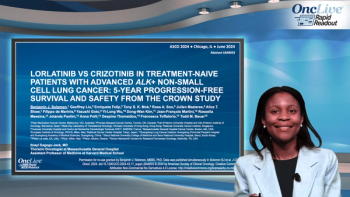
CROWN (NCT03052608) is a phase 3 clinical trial evaluating progression free survival with the use of loratinib in patients with advanced ALK+ NSCLC.

Chinmay Jani, MD, discusses findings from a study evaluating the impact of tobacco use and air pollution on mortality rates in patients with lung cancer.

Eric Vallieres, MD, FRCSC, discusses the evolving role of surgery in lung cancer treatment following the implementation of new neoadjuvant and adjuvant treatments.

Clinical benefit generated from treatment with lurbinectedin plus irinotecan was noted across sensitive and resistant patient populations with SCLC.

Key opinion leaders delve into the challenges posed by payers, costs, out-of-pocket maximums, and the need for letters of medical necessity, while also addressing additional sources of resistance encountered in clinical practice.
Zofia Piotrowska, MD, MHS, shares insights into the challenges and advantages of diagnostic testing practices at Massachusetts General Hospital, including the benefits of on-site testing, the need for less streamlined consent forms, and areas for improvement to expedite the diagnostic testing ordering process.

The European Commission has approved alectinib for adjuvant use in adult patients with ALK+ non–small cell lung cancer at high risk of recurrence.
The FDA has granted priority review to the supplemental NDA seeking the approval of osimertinib in EGFR-mutated stage III non–small cell lung cancer.

David R. Spigel, MD, discusses findings from the phase 3 ADRIATIC trial in patients with limited-stage small cell lung cancer.
TTFields therapy plus best supportive care increased time to first intracranial progression by 10.6 months in patients with NSCLC brain metastases.

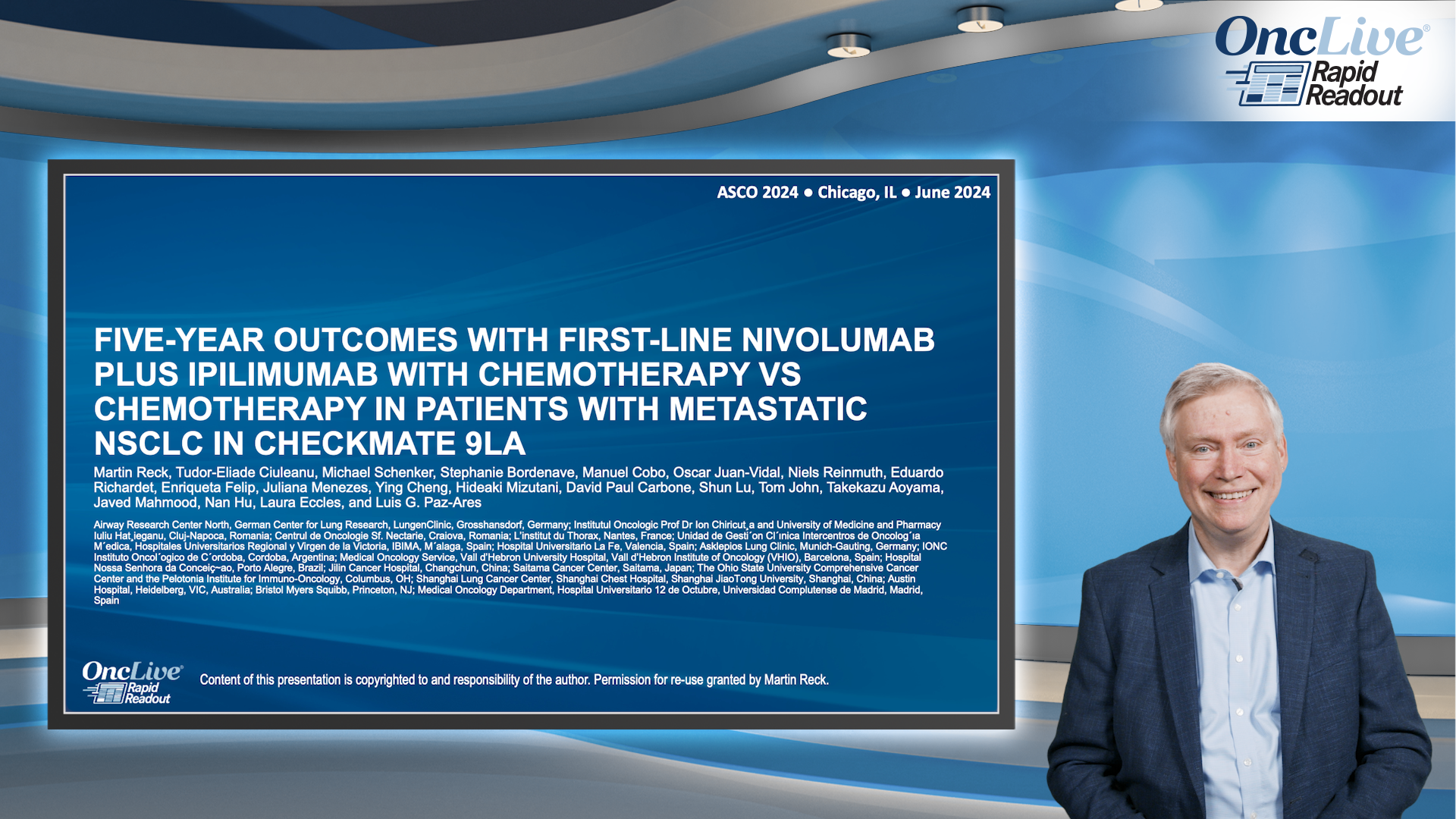
Nivolumab plus ipilimumab and chemotherapy elicited a durable, long-term survival benefit vs chemotherapy alone in metastatic NSCLC.

Key opinion leaders highlight findings from a University of Pennsylvania study demonstrating that implementing reflex next-generation sequencing testing can reduce time-to-treatment from 19 days to 10 days, potentially leading to improved overall patient outcomes and survival rates in non-small cell lung cancer.
Medical experts recommend that EGFR, ALK, and PD-L1 testing be performed as reflex tests for patients with early-stage non-small cell lung cancer to inform personalized treatment strategies.

The European Medicines Agency’s CHMP has recommended the approval of frontline osimertinib plus chemotherapy for EGFR-mutated non–small cell lung cancer.
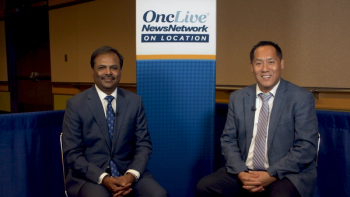
OncLive® will be LIVE with OncLive® News Network: On Location at the 2024 ASCO Annual Meeting. Each day, we will broadcast a series of interviews with top thought leaders, to learn their thoughts and reactions to data presented across oncology during the conference.

Neoadjuvant nivolumab/chemotherapy, followed by surgery and adjuvant nivolumab, significantly improved EFS in stage III N2 and stage III non-N2 NSCLC.

Datopotamab deruxtecan demonstrated comparable intracranial activity and safety in pretreated patients with NSCLC with or without brain metastases.

Neoadjuvant nivolumab with chemotherapy led to durable EFS benefit and a trend toward improved OS vs chemotherapy alone in patients with resectable NSCLC.
Long-term DFS and OS outcomes with adjuvant atezolizumab in stage II to IIIA NSCLC were consistent with prior data from the IMpower010 trial.

The European Medicines Agency’s Committee for Medicinal Products for Human Use adopted a positive opinion for Avzivi, a monoclonal antibody referencing bevacizumab.

Suresh S. Ramalingam, MD, FACP, FASCO, discusses findings with osimertinib after definitive chemoradiotherapy in unresectable EGFR-mutated NSCLC.

Taletrectinib demonstrated high response rates and a tolerable safety profile in patients with ROS1-positive non–small cell lung cancer.

The delivery of palliative care through telehealth vs in-person visits was equally beneficial for patients with advanced non–small cell lung cancer.

Consolidation treatment with durvalumab after concurrent chemoradiation led to a survival benefit vs placebo in limited-stage small cell lung cancer.
Advertisement
Advertisement
Trending on OncLive
1
Single-Center, Retrospective Data Show Low Rate of Lifileucel Infusion Following Referral in Advanced Melanoma
2
Real-World Data Support Clinical Benefit With Lifileucel in Previously Treated Advanced Melanoma
3
Long-Term Cilta-Cel Data Show Low Rates of PFS Events in Standard-Risk R/R Myeloma
4
Dr Riedell on the Long-Term Efficacy of Tisa-Cel in R/R Follicular Lymphoma
5