





Lung Cancer
Latest News
Advertisement
Latest Videos



CME Content































Advertisement
More News
John V. Heymach, MD, PhD, expands on the efficacy of perioperative durvalumab in the AEGAN trial, the significance of this unique approach for the non–small cell lung cancer treatment paradigm, and future research examining opportunities to build on or intensify the benefit achieved with this regimen.
A comprehensive discussion on combination chemotherapy + immunotherapy regimens available to patients with advanced non–small cell lung cancer.

Shared insight on the value that molecular testing and PD-L1 testing, respectively, have on determining optimal therapy for patients with advanced non–small cell lung cancer.
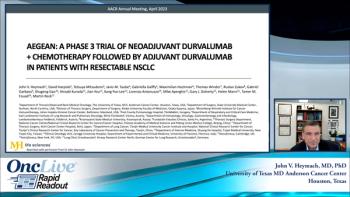
Expert oncologist John Heymach, MD, PhD, reviews data from the phase 3 AEGEAN trial following updates presented at the 2023 AACR annual meeting.

Devika Das, MD, MSHQS, discusses the use of neoadjuvant and adjuvant chemoimmunotherapy for patients with resectable non–small cell lung cancer, and emphasizes the importance of multidisciplinary collaboration when incorporating these regimens into treatment approaches.

Eftilagimod alpha plus pembrolizumab provided an overall survival benefit over what has been reported with historical controls when given as first-line treatment in patients with non–small cell lung cancer and a PD-L1 tumor proportion score of at least 1%.

The combination of osimertinib and platinum-based chemotherapy led to a statistically significant and clinically meaningful improvement in progression-free survival compared with osimertinib alone in patients with locally advanced or metastatic non–small cell lung cancer harboring EGFR mutations.

Brian Henick, MD, discusses the 3-year updated data from a phase 2 trial investigating treatment with neoadjuvant atezolizumab plus chemotherapy in patients with resectable non–small cell lung cancer.

Jarushka Naidoo, MD, M.B.B.Ch., explains the 5-year-data update from a study investigating single-agent pembrolizumab vs chemotherapy for advanced NSCLC.

The panel reviews data presented at ELCC from EMPOWERLung1 investigating cemiplimab versus chemotherapy in patients with advanced NSCLC.

The use of docetaxel and ramucirumab yielded antitumor activity and showcased a manageable safety profile in patients with non–small cell lung cancer who progressed on platinum-based chemotherapy and immune checkpoint inhibitors, according to data from the phase 2 SCORPION study.

Maya Khalil, MD, discusses the future investigations of immunotherapy in non–small cell lung cancer.

Maya Khalil, MD, discusses the use of first-line durvalumab plus tremelimumab in patients with non–small cell lung cancer enrolled in the phase 3 POSEIDON trial, and sheds light on histologies and mutations that are associated with increased benefit with this regimen.
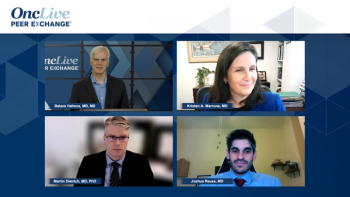
Switching their focus to advanced non–small cell lung cancer, panelists identify parameters that may influence the use of immune checkpoint inhibitors in this setting.

Before closing out their review of resectable NSCLC treatment strategies, key opinion leaders consider nuances in utilizing perioperative therapy in the current paradigm.

Devika Das, MD, MSHQS, discusses the activity and tolerability of lurbinectedin and topotecan as second-line regimens in extensive-stage small cell lung cancer.
Experts explain recent data updates on single-agent immunotherapy treatment for patient with advanced NSCLC.
Dr Solange Peters reviews data on the efficacy and toxicities of first-line nivolumab and ipilimumab for metastatic non-squamous NSCLC.
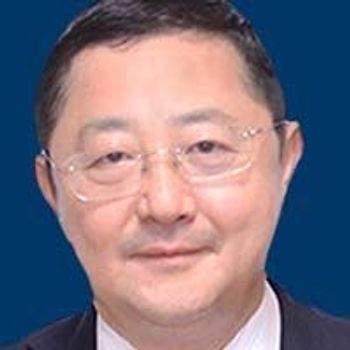
Sintilimab Plus Chemo With or Without IBI305 Provides PFS Benefit in EGFR TKI–Pretreated EGFR+ NSCLC
The combination of sintilimab and chemotherapy with or without the bevacizumab biosimilar IBI305 produced a statistically significant and clinically meaningful improvement in progression-free survival vs chemotherapy alone in patients with EGFR-mutated, nonsquamous non–small cell lung cancer who progressed after treatment with an EGFR TKI.
Devika Das, MD, MSHQS,discusses updated data on the use of immunotherapy and platinum-based chemotherapy regimens in extensive-stage small cell lung cancer.
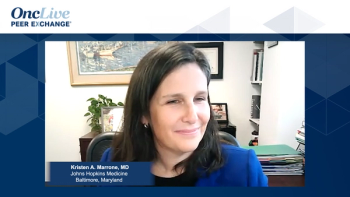
Switching their focus to the adjuvant setting of resectable NSCLC, expert panelists identify treatment options in this setting and review the clinical data behind them.
Shared insight from key opinion leaders on the value of molecular testing in patients with resectable non–small cell lung cancer and how it can be applied.

Administration of aumolertinib until intracranial oligoprogression, followed by salvage stereotactic radiation therapy, produced central nervous system responses with acceptable tolerability in patients with intracranial oligometastatic EGFR-mutant non–small cell lung cancer.
The FDA has approved FoundationOne® Liquid CDx as a companion diagnostic for mobocertinib in patients with locally advanced or metastatic non–small cell lung cancer harboring EGFR exon 20 insertion mutations.

Karen L. Reckamp, MD, MS, discusses the rationale for evaluating patients with early-stage NSCLC who received adjuvant atezolizumab as part of the LCMC3 study and explains the significance and limitations of data from a retrospective analysis.
Advertisement
Advertisement
Trending on OncLive
1
Long-Term Cilta-Cel Data Show Low Rates of PFS Events in Standard-Risk R/R Myeloma
2
FDA Updates Axi-Cel Label to Remove Limitation of Use in R/R PCNSL
3
Real-World Data Support Clinical Benefit With Lifileucel in Previously Treated Advanced Melanoma
4
Single-Center, Retrospective Data Show Low Rate of Lifileucel Infusion Following Referral in Advanced Melanoma
5