







Lung Cancer
Latest News
Advertisement
Latest Videos




CME Content































Advertisement
More News

Yonina R. Murciano-Goroff, MD, MSc, DPhil, discusses the investigation of the novel KRAS G12C inhibitor LY3537982 in patients with non–small cell lung cancer, colorectal cancer, and other solid tumors.

Focused discussion on the selection of neoadjuvant therapy in patients with resectable NSCLC in light of recent clinical trials.
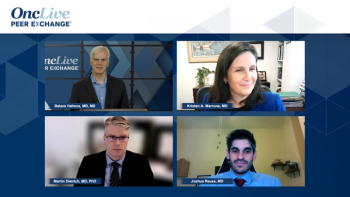
Expert oncologists reflect on key factors that aid in the selection of therapy for patients diagnosed with resectable non–small cell lung cancer (NSCLC).

Solange Peters, MD, PhD, detail the subgroups of patients with advanced NSCLC and how treatment varies.

Paul Stewart, PhD, discusses the multiomic landscape of squamous cell lung cancer.
VT3989, a first-in-class YAP/TEAD inhibitor, showcased durable antitumor activity and tolerability in patients with malignant mesothelioma and other solid tumors harboring NF2 mutations, according to data from a phase 1 trial presented at the 2023 AACR Annual Meeting.

The American Society for Radiation Oncology and European Society for Radiotherapy & Oncology have released the first clinical guideline on the use of definitive local therapy, including radiation and surgery, for the treatment of patients with oligometastatic non–small cell lung cancer.
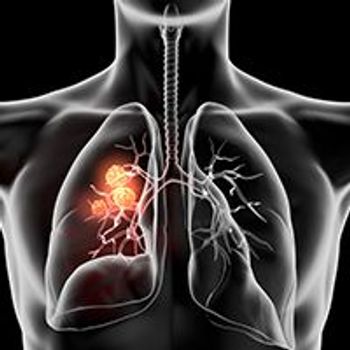
First-line treatment with furmonertinib plus icotinib induced responses in patients with EGFR-mutant non–small cell lung cancer. including those with central nervous system metastases, according to data from an ongoing phase 2 trial.

The panel discusses how patients with advanced NSCLC are sub-grouped in NSCLC and how to approach treatment for each group.

Marina Garassino, MD, reviews the role of PD-L1 testing in advanced non-small cell lung cancer.

AZD3759 elicited clinical responses and had an acceptable toxicity profile when administered at a dose of 200 mg twice daily in patients with untreated EGFR-mutant non–small cell lung cancer and central nervous system metastases, according to data from the phase 2 TRUMP trial.

First-line durvalumab plus up to 6 cycles of platinum and etoposide is safe and tolerable with signals of clinical efficacy consistent with those previously seen in patients with treatment-naïve extensive-stage small cell lung cancer.

Roy S. Herbst, MD, PhD, discusses the implications of the phase 3 AEGEAN trial in patients with resectable non–small cell lung cancer.

Overall response rates were similar across subgroups of patients with nonsquamous non–small cell lung cancer for the combinations of dostarlimab-gxly plus chemotherapy and pembrolizumab plus chemotherapy, and responses numerically favored the dostarlimab-based combination in most subgroups, according to a subgroup analysis of the phase 2 PERLA trial.

Karen L. Reckamp, MD, MS, discusses updated findings from the phase 2 LCMC3 trial in resectable stage IB to IIIB non–small cell lung cancer.

Jason J. Luke, MD, FACP, discusses initial results from the phase 1 GLIMMER-01 trial of E-602 in advanced solid tumors.

The recommended phase 2 dose of IBI351 monotherapy had favorable safety and encouraging efficacy signals when administered to patients with advanced KRAS G12C–mutated non–small cell lung cancer, according to updated data from a phase 1 dose-escalation study.
LY3537982, an investigative KRAS G12C inhibitor, demonstrated clinical efficacy across patients with non–small cell lung cancer, colorectal cancer, and other solid tumors.
Perioperative durvalumab plus neoadjuvant platinum-based chemotherapy demonstrated a statistically significant improvement in pathologic complete response and event-free survival vs placebo plus chemotherapy in patients with resectable non–small cell lung cancer.

Stephen V. Liu, MD, discusses the activity of trastuzumab deruxtecan in patients with HER2-mutated non–small cell lung cancer.

Despite a high-profile clinical disappointment, the TIGIT immune checkpoint remains an important target for anticancer therapy, with research programs testing novel agents moving forward in non–small cell lung cancer and a range of other tumor types.

The sequential combination of THIO plus cemiplimab did not lead to any dose-limiting toxicities or significant treatment-related adverse effects in patients with advanced non–small cell lung cancer.

Aaron J. Franke, MD, MS, discusses treatment options for patients with uncommon EGFR mutations in non–small cell lung cancer.

Janeesh Sekkath Veedu, MBBS, discusses the need for research comparing outcomes with surgery-based treatment vs CRT and immunotherapy in stage IIIA NSCLC, shares findings from a NCDB analysis, and emphasizes the importance of continuing this research as updated data become available.
Sarah Goldberg, MD, MPH, discusses potential strategies to overcome osimertinib resistance in EGFR-positive metastatic non–small cell lung cancer.
Advertisement
Advertisement
Trending on OncLive
1
Long-Term Cilta-Cel Data Show Low Rates of PFS Events in Standard-Risk R/R Myeloma
2
Real-World Data Support Clinical Benefit With Lifileucel in Previously Treated Advanced Melanoma
3
FDA Updates Axi-Cel Label to Remove Limitation of Use in R/R PCNSL
4
Dr Riedell on the Long-Term Efficacy of Tisa-Cel in R/R Follicular Lymphoma
5