





Lung Cancer
Latest News
Advertisement
Latest Videos


CME Content































Advertisement
More News
The FDA has approved pembrolizumab (Keytruda) as an adjuvant treatment following resection and platinum-based chemotherapy for patients with stage IB (T2a ≥4 cm), II, or IIIA non–small cell lung cancer.

A panel of experts in the treatment of NSCLC discusses how they manage patients with stage IB disease.

David H. Harpole Jr, MD, a thoracic surgeon, details his workup approach and discussed molecular testing for patients who present with NSCLC.
Expert oncologists discuss barriers to molecular testing and the use of liquid biopsy in non–small cell lung cancer.
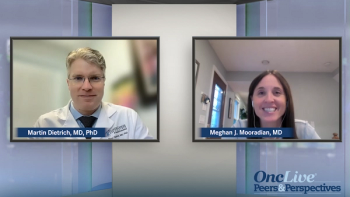
Martin Dietrich, MD, PhD, and Meghan J. Mooradian, MD, give an overview of the role of molecular biomarkers in the non–small cell lung cancer treatment space.
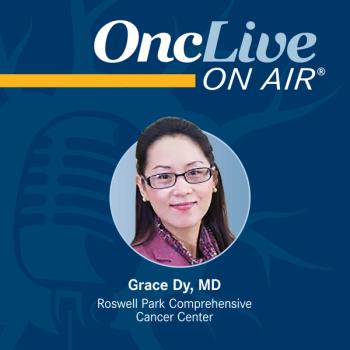
Dr Dy discusses the development of CEACAM5-directed antibody-drug conjugates in non–small cell lung cancer, ongoing research with tusamitamab ravtansine, and the potential role of competing docetaxel-based combination strategies in the second-line setting.

Perioperative treatment with the combination of toripalimab plus platinum-containing doublet chemotherapy, followed by toripalimab monotherapy as consolidation therapy after surgery, significantly extended event-free survival compared with chemotherapy plus placebo in patients with operable NSCLC.
David Spigel, MD, presents a patient case of a 57-year-old woman with NSCLC, and Jaspal Singh, MD, MHS, discusses his approach to initial evaluation.
A panel of experts introduce themselves and explain their approaches to multidisciplinary care in treating non-small cell lung cancer.
The FDA has granted an orphan drug designation to JBI-802 for the treatment of patients with small cell lung cancer and acute myeloid leukemia.

Jorge M. Mercado, MD, discusses the evolution of biopsy techniques in patients with lung cancer.

Max S. Topp, MD, discusses the safety profile of glofitamab in combination with R-CHOP in patients with diffuse large B-cell lymphoma.
Alexander Spira, MD, PhD, FACP, highlights the top advancements across non–small cell lung cancer in 2022, emphasized the need for increased genetic testing to inform treatment decisions, and previewed other agents under development.

The National Medical Products Administration of China has approved mobocertinib for the treatment of adult patients with locally advanced or metastatic non–small cell lung cancer harboring EGFR exon 20 insertion mutations and whose disease progressed on or following platinum-based chemotherapy.

Vamsidhar Velcheti, MD, highlights the advancement of CTLA-4–based combinations in non–small cell lung cancer treatment, the emergence of antibody-drug conjugates in non–small cell lung cancer, and the impact of the POSEIDON trial on the treatment landscape.

The Center for Drug Evaluation of China's National Medical Products Administration has granted a breakthrough therapy designation to IBI351 for the treatment of patients with advanced non–small cell lung cancer harboring a KRAS G12C mutation who have received at least 1 prior line of systemic therapy.

Neoadjuvant treatment with SHR-1701 with or without chemotherapy followed by surgery or radiotherapy induced responses in more than half of patients with stage III unresectable non–small cell lung cancer and increased resectability in those assigned to definitive surgery.

The addition of abequolixron to docetaxel generated responses in patients with relapsed/refractory non–small cell lung cancer or small cell lung cancer.

Japan has approved durvalumab monotherapy and durvalumab plus tremelimumab for unresectable hepatocellular carcinoma, durvalumab plus tremelimumab and chemotherapy for unresectable, advanced, or recurrent non–small cell lung cancer, and durvalumab plus chemotherapy for curatively unresectable biliary tract cancer.
The FDA has approved FoundationOne Liquid CDx as a companion diagnostic for use with the selective TKI entrectinib. The assay identifies patients with ROS1-positive NSCLC or NTRK fusion–positive solid tumors who do not have a tissue sample available and who may be appropriate for entrectinib treatment.
Tumor treating fields plus standard-of-care therapies led to a statistically significant and clinically meaningful improvement in overall survival vs SOC alone in patients with stage IV NSCLC who progressed while on or after platinum chemotherapy, meeting the primary end point of the LUNAR trial.
The FDA has granted a breakthrough device designation to the OverC Multi-Cancer Detection Blood Test for the early detection of cancers including esophageal, liver, lung, ovarian, and pancreatic in adults aged to 50 to 75 years with average risk.

The European Medicines Agency has validated an application for the use of trastuzumab deruxtecan for adults with previously treated unresectable or metastatic non–small cell lung cancer whose tumors have activating HER2 mutations.

Vamsidhar Velcheti, MD, discusses the evaluation of immunotherapy combination regimens for patients with metastatic non–small cell lung cancer.

Closing out their review of treatment options for KRAS G12C–mutated NSCLC, expert oncologists look toward future utilization of novel targeted agents in this setting.
Advertisement
Advertisement
Trending on OncLive
1
Long-Term Cilta-Cel Data Show Low Rates of PFS Events in Standard-Risk R/R Myeloma
2
Single-Center, Retrospective Data Show Low Rate of Lifileucel Infusion Following Referral in Advanced Melanoma
3
Real-World Data Support Clinical Benefit With Lifileucel in Previously Treated Advanced Melanoma
4
Dr Riedell on the Long-Term Efficacy of Tisa-Cel in R/R Follicular Lymphoma
5