






Lung Cancer
Latest News
Advertisement
Latest Videos







CME Content































Advertisement
More News
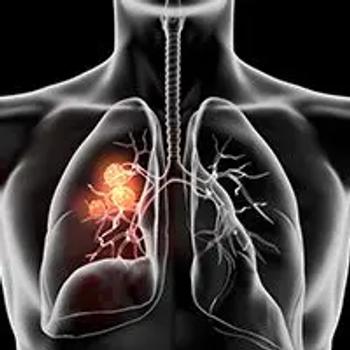
Mobocertinib plus ado-trastuzumab emtansine demonstrated inhibitory effects in HER2 exon 20 insertion–mutated lung cancer cell lines.

Edward B. Garon, MD, discusses the efficacy of datopotamab deruxtecan in patients with non–small cell lung cancer, as reported in the phase 1 TROPION-PanTumor01 trial.

Raymond U. Osarogiagbon, MD, discusses geographic disparities in lung cancer mortality rates across the United States.

Frontline sequential therapy with crizotinib followed by alectinib demonstrated survival benefits for patients with ALK-positive non–small cell lung cancer who develop resistance to, or become intolerant of crizotinib.

Atezolizumab plus carboplatin and pemetrexed yielded a favorable safety and efficacy profile in patients with advanced non-squamous non-small cell lung cancer with untreated brain metastases.


Makenzi Evangelist, MD, discusses the goals of the MYLUNG Consortium in lung cancer.

Vilde D. Haakensen, MD, PhD, discusses exclusion criteria for the Oslo University Hospital Named Patient Use program for adjuvant durvalumab in non–small cell lung cancer.

The combination of lurbinectedin and doxorubicin produced comparable efficacy to that of standard-of-care vincristine, cyclophosphamide, and doxorubicin or topotecan in patients with relapsed small cell lung cancer, missing the primary end point of the phase 3 ATLANTIS trial.

Adjuvant atezolizumab improved disease-free survival over best supportive care in patients with PD-L1–positive, stage II to IIIA non–small cell lung cancer, with benefit observed across most subgroups analyzed, according to data from an exploratory analysis of the phase 3 IMpower010 trial.

Lisberg discusses the excitement with datopotamab deruxtecan in non–small cell lung cancer and previews anticipated data from the NSCLC cohort of the TROPION-PanTumor01 trial at the International Association for the Study of Lung Cancer 2021 World Conference on Lung Cancer.

Flexibilities in time and place were effective strategies to mitigate COVID–19-related patient concerns and to increase participation in international lung cancer clinical trials.

The first-line combination of durvalumab and chemotherapy, with or without tremelimumab, led to a statistically significant improvement in progression-free survival compared with chemotherapy alone in patients with metastatic non–small cell lung cancer, according to data from the phase 3 POSEIDON trial.

David J. Feller-Kopman, MD, discusses the imperative role of the pulmonologist in the screening and management of lung cancer.

Updated data from a phase 2 trial presented at the 2021 World Conference on Lung Cancer showed that neoadjuvant osimertinib induced a pathologic complete response among patients with surgically resectable EGFR-mutant non–small cell lung cancer.

Mobocertinib demonstrated clinical activity in previously platinum-treated patients with EGFR exon 20 insertion mutation–positive non–small cell lung cancer whether or not they received a prior PD-1/PD-L1 inhibitor.

Nicholas Robert, MD, discusses the importance of evaluating trends in biomarker testing in metastatic non–small cell lung cancer.

Collin Blakely MD, PhD, discusses the rationale for utilizing osimertinib in resectable EGFR-mutant non–small cell lung cancer.

The combination of ado-trastuzumab emtansine and osimertinib demonstrated minimal antitumor effects on patients with EGFR-mutated non–small cell lung cancer, according to interim data of the phase 2 TRAEMOS trial.

Selpercatinib demonstrated robust and durable efficacy with a favorable safety profile in Chinese patients with advanced, RET fusion–positive non–small cell lung cancer.

Sotorasib elicited systemic durable anticancer activity with intracranial complete responses and continued intracranial stabilization in patients with KRAS G12C–mutated non–small cell lung cancer and stable brain metastases previously treated with radiation or surgery.

Approximately 20% of patients with malignant pleural mesothelioma were diagnosed with COVID-19 during the first year of the pandemic at the Vall d’Hebron University Hospital, leading to a high hospitalization and mortality rate.

Tislelizumab plus chemotherapy demonstrated clinically meaningful improvements in progression-free survival vs standard of care chemotherapy as a first-line treatment for patients with stage IIIB and those with stage IV advanced squamous non–small cell lung cancer.
The combination of osimertinib plus pelcitoclax demonstrated an acceptable safety profile and preliminary efficacy at the recommended phase 2 dose in patients with EGFR-positive non–small cell lung cancer that is resistant to third-generation EGFR inhibitors or treatment naïve.
In patients with advanced RET fusion–positive non-small cell lung cancer, pralsetinib demonstrated promising results regardless of previous therapies.
Advertisement
Advertisement
Trending on OncLive
1
Long-Term Cilta-Cel Data Show Low Rates of PFS Events in Standard-Risk R/R Myeloma
2
Single-Center, Retrospective Data Show Low Rate of Lifileucel Infusion Following Referral in Advanced Melanoma
3
Real-World Data Support Clinical Benefit With Lifileucel in Previously Treated Advanced Melanoma
4
Dr Riedell on the Long-Term Efficacy of Tisa-Cel in R/R Follicular Lymphoma
5