





Lung Cancer
Latest News
Advertisement
Latest Videos






CME Content































Advertisement
More News

Jason Porter, MD, discusses potential sequencing strategies with antibody-drug conjugates and TKIs in HER2-positive lung cancer.

Lyudmila A. Bazhenova, MD, discusses the importance of testing for HER2 mutations in lung cancer.

Luis E. Raez, MD, discusses the impact of PD-L1 status on immunotherapy outcomes for patients with non–small cell lung cancer.

Antoinette Wozniak, MD, FACP, FASCO, discusses optimizing the use of immunotherapy in patients with non–small cell lung cancer.

Dr. Hu discusses the importance of testing for RET alterations in thyroid cancer, the FDA approvals of selpercatinib and pralsetinib, and the changing dynamics between medical oncologists and endocrinologists.

Melissa L. Johnson, MD, discusses the clinical potential of AMG 757 in patients with small cell lung cancer.
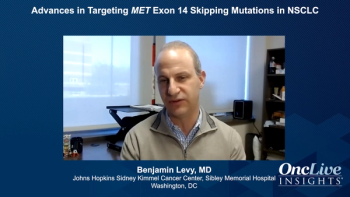
Drs Joshua M. Bauml and Benjamin Levy react to the development of novel therapies that specifically target MET exon 14 skipping mutations in non–small cell lung cancer.
Drs Joshua M. Bauml and Lyudmila A. Bazhenova describe what is understood regarding the behavior of MET exon 14 skipping mutations in non–small cell lung cancer and remark on their prevalence among specific patient populations.

Suresh S. Ramalingam, MD, FASCO, deputy director, director, Lung Cancer Program, Winship Cancer Institute of Emory University, professor, assistant dean, Roberto C. Goizueta Distinguished Chair for Cancer Research, director, Division of Medical Oncology, Department of Hematology and Medical Oncology, Emory University School of Medicine, discusses treatment after osimertinib (Tagrisso) in EGFR-mutant non–small cell lung cancer (NSCLC).

More patients with stage III non–small cell lung cancer received sequential chemoradiation and delayed the time to durvalumab treatment in a real-world setting compared with those enrolled on the phase 3 PACIFIC trial.

Janakiraman Subramanian, MD, discusses the use of EGFR TKIs in the treatment of patients with non–small cell lung cancer.

Osimertinib (Tagrisso) showcased encouraging efficacy and acceptable safety in patients with EGFR-positive, advanced non–small cell lung cancer. according to real-world findings from an observational, multicenter study.

Andrew G. Robinson, MD, MSc, FRCPC, discusses the updated results of the phase 3 KEYNOTE-407 trial in squamous non–small cell lung cancer.

Lyudmila A. Bazhenova, MD, discusses the results of a preliminary exploratory correlative analysis of the phase 1/2 KRYSTAL-1 trial in advanced non–small cell lung cancer.

Treatment with chemotherapy plus immunotherapy did not demonstrate significant clinical benefit over chemotherapy alone in patients with EGFR-mutated non–small cell lung cancer after progression on osimertinib.

Prior Immunotherapy or Osimertinib Negatively Impacts Outcomes With Subsequent Atezolizumab in NSCLC
Previous exposure to immune checkpoint inhibitors or osimertinib has been linked with poor outcomes in patients with non–small cell lung cancer who were receiving a subsequent atezolizumab-containing regimen.

The half-life extended, DLL3-targeting bispecific T-cell engager AMG 757 demonstrated early signals of efficacy and a favorable safety profile in patients with small cell lung cancer.

The European Medicines Agency’s Committee for Medicinal Products for Human Use has recommended the approval of atezolizumab for use as a frontline treatment in adult patients with metastatic non–small cell lung cancer whose tumors have a high PD-L1 expression and no EGFR or ALK aberrations.

Adagrasib yielded durable responses and broad disease control, in addition to providing extensive predicted coverage throughout the dosing interval, in patients with KRAS G12C–mutant advanced non–small cell lung cancer.

Marina Chiara Garassino, MD, discusses the rationale for the phase 2 PACIFIC-6 trial in non–small cell lung cancer.

First-line treatment with camrelizumab, an investigational PD-1 inhibitor, plus chemotherapy induced robust and durable clinical responses in patients with advanced squamous non–small cell lung cancer.

The fatty acid synthase inhibition caused by AZ12756122 could represent a promising therapeutic alternative to overcome resistance to EGFR TKIs because of the synergistic interaction that it has with osimertinib and its ability to reduce cancer stem cell properties in EGFR-mutant non–small cell lung cancer cell models.

The frontline combination of nivolumab and ipilimumab plus 2 cycles of chemotherapy demonstrated an improvement in overall survival vs chemotherapy alone in patients with advanced non–small cell lung cancer regardless of tumor mutational burden status in the tissue or blood.
Experts in thoracic oncology review data from the IMpower133 and CASPIAN trials as well as the use of chemotherapy with PD-L1 inhibitors for treatment-naïve ES-SCLC in clinical practice.

Insights on the differences between limited-stage and extensive-stage small-cell lung cancer and recent progress made with combination chemotherapy plus immunotherapy.
Advertisement
Advertisement
Trending on OncLive
1
Long-Term Cilta-Cel Data Show Low Rates of PFS Events in Standard-Risk R/R Myeloma
2
FDA Updates Axi-Cel Label to Remove Limitation of Use in R/R PCNSL
3
Real-World Data Support Clinical Benefit With Lifileucel in Previously Treated Advanced Melanoma
4
Single-Center, Retrospective Data Show Low Rate of Lifileucel Infusion Following Referral in Advanced Melanoma
5